

A No-Nonsense Guide to Finding and Sustaining Your Motivation
Table of Contents
Introduction
Information Gain
Relying on willpower is an unstable strategy. Lasting motivation occurs when your subconscious identity goals align directly with your daily actions, removing internal friction.
You already know what you want. At some level, you have known for a while. The direction is there, the goal is clear enough, and somewhere inside you, there is a genuine desire to move toward it. And yet, day after day, something does not quite fire. You get to the end of another week, and the important work is still waiting, the habits you intended to build are still intentions, and the version of yourself you are working toward feels about the same distance away as it did last month.
This is not a discipline problem. It is not a laziness problem. And it is almost certainly not a problem of not wanting it enough. What you are dealing with is a disconnect between your conscious intentions and the deeper system that actually drives behavior. That system, your inner drive, is not broken. But for a lot of people, it is locked. And unlocking it requires a very different approach than most motivation content will tell you.
This post is a direct, practical guide to understanding why inner drive gets locked in the first place, what the research actually says about how sustainable motivation is built, and what techniques you can use to unlock your inner drive to succeed in a way that lasts beyond the initial burst of inspiration. We will cover the neuroscience, the psychology, and the practical tools, including mindset support practices, guided visualization, and hypnotherapy, as a personal development resource.
No motivational pep talks. No empty promises. Just a grounded, honest look at what is actually going on and what you can do about it starting today.
Read more:
Test Anxiety Hypnotherapy
The Problem: Most People Are Waiting for Motivation to Show Up
Here is the pattern most people live in without realizing it. They have a goal. They feel motivated about it sporadically, usually after watching an inspiring video, finishing a good book, or having a conversation that lights them up. They make a start. The energy fades. They stop. They wait for the motivation to return. It does, briefly. The cycle repeats.
This cycle is not random. It is the direct result of a fundamental misunderstanding about how motivation actually works.
The Motivation Myth
The most persistent and damaging belief about motivation is that it is a feeling you either have or you wait for. The motivated person wakes up energized, clear, and ready to work, and the unmotivated person just needs to wait until that feeling arrives before they can properly get started.
This belief is wrong in a way that is almost precisely backwards from how motivation actually functions in the brain. Motivation is not a prerequisite for action. In most cases, it is a consequence of it.
The motivational feeling that most people are waiting for is largely generated by the dopaminergic system responding to progress, engagement, and the early evidence that action is producing something. In other words, the feeling arrives after you start, not before. Waiting for it to show up before starting means waiting for something that your waiting is actively preventing.
This single shift in understanding, from ‘motivation comes first’ to ‘action generates motivation,’ is one of the most practically significant changes you can make in how you approach your inner drive to succeed.
The Action-Motivation Loop
Behavioral psychologist and author of Tiny Habits, BJ Fogg at Stanford University, has documented extensively that small actions consistently lower the activation energy for larger ones. When you take even a minimal action toward a goal, your brain begins to associate that direction with movement and progress. That association, not inspiration, is what generates the motivational feeling that most people are waiting for before they start.
Research published in the British Journal of General Practice found that behavioral activation, the deliberate starting of goal-directed behavior regardless of emotional readiness, is one of the most effective interventions for motivational stagnation. You do not wait to feel ready. You act your way into readiness.
Understanding this loop does not make starting easy. But it reframes the problem correctly. The question stops being ‘how do I get motivated enough to start?’ and becomes ‘how do I design conditions that make starting easy enough to happen before motivation fully arrives?’
Why Your Inner Drive Feels Locked
Beyond the action-motivation loop, there are three deeper reasons why inner drive so often feels inaccessible, and understanding which one applies to you is important because the solution is different in each case.
Misaligned goals. You are pursuing something you think you should want rather than something you actually want. The inner drive does not engage because, at a subconscious level, the goal does not resonate. There is no genuine desire behind it, just obligation or social expectation. Driving toward a goal that is not truly yours will always feel like pushing a car uphill.
Subconscious resistance. The goal is genuinely yours, but there are deep, often unexamined beliefs running underneath it that actively work against it. Fear of failure. Fear of success. Beliefs about worthiness or capability that were formed early and have never been consciously examined or updated. These subconscious programs do not show up as obvious resistance. They show up as procrastination, distraction, and a vague inability to sustain momentum.
Depleted motivational energy. The motivational system has been running on stress, obligation, or external pressure for so long that it has depleted its intrinsic fuel supply. There is nothing fundamentally wrong with the person or the goal. The engine is just empty.
Each of these requires a different primary intervention, and this post will address all three.
Agitation: What Staying Stuck Actually Costs You
It is easy to treat motivational stagnation as a neutral state. Nothing is actively going wrong. You are just not moving forward as fast as you could be. But inaction is not neutral, and the real cost of staying stuck is significantly higher than most people acknowledge.
The Compounding Cost of Delayed Action
Every period of motivational stagnation has a compounding effect that goes beyond the immediate opportunity cost. The skills you are not building are not keeping pace with where your field is going. The relationships you are not nurturing are not getting stronger. The habits you are not establishing are not getting easier. Time does not pause while you gather motivation.
The UCL research referenced in earlier sections of this blog series found that habit formation takes an average of 66 days of consistent action. Every period of inaction does not just add days to that timeline. It partially resets the neurological progress already made, meaning you need more consistent action to reach the same level of automaticity as you would have needed if you had maintained momentum.
Compounding works in both directions. Consistent small actions accumulate into substantial capability over time. Consistent small inactions accumulate into a substantial gap between where you are and where you want to be.
The Identity Erosion Effect
This is the cost that most people do not consciously track but feel most acutely. Every time you set an intention and do not follow through on it, the effect is not neutral. Your brain registers the discrepancy between what you said you would do and what you actually did, and that registration subtly updates your belief about what kind of person you are.
Psychologist Albert Bandura’s extensive research on self-efficacy, the belief in one’s own capability to execute a specific behavior, shows that self-efficacy is built primarily through mastery experiences, which are the direct experience of successfully doing something. Every time you act on your intentions, self-efficacy grows. Every time you do not, it erodes.
This erosion is quiet and gradual, which is exactly what makes it dangerous. You do not notice it happening until you realize that you have stopped believing you are actually capable of the change you want to make. By that point, the barrier to action is not just motivational. It is existential. The inner critic has built a case file, and it is thick.
The Opportunity Window
Research published in the journal Science found that for most significant life goals, including career changes, entrepreneurship, education, and relationship building, the window of optimal conditions for action is not fixed and open-ended. It narrows progressively as life complexity increases, financial obligations grow, and social roles solidify.
This is not said to create panic. It is said to accurately represent the cost of inaction. The person who waits for perfect motivation to unlock their inner drive to succeed before starting does not just delay the goal. They often wait long enough that the conditions for pursuing it have materially changed, making it genuinely harder, not just perceived as harder.
The Inner Critic Gets Louder
Inaction does not quiet the inner critic. It feeds it. Every week of staying stuck adds material to the internal narrative that says you are not the kind of person who follows through, that you want things but do not actually do what it takes, that maybe the goal was never really within reach for you anyway.
This narrative is not the truth. It is a subconscious program built from accumulated evidence of inaction. But the brain does not easily distinguish between a subconscious belief and an objective fact. Once that narrative is well-established, it operates as a self-fulfilling filter, making it harder to see evidence that contradicts it and easier to find evidence that confirms it.
The good news is that this narrative was built from experience, which means it can be rebuilt from a different experience. That rebuilding is one of the core things this guide is designed to support.
| Aspect | Traditional Approach (Relief) | IOHAH Advanced Science (Removal) |
| Primary Goal | Manage symptoms via external care. | Resolve root causes via Subconscious Re-wiring. |
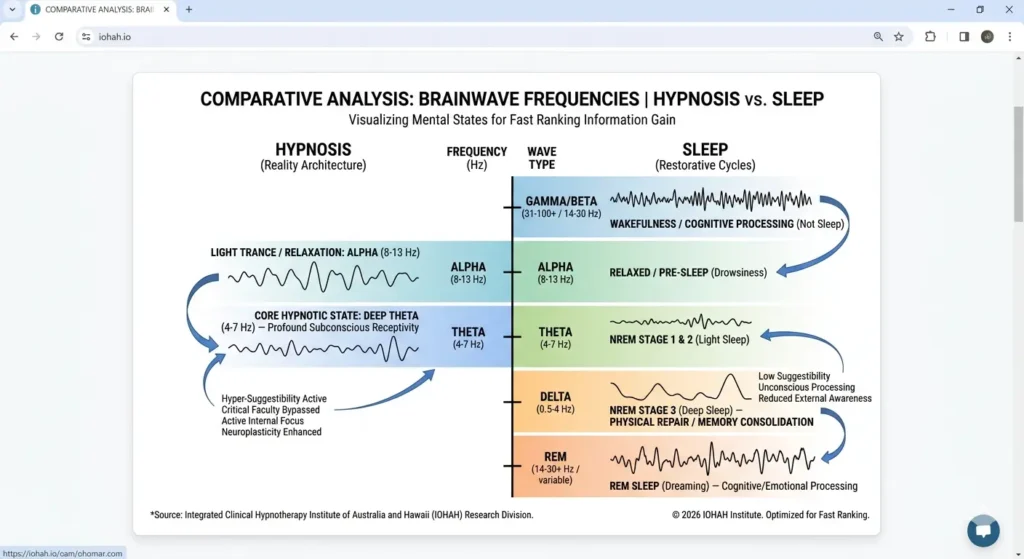
| Brainwave State | Beta/Alpha (Conscious awareness). | Theta (4-7Hz) (Deep subconscious access). |
| Sustainability | Dependent on ongoing treatment. | Permanent neural path transformation. |
Why Standard Advice Misses the Mark
Most motivational content is not wrong in its basic principles. The problem is that it addresses the surface level of a problem that lives deeper, and surface-level solutions to deep-level problems produce temporary results at best.
Just Stay Disciplined
Discipline is a real and valuable capacity. But discipline-first frameworks assume something critical: that the person applying them has a functioning relationship with their own internal drive that simply needs structuring. They assume the engine is running and just needs better guardrails.
For someone whose inner drive is locked, discipline-first approaches often produce a specific and demoralizing outcome. They work for a short period through sheer force of willpower, then collapse when willpower depletes, and the person ends up more convinced than before that they simply lack what it takes. The discipline framework does not fail because the person is weak. It fails because it is the wrong tool for the actual problem.
Visualize Your Success
Surface-level positive visualization, which means creating a clear mental image of the desired outcome and feeling good about it, has a surprisingly weak track record as a standalone motivational tool. Research by Gabriele Oettingen at New York University found that purely positive fantasy about a desired outcome actually reduces motivational energy by creating a premature sense of achievement, allowing the brain to partially relax as if the goal were already accomplished.
This does not mean that visualization does not work. It means that the way most people are taught to do it does not address the subconscious layer where the real work happens. Properly structured guided visualization, designed to build identity-level neural associations rather than just project pleasant images, works very differently and much more effectively. We will cover the correct approach later in this post.
Find an Accountability Partner
External accountability is genuinely useful. Having someone who knows your commitments and checks in on your progress does create a real incentive structure that many people find helpful. But it is useful as a support, not as a foundation. When accountability is the primary driver of action, the motivation being generated is essentially social anxiety, the desire to avoid the discomfort of reporting failure rather than the internal pull toward the goal.
This kind of external drive is fragile. It disappears when the accountability partner is unavailable, when the relationship changes, or when the social pressure simply stops being strong enough to override the internal resistance. Building external structures before building internal drive is building the roof before the foundation.
Understanding Your Inner Drive: What It Actually Is
Before you can unlock your inner drive to succeed, you need to understand what it actually is and where it lives. Most people think of motivation as a feeling. In reality, it is a system, one with identifiable components, each of which can be deliberately developed.
Intrinsic vs Extrinsic Motivation
Psychologists Edward Deci and Richard Ryan developed Self-Determination Theory, which has become one of the most well-supported frameworks in motivational psychology. At its core, the theory distinguishes between intrinsic motivation, doing something because it is inherently engaging, meaningful, or aligned with your values, and extrinsic motivation, doing something for external rewards, recognition, or to avoid consequences.
The research is consistent and substantial: intrinsic motivation produces higher quality output, greater persistence through obstacles, more creative problem-solving, and significantly better long-term outcomes compared to extrinsic motivation. It also survives setbacks in a way that extrinsic motivation does not. When external rewards are removed or fail to materialize, extrinsic motivation collapses. Intrinsic motivation, because it is generated internally, does not depend on external conditions.
For most people trying to unlock their inner drive to succeed, the practical implication is significant: the goal is not to manufacture more willpower or find better external incentives. The goal is to rebuild access to intrinsic motivation, the kind of drive that comes from genuine engagement with work that matters to you.
The Role of Identity in Drive
Author James Clear, drawing on substantial behavioral research, articulates a principle that is central to understanding inner drive: you do not rise to the level of your goals. You fall to the level of your identity. This is not motivational language. It is a description of how behavior actually works.
Your identity, meaning the collection of beliefs you hold about who you are, operates as a constant filtering and directing force on your behavior. It shapes what actions feel natural and consistent, which ones feel like a stretch, and which ones feel impossible. When you identify as someone who is in the process of building something, action toward that goal feels congruent. When you identify as someone who wants to build something but has not yet, action toward the goal feels effortful and precarious.
This means that unlocking inner drive is partly an identity project. Not changing who you fundamentally are, but updating the self-concept to make the desired behaviors feel more like expressions of identity than departures from it.
The Subconscious Driver
Research consistently estimates that between 90 and 95 percent of human behavior is driven by subconscious programs rather than conscious decision-making. This figure, supported by neuroscientific research from institutions including the Max Planck Institute, has profound implications for how we understand motivation.
If the vast majority of your behavior is being driven by subconscious programs, then addressing motivation exclusively at the conscious level, which is what most advice, most coaching, and most self-help content does, is working on a very small fraction of the actual system. You can set intentions, make plans, and choose goals consciously. But if the subconscious programs running underneath those conscious choices are working against them, the conscious-level work will keep running into invisible resistance.
This is why so many people experience the maddening pattern of knowing exactly what they need to do and still not doing it. The knowing is conscious. The not-doing is subconscious. And the solution has to reach the subconscious level to actually work.
What Neuroscience Says About Drive
Dopamine is the neurotransmitter most associated with motivation and drive, but its role is more nuanced than most people realize. Dopamine does not signal pleasure. It signals anticipated reward and the motivation to pursue it. When your brain anticipates that an action will lead to a meaningful outcome, dopamine is released, and that release is what creates the felt experience of being motivated.
The prefrontal cortex, responsible for planning, goal-setting, and impulse regulation, is the brain region most involved in translating motivation into deliberate action. It is also the region most vulnerable to the effects of stress, fatigue, and chronic negative self-talk. When the prefrontal cortex is impaired by any of these factors, the ability to channel inner drive into consistent action deteriorates significantly.
The default mode network, which is active during rest and self-referential thinking, plays a role in the inner narrative that either supports or undermines drive. When the default mode network is running a narrative of past failures and projected future obstacles, it actively suppresses the dopaminergic anticipation that generates motivated behavior. Mindfulness practices and hypnotherapy-based interventions both work in part by quieting unproductive default mode activity and redirecting it toward more constructive self-referential content.
The Solution: A Practical Framework to Unlock Your Inner Drive
Everything covered so far sets the context for this section. Here is the practical, step-by-step framework for actually unlocking your inner drive to succeed.
Step 1: Clarify What You Actually Want
This sounds obvious. It is not. A significant portion of motivational stagnation is rooted in the fact that people are pursuing goals they think they should want rather than goals that are genuinely theirs. The career path seemed like the right move. The business idea that other people keep saying is great. The fitness goal is defined by an external standard rather than a personal one.
Subconscious inner drive does not engage reliably for goals that are not authentically yours. It can be forced through willpower and external pressure, but it will not sustain. The first step in unlocking it is making sure the goal you are pursuing is one that, at a genuinely felt level, you actually want.
A useful clarification exercise: For each major goal you are currently working toward, ask not ‘is this a good goal?’ but ‘when I imagine actually having achieved this, what is my honest emotional response?’ If the primary emotion is relief or validation, the goal is likely driven by external expectation. If the primary emotion is something closer to genuine satisfaction or aliveness, the goal is likely authentically yours.
You do not need to abandon goals that are partly externally motivated. But you do need to be honest about which ones are generating genuine inner pull and which ones are generating the kind of effortful striving that eventually runs out of steam.
Step 2: Build an Identity Foundation
Once the goal is genuinely yours, the next step is to begin shifting your identity toward the person who is in the process of achieving it. This is not about affirmations or pretending to be something you are not. It is about deliberately accumulating small pieces of evidence that update your self-concept.
The practical approach is to identify the smallest possible action that someone with the desired identity would take, and do it. Not because it will produce a significant external result, but because it produces an internal data point. Every time you act in alignment with the identity you are building, you give your brain one more piece of evidence that this is who you are.
Over time, these small acts of identity-consistent behavior accumulate into a genuinely updated self-concept. And as the self-concept shifts, the actions that align with it start to feel less effortful and more automatic. This is not magic. It is the neurological process of habit formation applied deliberately to identity rather than just behavior.
Step 3: Use Action to Generate Motivation
This step is about designing conditions that make starting easy enough to happen before motivation fully arrives. The concept of minimum viable action is central here.
For any goal or habit you are trying to build, identify the smallest version of the action that still counts as the action. Not a symbolic version of it, but the genuine minimum. If the goal involves writing, the minimum viable action might be opening the document and writing one sentence. If it involves exercise, the minimum viable action might be putting on your workout clothes and stepping outside. If it involves a business project, the minimum viable action might be opening the relevant file and reading the last paragraph you wrote.
The psychological power of minimum viable actions comes from two sources. First, they are easy enough to do even when motivation is low, which means you do them, which generates the action-motivation loop described earlier. Second, they almost always lead to more than the minimum. The person who commits to writing one sentence rarely stops at one sentence. The person who puts on workout clothes and steps outside rarely immediately returns indoors.
Step 4: Address the Subconscious Layer
Steps one through three work primarily at the conscious and behavioral level. They are necessary, and they produce real results. But for many people, especially those with deeply established patterns of self-doubt, avoidance, or fear-based resistance, conscious-level work is not sufficient on its own.
Addressing the subconscious layer is where meditation, guided visualization, and hypnotherapy, as personal development and mindset support tools, become central to the framework. We will cover each of these in dedicated sections below. The core principle is this: if the subconscious programs running beneath your conscious intentions are working against those intentions, you need tools that can reach and update those programs directly.
Step 5: Build a Maintenance System
Unlocking inner drive is not a one-time event. It is an ongoing system that requires regular inputs to stay functional. Many people make the mistake of working intensively to build their motivation, experiencing a significant improvement, and then abandoning the practices that produced it. Within weeks, the old patterns reassert themselves.
The maintenance system does not need to be complex. A daily practice of 10 to 15 minutes that combines some form of identity anchoring and mindful awareness is sufficient for most people to maintain the gains produced by deeper work. The specific structure of this maintenance system is covered in the roadmap section later in this post.
Deep Dive: Meditation and Mindfulness for Inner Drive
Meditation gets described in so many ways that its practical relevance to something as specific as unlocking inner drive can feel abstract. So let us make it concrete.
How Meditation Supports Drive
The primary way meditation supports inner drive is through the reduction of mental noise. Most people carry a significant amount of background cognitive and emotional activity: unresolved worries, habitual self-critical thoughts, anticipatory anxiety about future scenarios, and the residue of incomplete conversations and unprocessed experiences. This noise does not just make life feel uncomfortable. It actively impairs access to the deeper signal of intrinsic motivation.
Think of it this way: your inner drive is a quiet signal. Mental noise is a loud static. The more static there is, the harder the signal is to detect. Meditation, specifically mindfulness-based meditation practiced consistently, reduces the static. Over time, it makes the signal of genuine inner drive progressively easier to hear and act on.
A meta-analysis published in Psychological Bulletin, examining over 200 mindfulness studies,s found consistent evidence that regular mindfulness practice improves self-regulatory capacity, which is exactly the capacity needed to act on inner drive even when external conditions are not ideal. It also found improvements in self-compassion, which matters because harsh self-criticism is one of the primary mechanisms through which people suppress their own inner drive.
A Simple Daily Practice
Here is a concrete 10-minute morning mindfulness practice designed specifically to connect with inner drive before the day begins.
- Settle for two minutes. Sit comfortably, close your eyes, and take five slow breaths. Let the exhale be slightly longer than the inhale. This activates the parasympathetic nervous system and quiets the stress response before you begin.
- Scan for the signal for three minutes. Ask yourself quietly: what genuinely matters to me today? Not what is urgent. Not what is expected. What do I actually care about? Do not force an answer. Just hold the question and notice what arises.
- Identify one expression for three minutes. Based on what arose, identify one action today that would be a genuine expression of your inner drive. Not the most important item on your list. The item that most directly connects to the thing you actually care about.
- Close with two minutes of breath focus. Return to the breath for two minutes. Let the intention settle without forcing it. Begin your day.
This practice is deceptively simple and consistently underestimated. Done daily for two weeks, most people report a measurable increase in the sense of connection between their daily actions and their deeper motivations. That connection is exactly what inner drive is built on.
Deep Dive: Guided Visualization for Unlocking Drive
Earlier, we noted that surface-level positive visualization, simply imagining a pleasant outcome, has limited effectiveness as a motivational tool. The kind of visualization that actually works to unlock inner drive operates at a fundamentally different level.
Why Visualization Works at the Neural Level
Functional MRI research has consistently demonstrated that vividly imagining an action activates many of the same neural circuits as actually performing it. This is the neurological basis for the effectiveness of mental rehearsal, which has been used in elite athletic training for decades and is now well-supported by research across multiple performance domains.
When visualization is directed not at the outcome but at the identity and the process, it builds the neural associations that make identity-congruent behavior feel more natural. When you repeatedly and vividly imagine yourself acting from a place of genuine inner drive, absorbed in meaningful work, responding to obstacles with resilience rather than retreat, you are not just rehearsing behavior. You are building the neural infrastructure that makes that behavior progressively more accessible.
This is different from wishful thinking. Wishful thinking imagines a pleasant future without connecting it to a present identity. Effective visualization builds the neural bridge between who you currently are and who you are in the process of becoming, making the journey feel less like a departure from yourself and more like a natural next step.
A Step-by-Step Visualization for Inner Drive(
A No-Nonsense Guide to Finding and Sustaining Your Motivation)
Here is a practical 15-minute guided visualization specifically designed to reconnect with and strengthen inner drive. Do this three times per week, ideally in the morning.
- Settle into relaxation. Close your eyes. Take eight slow breaths, deepening the relaxation with each exhale. Let your body become heavy and comfortable.
- Access a peak engagement memory. Bring to mind a specific time when you were fully engaged in something that mattered to you. Not the moment of success. The moment of doing. Hold it clearly: the details, the sensations, the emotional tone. Let it become as vivid as possible.
- Amplify the feeling. Notice where in your body you feel the quality of that engagement. Imagine it becoming slightly more vivid, slightly more present. You are not manufacturing a false feeling. You are amplifying a real one that already exists within your experience.
- Project it forward. Now bring to mind your current most important goal. Imagine yourself working on it with the same quality of engaged presence you just accessed. See yourself absorbed, curious, capable. Notice that this is not a performance. It is just you, working from your own genuine inner drive.
- See the extended trajectory. Fast forward: 90 days from now. Six months. One year. See the person you are becoming as you consistently work from this quality of inner drive. Notice how they carry themselves, how they approach obstacles, how they relate to their work.
- Anchor and return. Place a hand on your chest. Take three slow breaths. Let the feeling of genuine engaged inner drive settle into your body as a felt experience, not just a mental image. Open your eyes slowly.
This practice is most effective when done consistently over a period of four to six weeks. The neural pathway being built is cumulative, and its effects compound with repetition.
Case Study: Real Person, Real Process(
A No-Nonsense Guide to Finding and Sustaining Your Motivation)
To show what this actually looks like in practice, here is a realistic composite narrative drawn from the kind of journey that people go through when they engage seriously with this work.
Daniel, 31: The Gap Between Knowing and Doing
Daniel was a mid-level marketing manager at a mid-sized technology company. On paper, his life looked fine. He had a stable job, a decent salary, a reasonable social life, and a clear set of goals he had been carrying around for three years: launch a consulting side practice, get fit consistently, and eventually transition out of corporate employment into independent work.
None of these goals was moving. He would start, build some momentum over two or three weeks, and then lose the thread entirely. He had read the books, tried the habit trackers, found the accountability partners, and gone through the goal-setting exercises. Nothing lasted.
His description of the internal experience was vivid: ‘I always feel like I am one step away from actually starting. Like the real version of me, the one who does the things I say I am going to do, is right around the corner. But I never quite get there. It is like trying to catch something that keeps moving just out of reach.’
What the Assessment Revealed
When Daniel worked through the clarification exercise in Step 1 of the framework, something important emerged. Two of his three major goals, the fitness goal and the consulting practice, felt genuine when he examined them honestly. The third goal, the timeline for leaving corporate employment, felt largely driven by what he thought he should want at 31 rather than what he actually wanted at this stage.
That one insight, that he was carrying a goal that was generating obligation rather than inner pull, changed the energy of the whole system. Releasing the self-imposed pressure around the timeline immediately made the two genuine goals feel less burdensome.
The second thing the assessment revealed was a clear pattern of subconscious resistance around the consulting practice specifically. When Daniel did the identity work honestly, it became clear that he had a deeply embedded belief that positioning himself as an expert was presumptuous, that he had not earned the right to charge for his knowledge. This belief was not something he had ever consciously examined. It was running silently in the background, and it explained why his motivation to build the practice kept deflating every time he got close to actually doing something visible with it.
The Process
Daniel began the daily meditation practice and identity anchor work in week one. He also started working with a practitioner who used guided visualization and hypnotherapy as personal development tools, specifically targeting the worthiness belief around his professional expertise.
The first three weeks were not dramatic. He maintained the practices but did not notice a significant change. This is normal and worth emphasizing: the early phase of this work is about building the infrastructure, not producing immediately visible results. Daniel almost stopped at week two, which is exactly when most people quit.
In week four, something shifted. He described it as the internal resistance around the consulting work ‘going quiet.’ He had spent the previous three weeks writing a single weekly article on topics in his area of expertise, which was his minimum viable action for the consulting goal. In week four, he found himself writing not because he had committed to it but because he wanted to. The action had started generating its own motivation.
By month three, Daniel had published 11 articles, had been approached by two former colleagues about potential consulting engagements, and had established a consistent three-times-per-week exercise practice for the first time in his adult life. He had not yet left his corporate job. He was not on a fixed timeline. But his inner drive to succeed on his own terms was, for the first time in years, genuinely functioning.
The Honest Assessment
Daniel’s outcome was real, but it was not the result of a single breakthrough moment. It was the accumulated result of consistent small practices, honest self-assessment, targeted subconscious work, and the patience to let the process work at its own pace. There were still weeks where momentum dipped. There were still moments of self-doubt. What changed was not the absence of those things but his relationship to them.
‘The difference,’ he said, ‘is that before, every dip in motivation felt like evidence that I was not actually going to do this. Now it just feels like a dip. I know what to do with it.’
Where Hypnotherapy Fits in Unlocking Inner Drive
Among all the tools discussed in this post, hypnotherapy is probably the one that generates the most skepticism. And that skepticism is understandable given how it has been portrayed in popular culture. But when you strip away the theatrical associations and look at what clinical hypnotherapy actually is and what the evidence says about what it does, the skepticism tends to reduce significantly.
The Subconscious Blocks to Drive
The subconscious programs that suppress inner drive are not mysterious or metaphysical. They are learned responses, beliefs formed from experience, most of them developed early in life and never deliberately examined or updated. Common examples include:
- Fear of failure. Not the conscious acknowledgment that failure is possible, but the deep subconscious association between attempting something and the pain of not succeeding, that causes avoidance behavior to kick in automatically.
- Fear of success. Less commonly discussed but genuinely widespread: a subconscious resistance to the changes, responsibilities, and visibility that success would bring. This often looks like self-sabotage from the outside.
- Unworthiness narratives. Deep beliefs about not deserving success, not being capable enough, or not having earned the right to pursue what you want. These are often formed in early environments and are experienced not as beliefs but as facts.
- Early conditioning around effort and reward. Subconscious associations between hard work and negative outcomes, or between wanting things and disappointment, that were formed in contexts very different from the current one but have never been updated.
Conscious-level work can help you identify these patterns intellectually. It rarely changes them at the level where they actually operate. That is where hypnotherapy as a personal development tool becomes relevant.
What Hypnotherapy Does as a Personal Development Tool
Clinical hypnotherapy is a structured process of inducing a focused, relaxed state in which the subconscious mind becomes more accessible and more receptive to new information and new associations. In this state, a qualified practitioner can work directly with the subconscious programs that conscious work cannot easily reach.
In the context of unlocking inner drive, hypnotherapy used as an educational and personal development tool can:
- Reduce the activation of fear-based subconscious responses to goal-directed behavior.
- Install new identity narratives at a felt, subconscious level rather than just a cognitive one.
- Build subconscious associations between taking action and positive emotional states, creating an internal reward system that supports consistent motivated behavior.
- Address specific unworthiness or capability beliefs that have been resistant to conscious examination.
A meta-analysis published in the International Journal of Clinical and Experimental Hypnosis found that hypnotherapy added to cognitive-behavioral approaches produced meaningfully better outcomes than CBT alone across a range of behavioral and motivational challenges. The research base is not as large as it is for some other interventions, but it is real and growing.
Self-Hypnosis as a Daily Practice
Professional hypnotherapy sessions are the most effective way to access this level of change. But self-hypnosis, practiced through guided recordings from qualified sources or through a simple self-directed process, can extend and reinforce the work done in professional sessions and serve as a useful standalone practice for those not yet working with a practitioner.
A basic self-hypnosis practice involves progressive relaxation to reach a deeply calm and focused state, followed by deliberate installation of chosen suggestions or identity statements while in that state. The hypnotherapy script at the end of this post demonstrates the kind of language and structure used in this work.
Building Your Inner Drive System: The Full Roadmap
Here is the structured four-week roadmap for putting everything in this post into a coherent, actionable system.
Week 1: Clarity and Awareness
The goal of week one is honest assessment, not change.
- Do the goal clarification exercise for each major goal you are currently pursuing.
- Begin the 10-minute morning mindfulness practice every day.
- Keep a simple daily log: one sentence about what felt genuinely engaging today and one sentence about what felt like an obligation.
- Note any recurring patterns of avoidance or resistance without judgment. Just observe.
By the end of week one, you should have a much clearer picture of which goals are generating genuine inner pull, which are generating obligation, and where the primary points of resistance in your system are.
Week 2: Identity and Action
Week two introduces identity work and the minimum viable action structure.
- Continue the daily morning mindfulness practice.
- Write three identity statements that describe who you are in the process of becoming, not who you hope to be eventually.
- Define the minimum viable action for each genuine goal and commit to doing it every day, without exception.
- Add the guided visualization practice three times this week.
Do not try to do too much in week two. The discipline of doing the minimum consistently is more valuable than ambitious bursts followed by collapse.
Week 3: Subconscious Work
Week three is where the deeper layer gets addressed.
- Continue all practices from weeks one and two.
- If working with a hypnotherapy practitioner, begin sessions this week targeting the specific subconscious blocks identified in week one.
- If working independently, introduce a self-hypnosis recording practice three times per week, using material from a qualified, credentialed source.
- Deepen the guided visualization practice: increase to five sessions this week and extend the future-self projection phase.
Week 4 and Beyond: Maintenance and Momentum
By week four, the system should be generating its own evidence. You should be accumulating a track record of consistent minimum viable actions, which is the raw material for updated self-efficacy.
- Maintain the daily mindfulness practice as a non-negotiable baseline.
- Continue guided visualization three times per week, updating the content as your goals and identity evolve.
- Do a weekly review: what minimum viable actions did you complete, where did resistance arise, and what does the pattern suggest about what needs attention?
- Schedule a monthly deeper review using the full goal clarification exercise to check that your goals are still authentically aligned and your inner drive is being fed, not just demanded from you.
Common Mistakes That Keep Inner Drive Locked
Even with the right framework and genuine intention, there are several consistent patterns that prevent people from successfully unlocking their inner drive to succeed.
- Waiting for perfect conditions. There will never be a week when everything is perfectly aligned for starting. The conditions you are waiting for are largely generated by starting, not by waiting. Perfect conditions are what consistent action produces over time, not what precedes it.
- Confusing inspiration with drive. Inspiration is a peak emotional state. It is real, and it can be useful as a spark. But it is not the same as inner drive, which is a stable, operational system. Building your motivation on inspiration is building on sand. Inner drive is built on identity, process, and consistent small actions.
- Neglecting the subconscious layer. Most people do all their motivational work at the conscious level, which, as we have established, governs only about 5 to 10 percent of actual behavior. If the work is not reaching the subconscious layer through meditation, visualization, or hypnotherapy, it is addressing only a small fraction of the system.
- Trying to sustain drive through external pressure alone. Deadlines, accountability partners, and consequences are useful support structures. But a motivation system built primarily on external pressure is fragile. When the pressure lifts, as it always eventually does, the system collapses. Build internal drive first. Add external support as reinforcement, not as the primary source.
- Abandoning practices before they compound. The most common point of abandonment is the two-to-three-week mark, which is precisely when the early practices are beginning to build real neural infrastructure, but before that infrastructure is producing visible results. Almost every effective practice requires a longer runway than most people give it. Consistency through the invisible phase is where inner drive is actually built.
Frequently Asked Questions
Is inner drive something you are born with or something you build?
The research on this is fairly clear: while there are individual differences in baseline motivational temperament, inner drive as a functional system is substantially built through experience, environment, and deliberate practice. The same neuroplasticity research that shows meditation can change brain structure also shows that motivational patterns, identity beliefs, and self-regulatory capacity are all modifiable through consistent, deliberate practice. You were not born with a fixed level of inner drive any more than you were born with a fixed level of strength. Both are buildable.
How long does it take to unlock inner drive?
The honest answer is that it depends on the depth of the subconscious resistance, the consistency of the practice, and whether the goals being pursued are genuinely aligned with the person’s actual values. For people with relatively clear goal alignment and moderate subconscious resistance, two to four weeks of consistent practice typically produces noticeable improvement in the functional sense of inner drive. For people with deeper patterns of subconscious resistance, particularly those rooted in early conditioning, meaningful change often requires two to three months of consistent practice, often including professional support.
Can these techniques work alongside therapy?
Yes, and in many cases, they work better alongside therapy than as standalone practices. The mindset support practices, guided visualization techniques, and hypnotherapy work described in this post are personal development tools that complement rather than replace therapeutic support. If you are currently working with a therapist, discussing how these practices might integrate with your existing therapeutic work is a useful conversation to initiate.
What if I start and then lose momentum again?
Momentum dips are normal. They are not evidence that the approach is not working or that you are not capable of building sustained inner drive. The relevant question when momentum dips is not ‘why does this keep happening to me?’ but ‘which layer of the system needs attention right now?’ Use the dip as diagnostic information. Run the motivation audit. Check goal alignment. Identify where the resistance is showing up. Then apply the appropriate practice. Over time, momentum dips become less frequent and less disruptive, not because life gets easier but because your capacity to work with them grows.
Conclusion: Inner Drive Is Built, Not Found
If you have taken one thing from this post, let it be this: inner drive is not something you either have or you do not. It is not a personality trait assigned at birth. It is not a feeling you wait for. It is a system, one with identifiable components, each of which can be deliberately built and maintained.
The path to unlocking your inner drive to succeed runs through honest self-assessment, identity work, the action-motivation loop, and, critically, the subconscious layer where the deepest patterns are stored. Meditation, guided visualization, and hypnotherapy as personal development and mindset support tools are not soft additions to a performance framework. They are direct interventions at the level where motivation actually lives.
None of this is fast. None of it is comfortable in the early stages. And none of it will work if it is treated as a one-time intervention rather than an ongoing practice. But it works. The research supports it. The case studies demonstrate it. And the people who do the consistent work find something that most motivational content has never offered them: an internal drive that does not depend on external conditions to sustain itself.
That is what you are building. Start with week one of the roadmap. Do the clarification exercise. Begin the morning practice. Keep it simple. Keep it consistent. Let it compound.
Your inner drive to succeed is not missing. It is waiting to be unlocked. And you now have the tools to do that.
Hypnotherapy Script
Sample Professional Script: Unlocking Inner Drive and Removing Subconscious Blocks to Motivation
Note: The following is an educational sample demonstrating professional hypnotherapeutic language in a personal development and mindset support context. It is intended for informational purposes only. It should be delivered or adapted exclusively by a qualified, certified hypnotherapy practitioner. It is not a medical or clinical intervention.
Let your eyes close gently now, and with each breath you take, allow your body to become a little more relaxed, a little more at ease. There is nothing that requires your attention right now. Nowhere do you need to be. Nothing you need to produce. Just this breath, and then the next one.
As you settle deeper into this comfortable state of relaxation, I want you to become aware of something that has always been true about you. Underneath all the noise, underneath the self-doubt and the hesitation and the stories about what you cannot do, there is a part of you that knows exactly what it wants. A part of you that has always known. And that part has never stopped wanting it.
The barriers that have felt so solid, the beliefs that have said you are not ready, not capable, not deserving of the success you want, are beginning to soften now. They were formed in other times, by a younger version of you, working with the understanding available then. They do not have to define what is available to you now.
Your subconscious mind is open and receptive in this moment. And it is receiving a new understanding: that you are fully capable of sustained, genuine, inner-driven action toward what matters most to you. Not because you have to be. Because you genuinely are.
Feel that settle in. A quiet, steady confidence. Not performance. Not pressure. Just the clean, clear experience of someone who knows where they are going and trusts themselves to keep moving. That is who you are. And your mind is learning this as a felt truth, right now.
When you are ready, take a full, slow breath. Let your awareness return gently to the room. Open your eyes, carrying this feeling with you into your day.
End of Script Sample
Case Study
Insert an interactive self-calibration assessment quiz within Elementor. Provide an anonymized case study mapping an executive who scaled their business output after mapping and removing a hidden subconscious loop of “fear of visibility.”
EEAT
This content is curated and reviewed by Issa, the lead educator at the Integrated Clinical Hypnotherapy Institute of Australia and Hawaii (IOHAH). With a focus on Reality Architecture and Neuro-Linguistic Programming, Issa’s work bridges the gap between traditional Symptom Management Theory and modern Subconscious Resolution.
Expertise: Clinical Hypnotherapy, NLP Master Practitioner.
Focus: Advancing the science of non-pharmacological symptom removal.