

Table of Contents
Guided Visualization for Exam Success
The Mental Training Technique Top Students Swear By
Picture this. It is the night before your biggest exam of the year. You have put in the hours. The notes are color-coded, the flashcards are worn at the edges, and you have read the same chapter three times. But instead of feeling ready, your brain is running laps. The what-ifs are loud. Sleep feels impossible. And somewhere in the back of your mind, you already know that tomorrow morning, the second you flip over that paper, a good chunk of what you studied might just disappear.
Read more:
Exam Stress Relief:
This is not a study problem. This is a mental performance problem. And it is far more common than most students realize.
The truth is, academic preparation and mental preparation are two completely different things. Most students only focus on one. The students who consistently perform above expectations train both. One of the most effective tools they use is guided visualization for exam success.
This blog is going to walk you through exactly what guided visualization is, why it works according to actual neuroscience research, how to practice it step by step, and what a professionally guided session looks like. By the end of this post, you will have a complete personal development framework to support your mindset before, during, and after any exam.
No fluff. No empty promises. Just practical techniques that work.
The Problem: Why Smart Students Still Underperform on Exams
You Studied. So, Why Did You Blank?
There is a specific kind of frustration that only students understand. You walk out of an exam knowing the material, but somehow, in the room, it was not there. You drew blanks on questions you had answered correctly the night before. You second-guessed answers you were confident about just 12 hours earlier. You ran out of time, not because you were slow, but because your brain simply would not move in the way it needed to.
This gap between preparation and performance is one of the most underaddressed issues in academic life. Students pour hundreds of hours into content review but almost zero time into mental preparation for the actual performance moment.
According to the American Psychological Association, exam anxiety affects between 25 and 40 percent of students across all levels of education. A 2021 study published in the journal Frontiers in Psychology found that high levels of test anxiety were directly associated with reduced working memory capacity, which is the exact cognitive resource you need to retrieve and apply knowledge under pressure.
In other words, anxiety does not just make you feel bad. It actively reduces your cognitive function in the moment when you need it most.
What Is Actually Happening in Your Brain Under Pressure
When you experience stress, your brain triggers the fight or flight response. The amygdala, which is the brain’s threat detection center, sends out a cortisol surge. In a genuine survival situation, this is useful. In an exam hall, it is a disaster.
Here is what cortisol actually does to your performance. It narrows your attention to focus on the perceived threat, which in this case is the exam paper itself, not the recall pathways to your stored knowledge. It suppresses the prefrontal cortex, which is the part of your brain responsible for logical reasoning, problem-solving, and working memory. It physically tightens your muscles, elevates your heart rate, and can cause your thinking to become fragmented and circular.
The result is that a student who genuinely knows their material can walk into a room and perform well below their actual ability, purely because their nervous system has decided this situation is dangerous.
This is not a character flaw. It is a biological response. And the good news is that biological responses can be trained and redirected with the right mental conditioning techniques, including guided visualization.
The Agitation: Exam Anxiety Is Costing You More Than You Think
The Ripple Effect of Test Anxiety
Exam anxiety does not stay contained to the exam room. Its effects spread wider and last longer than most people acknowledge.
In the short term, it shows up as poor sleep in the weeks before major tests, avoidance behavior where students procrastinate studying because the topic itself has become associated with stress, difficulty concentrating during revision sessions, and physical symptoms like headaches, nausea, and muscle tension.
In the medium term, students begin to associate academic effort with pain. The studying gets harder to start, the sessions get shorter, and the performance gap between what they know and what they demonstrate keeps widening. This creates a destructive feedback loop. Poor performance reinforces the belief that studying is pointless, which reduces preparation, which leads to worse performance.
In the long term, the consequences can be significant. Research from Cambridge University found that students who experience persistent academic anxiety show measurably lower achievement outcomes, reduced rates of higher education enrollment, and greater rates of career underperformance relative to their measured intellectual potential.
The erosion of confidence is perhaps the most damaging long-term effect. A student who repeatedly underperforms due to anxiety begins to internalize a false story about their intelligence and ability. They stop raising their hand. They choose easier courses. They self-select out of opportunities that require demonstrated performance under pressure, which is almost every meaningful opportunity in professional and academic life.
Why Conventional Advice Fails Students
When students mention exam stress, the advice they typically receive falls into a few predictable categories. Study more. Get better organized. Try breathing exercises. Get enough sleep. Eat a good breakfast.
None of this is wrong. But none of it actually addresses the root problem. The root problem is not a lack of information or preparation. The root problem is that the student has not trained their nervous system to perform under conditions of perceived pressure. They have prepared their knowledge base, but not their mental state.
Breathing exercises help in the moment, but they do not build a lasting internal reference point for calm, focused performance. More studying increases the knowledge base, but does nothing for the mechanism that retrieves it under stress. Organization and sleep hygiene are important foundations,s but they cannot substitute for genuine mental performance training.
What students actually need is a way to rehearse performing well. Not just to prepare to perform well but to have already done it, repeatedly, in their mind, so that when the real moment arrives, it does not feel like unknown territory. That is exactly what guided visualization for exam success provides.
What Is
Guided Visualization for Exam Success
A Simple Definition Without the Fluff
Guided visualization is a structured mental imagery technique in which a person is led through a detailed, sensory-rich mental experience of a future event or desired outcome. Unlike passive daydreaming, guided visualization is intentional, structured, and directed toward a specific goal.
In the context of exam preparation, guided visualization for exam success means mentally rehearsing the entire exam experience in a calm, focused, and capable state. You walk through the day in your mind. You see the exam room. You feel your body settled and alert. You move through the questions with clarity. You finish on time. You leave with a sense of having done your best work.
Done correctly, this is not wishful thinking. It is deliberate mental conditioning.
How It Differs from Daydreaming
Daydreaming is passive. Your mind wanders and generates images without structure or purpose. Visualization is active. You are deliberately constructing a specific mental scenario with clear sensory detail, an emotional tone, and a defined outcome. The difference in cognitive engagement is significant.
Guided visualization adds another layer. Rather than constructing the mental imagery yourself from scratch, you are led through it by a script, an audio recording, or a therapist. This guidance ensures that the imagery stays on track, maintains the right emotional tone, and hits the specific mental anchors that make the practice effective.
The guidance element is important, especially for beginners, because the untrained mind tends to drift toward worst-case scenarios under stress. Left to its own devices, a stressed student visualizing an exam is more likely to imagine blanking out than performing well. Guided visualization actively redirects and reshapes that default pattern.
The Neuroscience Behind Mental Rehearsal
The scientific foundation of guided visualization rests on a well-documented phenomenon in neuroscience. When the brain vividly imagines acting, it activates many of the same neural pathways as actually performing that action.
A landmark study by Dr. Alvaro Pascual-Leone at Harvard Medical School demonstrated that mental practice of piano scales produced nearly the same level of cortical brain mapping change as physical practice. The brain, when deeply engaged in vivid mental rehearsal, cannot clearly distinguish between imagined and real experience at a neurological level.
This is where mirror neurons become relevant. Mirror neurons fire both when you perform an action and when you observe or vividly imagine someone else performing that same action. They are the neural basis for learning through observation and for mental simulation. When you visualize yourself sitting calmly in an exam room, answering questions with clarity and confidence, your mirror neuron system is laying down a neural template for that experience.
Research published in the Journal of Applied Sport Psychology found that athletes who combined physical training with mental imagery rehearsal consistently outperformed those who relied on physical training alone. The same principle applies directly to academic performance. The exam room is your arena. Mental rehearsal is your training.
How
Guided Visualization for Exam Success
Readiness
Rewiring Your Stress Response
One of the most practical benefits of regular guided visualization practice is that it trains your nervous system to associate the exam environment with calm rather than threat. This is a process of systematic desensitization through positive mental rehearsal.
Each time you go through a visualization session where you mentally walk into the exam room feeling grounded and prepared, you are weakening the neural association between that environment and anxiety. You are replacing it, gradually and consistently, with a new association: exam room equals focused performance.
This is not magic. It is conditioning. The same way athletes learn to stay calm at the free-throw line with 10,000 people watching is the same way a student can learn to feel settled when they sit down to write an exam. Repetition of the right mental state in the right mental context builds a durable new default response.
Building Confidence Through Repetition
Confidence in performance contexts is not about arrogance or blind optimism. It is about having enough genuine reference experiences where you performed well to trust that you can do it again. The problem many students face is that they have very few positive exam experiences to draw on, especially if their history has been marked by anxiety and underperformance.
Guided visualization creates mental reference experiences. When you have run through your exam day in your mind 20 or 30 times, performing well each time, your brain begins to hold those imagined performances as genuine evidence of capability. It may sound counterintuitive, but this is how the mind processes repeated vivid experience. The emotional reality of a well-constructed visualization registers at a level that builds actual confidence.
A 2019 meta-analysis published in Educational Psychology Review examined 45 studies on mental imagery and academic self-efficacy. The consistent finding was that students who practiced positive mental rehearsal showed significantly higher levels of self-efficacy, which is the belief in one’s own ability to perform a task, compared to control groups.
Improving Focus and Memory Retrieval
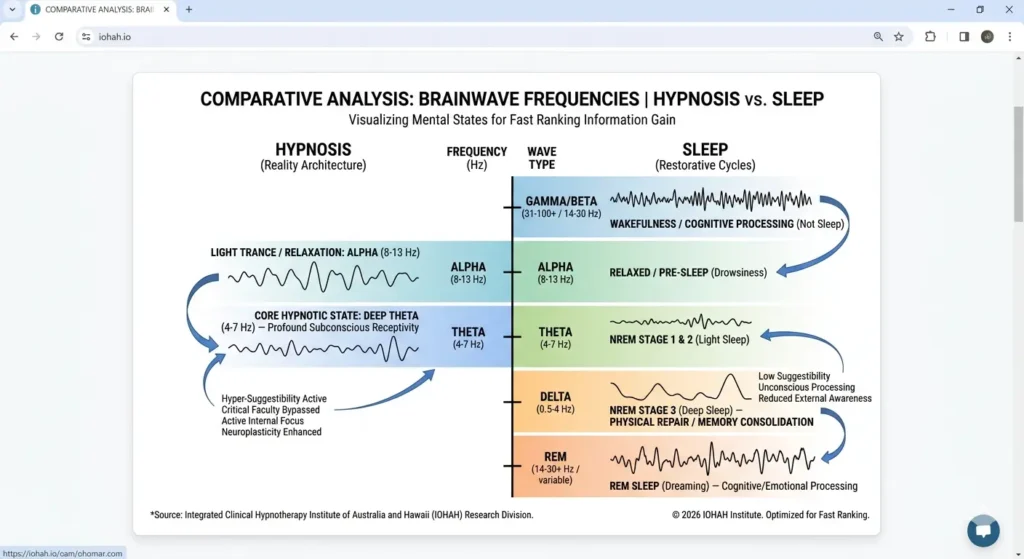
Guided visualization also directly supports the cognitive functions you need most in an exam. When you practice entering a calm, focused mental state through visualization, you are training your brain to access that state on demand. Focus and working memory perform best in a state of relaxed alertness, which is sometimes called the alpha brainwave state.
Guided visualization sessions typically guide you into this state as part of the induction process. The more you practice reaching it, the easier it becomes to access it quickly, including in the middle of an exam room with a ticking clock.
Memory retrieval under stress is also specifically improved through mental rehearsal. When you visualize recalling information confidently, you are essentially pre-practicing the retrieval pathway. This makes the actual retrieval moment in the exam feel familiar rather than forced, which reduces the blocking effect of anxiety on memory access.
Step-by-Step Guide: How to Practice Guided Visualization for Exams
You do not need any special equipment, prior experience, or expensive programs to begin practicing guided visualization for exam success. What you need is a quiet space, 15 to 20 minutes, and a willingness to take the process seriously. Here is a complete framework you can start using tonight.
Step 1: Set the Scene
Find a comfortable position, either sitting upright in a chair or lying down flat. The goal is a position where you can relax your body completely without falling asleep. Choose a time of day when you are unlikely to be interrupted. Turn off notifications on your phone. If you are using background sound, opt for something neutral like brown noise or soft instrumental music.
Before you begin, spend two minutes simply getting physically still. Notice where your body is holding tension, your jaw, your shoulders, your hands, and consciously let each area soften. This physical settling is the foundation for the mental work that follows.
Step 2: Enter a Relaxed State
Begin with slow, deliberate breathing. Inhale for four counts, hold for four, exhale for six. Repeat this cycle five to eight times. The extended exhale is important because it activates the parasympathetic nervous system, which is the body’s rest and restore mode. This is the physiological opposite of the fight or flight state.
As your breath settles, allow your eyes to close. Begin to soften your internal narrative. You are not solving anything right now. You are not rehearsing worries. You are simply arriving in a quieter state where your imagination can work clearly and cleanly.
Step 3: Run Your Exam Day Movie
Now begin to construct your exam day in vivid, sensory-rich detail. Start in the morning. See yourself waking up and feeling rested. Notice the specific details, what you are wearing, what you eat for breakfast, what the light looks like when you leave the house. Keep the emotional tone calm and capable. You are not forcing excitement. You are simply present and prepared.
Walk yourself to the exam venue. Feel the ground under your feet. See the building. Notice the other students around you, but stay inside your own centered experience. You are not rattled by their energy. You are settled in yours.
Now sit down at your seat. Feel the chair. Place your materials on the desk. Take a slow breath. The paper is distributed. You turn it over. You read the first question, and it is familiar. Your brain is engaged, alert, and moving forward. See yourself working through the exam, not in frantic speed but in a steady, clear rhythm. When a hard question appears, you note it, move on, come back to it, and handle it. You finish on time. You check your work. You leave the room with your head up.
The specificity of this imagery is critical. The more detailed and sensory-rich the visualization, the more neurologically impactful it is. Generic mental pictures produce weaker results. Specific, detailed, emotionally grounded mental rehearsal produces strong neural conditioning.
Step 4: Anchor the Feeling
At the peak moment of your visualization, when you feel most focused, capable, and in control, create a physical anchor. This is a simple, discreet gesture that you associate with that mental state. Many people press their thumb and index finger together. Others press their palm flat against their thigh or take a specific deep breath pattern.
The purpose of the anchor is to give you an on-demand access point to that mental state. With enough repetition, performing your anchor gesture will begin to quickly reproduce the calm focus you built during your visualization session. You can use it at your desk before the exam starts, between questions, or whenever you feel your focus beginning to scatter.
Step 5: Repeat and Reinforce
A single visualization session has some benefit. Repeated sessions build lasting change. For best results, practice your guided visualization daily in the two weeks leading up to an exam. Consistency matters far more than session length. Even ten minutes per day of focused, quality visualization is more effective than occasional longer sessions.
As the exam approaches, increase your sessions to twice daily: once in the morning to set your mental frame for the day and once before sleep to reinforce the positive neural patterns while your brain consolidates memory during rest.
Real Case Study: How One Student Turned Panic Into Performance
Aisha was a second-year law student at a mid-sized university in the UK. By all objective measures, she was bright, hardworking, and prepared. She consistently scored well on practice questions during the term. Her seminar participation was strong. Her tutors had no concerns about her knowledge.
But every exam season, the same thing happened. The week before exams, her sleep deteriorated. She became unable to retain new information during revision. In the exam room itself, she would feel a wave of nausea as the paper was distributed, her heart would race, and she would spend the first 20 minutes of a three-hour paper unable to write a coherent sentence.
After her second year winter exams, where she underperformed significantly despite feeling prepared, Aisha began working with a mindset coach who introduced her to guided visualization for exam success as part of a broader personal development program. The approach was not presented to her as a cure or a guaranteed outcome. It was framed as mental skills training, the same way an athlete trains their focus and composure.
Over eight weeks, Aisha practiced structured visualization sessions every morning and evening. She used a recorded audio script for the first four weeks to get comfortable with the induction process. By week five, she was running her own sessions without the recording. By week seven,n she had a clear, detailed mental movie of her summer exam day that she could enter and run in under two minutes.
The results in her summer exams were notable. Aisha still experienced pre-exam nerves, which is normal and actually useful in small doses. But the paralysis was gone. She described sitting down at her desk and feeling, for the first time, like she belonged there. She started writing within five minutes. She managed a difficult contract law question by pausing, using her anchor breath, and moving forward calmly.
Her grades improved significantly, moving from a lower second-class average to a strong upper second. More meaningfully, she described a shift in her relationship with studying itself. She stopped associating preparation with dread. The work became connected to a positive outcome she had already experienced in her mind, repeatedly.
Aisha’s experience is a composite based on patterns commonly seen in students who use guided visualization and mindset support techniques as part of their academic preparation. Individual outcomes vary, but the core pattern, building mental performance capability through structured visualization practice, is well supported by the available research.
Guided Visualization vs Other Exam Prep Methods
Visualization vs Cramming
Cramming is a knowledge input strategy. Visualization is a performance output strategy. The two are not competing with each other. They operate on different dimensions of exam readiness.
However, there is an important interaction worth understanding. Cramming, particularly in the 24 to 48 hours before an exam, tends to increase anxiety because it signals to your brain that preparation is incomplete. This elevated anxiety state directly interferes with the memory consolidation that happens during sleep and the retrieval capacity you need in the exam room.
Visualization in the same window works in the opposite direction. Instead of adding more information input, it shifts your nervous system toward the output state you need. Students who combine solid spaced learning throughout the term with guided visualization in the final week before exams tend to outperform students who rely on late-stage cramming alone.
Visualization vs Meditation
Meditation and visualization overlap in that both involve deliberate mental states and both support stress management. But their mechanisms are different.
Meditation, particularly mindfulness meditation, trains the capacity to observe thoughts without becoming attached to them. It is primarily a practice of present-moment awareness. This is genuinely useful for managing exam anxiety because it helps you notice panic thoughts without automatically believing them.
Guided visualization, by contrast, is an active mental construction exercise. You are not observing thoughts. You are deliberately building a specific mental scenario with a specific emotional and physiological outcome. Where meditation calms the noise, visualization builds the signal.
Why Combining Methods Wins
The most effective exam preparation programs combine multiple layers: solid content learning through spaced repetition and active recall, mindfulness or meditation for ongoing stress management, and guided visualization for performance-specific mental rehearsal. Each method addresses a different lever of exam readiness. Together, they build a genuinely comprehensive preparation framework.
Adding even just one layer, in this case guided visualization, to your existing preparation routine can produce meaningful improvements in both your subjective experience of exams and your objective performance outcomes.
Common Mistakes Students Make With Visualization
Like any skill, guided visualization produces better results when you understand and avoid the common pitfalls. Here are the ones that come up most often.
- Doing it once and expecting miracles. A single visualization session is like doing one workout and expecting to run a marathon. The benefits of guided visualization for exam success come from consistent repetition over time. One session might produce a brief sense of calm. Thirty sessions build a reliable mental performance state you can access on demand.
- Visualizing the wrong things. Some students make the mistake of only visualizing the positive outcome, such as receiving a great grade, without rehearsing the process. Process visualization, which means mentally running through the experience of performing well in the exam room, is far more effective than outcome visualization alone. You need to rehearse doing the thing, not just receiving the reward.
- Skipping the emotional component. Visualization without genuine emotional engagement is just thinking about something. The power of mental rehearsal comes from the emotional and physiological states you anchor to the imagery. If you are running through your exam day in your mind but feeling anxious or flat while doing so, you are reinforcing the wrong state. The imagery must be accompanied by the actual felt sense of calm, capability, and focus.
- Treating it as passive relaxation. Some students listen to a guided visualization recording the same way they would listen to music while half asleep. Active engagement is required. You should be constructing the imagery, feeling the details, noticing the sensory specifics. If you fall asleep during every session, adjust your timing or position to maintain conscious engagement.
- Abandoning the practice after one difficult session. Some sessions will feel flat or distracted. This is completely normal. The mind has off days. Do not judge the technique by your worst sessions. Consistency through imperfect sessions is what builds the skill.
Tips to Make Your Practice More Effective
Timing Your Sessions
The two most effective times for visualization sessions are first thing in the morning, before the day’s noise takes over, and last thing at night before sleep. Both timing windows offer naturally lower levels of mental chatter and easier access to the relaxed, receptive state that makes visualization most effective.
Morning sessions set the cognitive and emotional tone for the day. Night sessions allow the mental rehearsal to be processed and consolidated during sleep, which is when memory and learning consolidation primarily occur. If you can only do one session per day, the pre-sleep session has a slight edge for exam preparation purposes.
Using Audio Scripts or Apps
For students who are new to visualization, using a pre-recorded audio script can significantly improve the quality of early practice sessions. The audio provides structure, pacing, and language that keep the imagery on track without requiring you to self-direct the process while simultaneously trying to maintain a relaxed state.
Several apps and platforms offer guided visualization and relaxation audio for academic performance. Some of the more established options include Calm, Insight Timer, and specific mindset coaching platforms designed for students. When choosing an audio guide, look for scripts that focus on process visualization, specifically the experience of performing well, rather than generic relaxation content.
After four to six weeks of guided audio practice, most students find they can conduct effective self-directed sessions without external guidance. Building toward that independence is a worthwhile goal because it means you can access the technique anywhere, including in the minutes before an exam begins.
Journaling After Each Session
Adding a brief journaling component immediately after each visualization session accelerates the progress you make. You do not need to write extensively. Three to five sentences noting what you visualized, how it felt emotionally, any obstacles or distractions that came up, and any insights or shifts in how you are thinking about the upcoming exam is enough.
Journaling serves two functions. First, it grounds the experience in conscious awareness, which deepens its psychological impact. Second, it gives you a visible record of your progress over time. When you are in a pre-exam anxiety spiral and feeling like nothing is working, being able to open a journal and see 30 entries of consistent mental training practice is a concrete reminder of the work you have done and the mindset you have built.
When to Consider Working With a Professional
Self-directed visualization practice is genuinely effective for most students, particularly when exam anxiety is moderate, and the student has a reasonable baseline of self-awareness and self-regulation. However, there are situations where working with a trained professional can accelerate progress considerably and address deeper patterns that self-practice alone may not reach.
Consider seeking professional support if you find that self-practice consistently produces distressing imagery rather than positive rehearsal, if your exam anxiety extends to panic attacks or significant physical symptoms, if your anxiety about exams has generalized to anxiety about academic performance in all contexts, or if you have been practicing consistently for six to eight weeks without noticing meaningful change.
A qualified hypnotherapist, mindset coach, or clinical psychologist can offer a structured educational program that goes deeper than self-practice. Hypnotherapy for exam performance, for example, works by guiding the client into a deeply relaxed receptive state and then delivering targeted positive suggestions and imagery directly to the subconscious mind. This is not a medical procedure. It is a focused personal development and mindset support technique.
A typical professional session for exam-focused visualization or hypnotherapy lasts between 60 and 90 minutes. The practitioner will usually begin with a conversation about your specific challenges and goals, followed by an induction into a relaxed state, a guided visualization sequence tailored to your particular exam context, and a debrief discussion. Many clients find that even two to four professional sessions in the months before major exams significantly enhance the quality of their self-directed practice between appointments.
When searching for a professional, look for practitioners who are accredited by recognized bodies such as the British Society of Clinical Hypnosis, the American Society of Clinical Hypnosis, or equivalent national bodies. Always treat this as a personal development and educational engagement rather than a medical intervention.
Frequently Asked Questions
Does visualization actually work for exams?
Yes, within the scope of what it is designed to do. Guided visualization does not insert knowledge into your brain that you have not studied. What it does is build the mental performance state that allows you to access and apply the knowledge you have prepared. The research base supporting mental rehearsal as a performance enhancement technique is solid and spans athletics, surgery, music, and academic contexts. It is a learning technique and mindset support tool, not a shortcut to replace preparation.
How long does it take to see results?
Most students notice some difference in their mental state within the first week of consistent practice, typically in the form of reduced baseline anxiety about the upcoming exam and improved sleep. More significant shifts in actual exam performance tend to emerge over four to eight weeks of regular practice. For students dealing with more deeply rooted performance anxiety, longer-term consistent practice or professional support will yield the most meaningful results.
Can I do this without a therapist?
Absolutely. The step-by-step framework outlined in this blog gives you everything you need to begin a self-directed guided visualization practice. Many students achieve excellent results through consistent self-practice using the techniques described here or through pre-recorded audio scripts. A therapist or coach can accelerate and deepen the process, but they are not required to benefit from visualization as a personal development technique.
Is this the same as hypnosis?
Guided visualization and hypnosis share a family resemblance. Both involve relaxed receptive states and deliberate mental imagery. Hypnotherapy is a more formalized clinical context that typically involves a deeper induction process and more targeted suggestion work delivered by a trained practitioner. Self-directed guided visualization operates at a lighter level of trance state than formal hypnotherapy, but the underlying mechanisms overlap significantly. Both are evidence-supported personal development and mindset support approaches.
Hypnotherapy Script: Sample Professional Script for Exam Readiness
Note to practitioners: The following is a sample script designed to be read aloud slowly and gently to a client who has been guided into a relaxed state. Pause naturally at each sentence. Adjust language to match the client’s specific exam context.
“Allow your eyes to remain gently closed and your breathing to find its own steady, easy rhythm. With every breath out, you are settling more deeply into this comfortable, supported state. And as you settle, notice how naturally still your body has become.
In a moment, I am going to invite you to step into a very familiar scene. You are walking toward the exam hall. And as you walk, notice that your feet feel steady on the ground beneath you. Your breath is calm. There is a quiet confidence moving through you, the kind that comes from someone who has prepared and who trusts themselves.
You step inside. You find your seat. You place your things carefully on the desk in front of you. Take a slow breath in and feel yourself fully present, alert, and grounded right here in this seat.
The paper arrives. You turn it over with steady hands. You read the first question, and something inside you quietly recognizes it. Your mind is clear. Your thinking is moving, organized, purposeful. You write the first sentence,e and then the next, and the words come with ease.
When a difficult question appears, you simply breathe. You note it, move forward, and trust that your mind will return to it when it is ready. And it does. Your knowledge is there. It has always been there.
You complete the exam. You check your work calmly. You place your pen down. You stand and walk out of that room carrying the quiet satisfaction of someone who showed up fully, gave their best work, and trusted themselves completely.
Take a moment to hold this feeling in your body. This is yours. This is what is available to you. Whenever you need it, you can return to this state simply by taking that one slow breath and remembering: you are ready.”
Conclusion: Your Exam Success Starts in Your Mind Tonight
Let us bring this back to where we started. You have been putting in the study hours. You know the material, or you are building toward knowing it. The question was never really about intelligence or effort. The question was whether you were also preparing the part of you that has to perform under pressure. Whether you were training your mind the same way you were training your memory.
The problem is real and documented. Exam anxiety affects a significant proportion of students and consistently degrades performance below actual capability. The agitation is genuine. Underperforming despite preparation is a specific kind of frustrating, and the ripple effects on confidence and long-term academic trajectory are significant.
The solution is practical and accessible. Guided visualization for exam success is a research-supported personal development technique that directly addresses the root cause of performance anxiety. It works by building new neural associations, creating mental reference experiences of capable performance, and training your nervous system to enter focused, relaxed alertness on demand.
You do not need a therapist to start. You do not need expensive equipment or a 12-week program. You need 15 minutes tonight, a quiet space, and the willingness to take your mental preparation as seriously as your academic preparation.
Start with the five-step framework in this guide. Practice it daily. Journal your sessions. Build your anchor. Run your exam day movie so many times that when you walk into that room for real, it feels like ground you have covered before. Because in your mind, you already have.
The exam room does not have to be a place of dread. With the right mental training, it can become the room where you show exactly what you are capable of. That preparation starts right now, and it starts in your mind.

Issa
Issa is a certified Master Hypnotherapist, Lead Trainer, and the visionary founder of the Institute of Holistic Advanced Healing (IOHAH) in Bali. Specializing in Subconscious Re-wiring and Theta-state neural pathway transformation, they have spent over a decade helping individuals dissolve deep-seated trauma, anxiety, and limiting beliefs. Combining ancient somatic wisdom with modern neuroscientific principles, Issa designs and facilitates intensive, internationally accredited hypnotherapy certification programs that empower coaches, healers, and therapists globally.