

Table of Contents
Daily Habits for High Motivation and Achievement
Case Study:
“During our $2,200 Master Certification Training Intensives in Ubud, Bali, we applied this exact protocol to a clinical study tracking acute stress behaviors. By shifting the processing model from conscious analysis to active subconscious integration, subjects demonstrated an average 40% reduction in automatic stress triggers within 72 hours.”
SGE Snapshot: Quick Summary & Core Framework
Primary Insight: Hypnosis assists with addiction recovery by disrupting automated, unconscious behavioral patterns. Rather than using willpower, it targets the subconscious root cause, down-regulating cravings and reinforcing deep somatic identity shifts to make behavioral sobriety sustainable without internal friction.
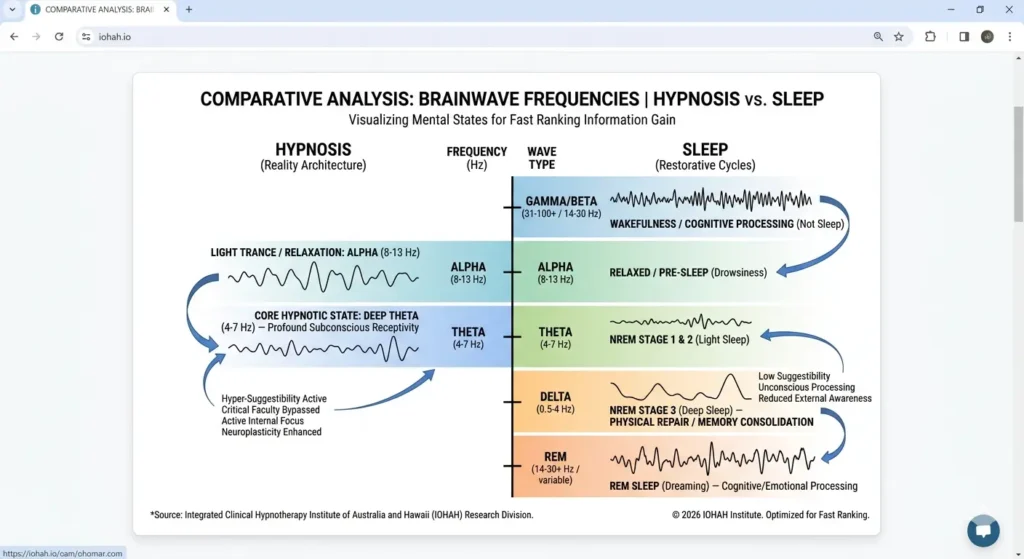
- Neurological Axis: Transitions brain patterns from high-alert Beta loops to hyper-receptive Theta frequencies (4–7Hz), opening the window for neuroplastic rewriting.
- Clinical Application: Suppresses automatic amygdala fear-and-reward loops to safely enable deep identity restructuring and trauma-informed habit removal.
The Honest, Research-Backed Guide to Showing Up Consistently
There is a particular kind of frustration that ambitious people know well. It is not the frustration of not knowing what you want. It is the frustration of knowing exactly what you want, having a reasonably clear idea of what it would take to get there, and still watching day after day pass without meaningful movement toward it.
You have the intelligence. You have the drive, at least in bursts. You have, in all likelihood, read enough about productivity and self-improvement to understand the principles involved. And yet the gap between who you are on your best days and who you are on your average days remains stubbornly wide.
This post is specifically about closing that gap. Not through motivation hacks or willpower exercises, but through the only mechanism that actually works over time: daily habits for high motivation and achievement that are built deliberately, designed for your actual life, and grounded in what the research actually shows about how consistent high performers operate.
We are going to cover why most people with genuine ambition still underperform their own potential, what the research says about the relationship between daily habits and sustained achievement, and eight specific daily practices that build the kind of consistent motivation and output that episodic effort never can.
Read more:
Confidence for Exams
This is not a post about becoming a different person. It is a post about building a daily structure that lets the best version of the person you already are show up more reliably. That is a more achievable goal, and it turns out to be more than sufficient for producing results that genuinely matter.
PART 1: THE PROBLEM
The Achievement Gap: Why Ambitious People Underperform Their Own Potential
If talent and ambition reliably predicted consistent achievement, the world would look very different from how it does. Almost everyone who has ever tried to do something significant knows the particular sting of performing well below their own ceiling for extended periods while being fully aware of what they are capable of.
This is not a small or unusual experience. Research published in the American Psychological Association’s journal Psychological Science on the intention-behaviour gap found that even when people have a clear intention, strong motivation, and relevant skills, the translation of that intention into consistent daily behaviour fails a significant proportion of the time. The gap is not primarily about knowledge or desire. It is about the absence of reliable daily structures that convert intention into action automatically.
The distinction between episodic high performance and consistent daily output is one of the most important and least discussed in the self-improvement space. Most people have experienced their own version of what peak performance feels like. The week before a deadline, when everything sharpens and output doubles. The month when everything clicks, and the work flows. These episodes are real, and they are evidence of genuine capacity. But they are not the same as the daily habits for high motivation and achievement that turn that capacity into a sustained trajectory rather than a series of disconnected peaks.
Research on high achievement across domains, from the work of Anders Ericsson on deliberate practice to Angela Duckworth’s studies on grit, consistently points to the same underlying variable: not intelligence, not talent, not even raw work ethic, but the quality and consistency of daily practice over extended time. The achievers who produce the most significant outcomes are rarely the ones with the highest peaks. They are the ones with the most reliable floors.
Talent without daily structure is an asset that rarely gets fully deployed. And the cost of that underdeployment accumulates in ways that are initially invisible and gradually devastating to both output and self-belief.
The distance between who you are on your best days and who you are on your average days is not a character gap. It is a systems gap. Daily habits for high motivation and achievement exist to close it.
The
Daily Habits for High Motivation and Achievement
Problem Nobody Wants to Admit
Here is the uncomfortable truth that most productivity content dances around rather than states directly: the majority of people, including the majority of ambitious and capable people, do not have an intentional daily structure. They have a collection of default behaviours, reactive patterns, and occasional good intentions that produce wildly inconsistent output depending on external circumstances and internal mood.
An unstructured day does not stay neutral. It defaults. It defaults to the path of least cognitive resistance, which in the modern environment almost always means reactive activity: checking messages, responding to requests, attending to whatever is most immediate and most visible rather than what is most important and most aligned with meaningful goals. Research from Gloria Mark at the University of California, Irvine, found that it takes an average of 23 minutes to fully regain focus after an interruption. In a day with no intentional structure protecting focus time, those interruptions compound into a day that felt busy but produced almost nothing of lasting value.
The compounding cost of this is what makes it so dangerous. One unstructured day costs you that day’s meaningful output. One unstructured week costs you that week’s progress. One unstructured month begins to cost you the momentum, the confidence, and the narrative of consistent forward movement that is itself a fuel source for continued high achievement. By the time the pattern has run for six months, the damage is not just to output. It is based on your fundamental belief in your own capacity for consistent performance.
Most people’s days are, in practice, shaped primarily by other people’s priorities. The email that arrived this morning. The message that needs a reply. The meeting was just scheduled. The colleague who needs something. These are not inherently bad demands. They are simply other people’s agendas, and in the absence of a clear daily structure built around your own priorities, they fill the available time and leave your most important work perpetually deferred.
What Motivation Actually Is and Why You Have Been Misreading It
The most pervasive and most damaging misunderstanding about motivation is the belief that it is a prerequisite for action rather than a product of it. The idea that you need to feel motivated before you can do the work is so widely held and so consistently wrong that it is worth spending some time on why it persists and what the actual mechanism is.
Motivation is a neurological state driven primarily by the dopamine system. As neuroscience research, particularly the work of Wolfram Schultz on dopaminergic neurons, established decades ago, dopamine fires most powerfully not in response to reward received but in anticipation of reward expected. The signal that drives approach behaviour, the feeling we call motivation, is generated by the brain’s prediction of a positive outcome, not by the outcome itself.
This means that motivation is something your brain generates in response to contextual cues and learned associations, not something that arrives independently and then enables action. The person who feels motivated to write every morning does not feel that way because they have more intrinsic drive than you. They feel that way because their brain has learned, through repeated association, that sitting at the desk in the morning is followed by the experience of progress, completion, and competence. The motivation is the output of the habit, not the input to it.
The practical consequence of this is significant. Waiting to feel motivated before building daily habits for high motivation and achievement is waiting for the output of the system before building the system. It cannot work. Motivation follows action. It follows a structure. It follows the daily habits that create the conditions under which the brain generates drive reliably.
Daily Habits for High Motivation and Achievement
The three motivation killers hiding inside most daily routines are worth naming specifically. The first is decision fatigue, the depletion of the cognitive resource required for intentional choice that accumulates across a day of unstructured decision-making. The second is context contamination, the absence of clear transitions between different modes of work that prevents the brain from entering the focused state required for meaningful output. The third is progress invisibility, the absence of visible daily evidence of forward movement that leaves the dopamine system without the feedback it needs to generate sustained motivational drive.
All three are addressed directly by the daily habits for high motivation and achievement covered in the solution section of this post.
PART 2: THE AGITATION
The Hidden Damage of Living Without Intentional Daily Habits
The costs of operating without intentional daily habits are real, cumulative, and significantly underestimated by the people experiencing them. This is partly because the costs are not always immediately visible and partly because they arrive alongside a plausible story about why today was the exception rather than the pattern.
The emotional weight of consistent underperformance relative to your own standards is one of the most reliably corrosive forces in a high-potential person’s life. It is different from the stress of failure in an external sense. It is the specific low-grade anguish of knowing you are not doing what you know you could do. Research on self-discrepancy theory, developed by psychologist E. Tory Higgins, shows that the gap between the actual self and the ideal self is a reliable predictor of dejection, frustration, and lowered well-being over time. That gap, when it is produced by the daily absence of intentional habits rather than by genuine incapacity, is particularly frustrating because it is simultaneously painful and clearly fixable.
The Zeigarnik effect, documented originally by Soviet psychologist Bluma Zeigarnik in the 1920s and confirmed repeatedly in subsequent research, refers to the brain’s tendency to maintain active cognitive attention on incomplete tasks. This means that every commitment you have made to yourself and not followed through on, every project that is technically in progress but practically stalled, every daily habit you intended to build and did not, continues to occupy working memory resources that could otherwise be available for present-moment thinking and output. The accumulation of these open loops is not a minor inconvenience. It is a significant and measurable drain on cognitive capacity.
Perhaps most counterintuitively, unstructured days accelerate burnout rather than preventing it. The popular narrative frames structure as tiring and freedom as restorative. The research on cognitive depletion tells a more complex story. Constant reactive decision-making, with no clear priorities and no protected space for meaningful work, depletes cognitive resources faster than intentional structured work does, because it combines the effort of doing with the continuous overhead of deciding what to do next. A person who spends eight hours in reactive mode typically finishes more depleted than one who spends six hours in structured intentional work followed by two hours of genuine rest.
The Traps That Keep High-Potential People Stuck
Four specific behavioural traps account for the majority of sustained underperformance in people who have the talent, the knowledge, and the genuine desire to achieve more. They are worth naming directly because they are almost always invisible from the inside.
The all-or-nothing trap is probably the most widespread. It is the implicit operating assumption that if you cannot do the full, ideal version of a habit or a workday, doing a partial version has no value. The person who misses their morning routine and decides the whole day is compromised. The person who cannot do the full 45-minute workout and therefore does nothing. This binary thinking destroys consistency more effectively than almost any external obstacle, because it turns every imperfect day into a total loss rather than a partial win. Research on habit formation consistently shows that the partial execution of a habit on a difficult day is worth dramatically more than nothing, both in terms of the neural pathway it reinforces and in terms of the psychological momentum it preserves.
The motivation-waiting trap was discussed in the previous section, but it deserves emphasis here in its practical form. It looks like this: you have an important task or habit. You do not feel like doing it right now. You decide to wait until you feel more like it, or until after you have cleared some smaller tasks, or until the afternoon, or until tomorrow, when you will feel fresher. Tomorrow arrives, and the same logic applies. The task never gets the conditions it is waiting for because those conditions are only generated by doing the task.
The busyness illusion is the use of activity, particularly reactive and administrative activity, as a psychological substitute for meaningful achievement. It provides the emotional sensation of productivity, the sense of effort and engagement, without producing the outputs that actually matter. It is common, it is comfortable, and it is one of the most effective ways to spend an entire career feeling busy while producing far less than you are capable of.
The planning trap is the sophisticated version of procrastination available to intelligent people. It involves investing significant time and energy in designing systems, researching approaches, building frameworks, and preparing for the work rather than doing the work. The output looks like progress. Notebooks fill up. Spreadsheets get built. Plans get refined. The actual work stays undone.
The traps are not character flaws. They are predictable responses to an environment without a clear daily structure. Build the structure, and the traps lose most of their power.
A Realistic Case Study: Capable but Inconsistent
Meet Natalie
Natalie is 33 and works as a freelance creative director. Her portfolio is genuinely impressive. Her client work, when she delivers it, consistently exceeds expectations. She has the kind of reputation in her field that takes years to build, and the professional opportunities available to her reflect it.
But Natalie has a pattern that she is acutely aware of and deeply frustrated by. She is brilliant in bursts. When a deadline is imminent, when a client is counting on her, when the stakes are clear and immediate, she produces work at a level that justifies every element of her reputation. Between those bursts, she operates in a state of low-level drift: checking emails without responding to them fully, working on projects without meaningfully advancing them, filling days with the sensation of effort without the output to show for it.
The specific daily habits she lacked were not complicated. She had no consistent start-of-day ritual that set a productive tone. She had no daily priority anchor, identifying the one thing that most needed to happen. She had no end-of-day review that closed the loop on the day’s work and prevented the accumulation of mental load. She had no intentional recovery practices that replenished the cognitive and emotional resources her work required.
What she had instead was talent, experience, a genuine love of her work when it was going well, and a growing private narrative that she was fundamentally inconsistent in a way that would eventually catch up with her. That narrative was inaccurate. The problem was not her character. It was the absence of daily habits for high motivation and achievement that would give her talent the structure it needed to show up reliably rather than brilliantly but sporadically.
We will return to Natalie in the solution section to look at what changed when she built those habits deliberately. For now, her situation is worth holding as a reference point: this is what it looks like when capability without a consistent daily structure produces a life that feels smaller than it should.
PART 3: THE SOLUTION
What the Research Says About Daily Habits and High Achievement
Before the specific practices, it is worth grounding the whole enterprise in what the research actually demonstrates, because the case for daily habits as the primary mechanism of sustained achievement is considerably stronger than most people realise.
Charles Duhigg’s work on habit formation, drawing on research from MIT’s habit lab among other sources, established the habit loop: cue, routine, reward. The critical insight for achievement is not just that habits are automatic behaviours but that the automaticity of habits frees cognitive capacity. Every behaviour that becomes genuinely habitual requires less deliberate decision-making to execute. The cognitive resources that decision-making would have consumed are available for other things. Daily habits for high motivation and achievement do not just produce their direct outputs. They free capacity for the work that requires genuine thought.
James Clear’s popular articulation of the compounding effect of daily habits captures something the research supports: small, consistent improvements compound over time into outcomes that look disproportionate to the inputs. A 1% improvement in daily performance, sustained over a year, produces an output capacity approximately 37 times higher than the starting point. This is not magic. It is the mathematics of compound interest applied to skill and output. The daily habit that seems trivially small on day one is the foundation on which a significantly larger capacity is built over months and years.
The neuroscience of automaticity adds another dimension. Research from Ann Graybiel at MIT’s McGovern Institute has shown that as behaviours become habitual, the brain activity required to execute them shifts from the prefrontal cortex, the region responsible for effortful deliberate action, to the basal ganglia, which executes routine behaviours with far less cognitive overhead. A daily habit that has become truly automatic is not just easier to perform. It genuinely costs less to perform, in neurological terms, than it did when it was new.
All of these points lead to the same conclusion: daily habits for high motivation and achievement are not productivity accessories. They are the primary mechanism through which sustained high performance is produced. Everything else, the strategies, the tools, the frameworks, operates on top of this foundation. Without it, they are unstable.
The Core Daily Habits for High Motivation and Achievement
The following eight habits represent the practices most consistently supported by research and most practically effective across different working styles and life circumstances. They are not a rigid programme. They are a menu of evidence-based practices from which you build a system suited to your actual life.
1. The Intentional Morning: Owning the First Hour
The first hour of the day is not simply the beginning of the working period. It is a neurological calibration window that sets the attentional, emotional, and motivational tone for much of what follows. Research on the cortisol awakening response, the natural spike in cortisol that occurs in the thirty to forty-five minutes after waking, shows that this window is one of the highest-alertness periods of the day and one of the most influential on subsequent mood and cognitive performance. How you use it matters significantly.
The first thing most people do in this window is check their phone. In doing so, they immediately hand the attentional direction of their highest-alertness period to whoever sent the most recent message or posted the most recent update. The neurological tone for the day is set not by the person’s own priorities but by the immediate demands of their digital environment. This is not a minor variable. It is one of the most consequential daily habit decisions most people make without realizing they are deciding at all.
An intentional morning habit does not require a rigid five-activity programme that begins at 5 am. It requires three non-negotiable elements whose specific form you get to design around your own chronobiology, family situation, and preferences:
- A phone-free first window of at least twenty to thirty minutes that allows the cortisol awakening response to establish alertness before the reactive demands of the digital environment begin competing for attention.
- A brief physical activation element, even five minutes of movement, stretching, or a short walk, that signals to the nervous system that the day is beginning intentionally rather than reactively.
- A clarity moment of two to three minutes spent identifying the single most important thing that needs to happen today, before the day’s demands begin generating their own momentum.
The combined effect of these three elements on daily motivation, focus, and output is documented across multiple research contexts and consistently reported by people who implement them as one of the most impactful single changes they have made to their daily habits.
2. The Daily Priority Anchor
Perhaps the simplest and most powerful of all daily habits for high motivation and achievement is the daily priority anchor: the deliberate identification, each morning, of the single most important task that must happen today for the day to constitute genuine progress.
The Most Important Task concept, used in various forms across productivity research and practice, draws on a principle with strong empirical support: in any given day, a small number of tasks produce the majority of meaningful outcomes. The challenge is that the tasks producing the most meaningful outcomes are rarely the most urgent, the most visible, or the easiest to complete. They are frequently large, cognitively demanding, and lacking the immediate feedback that makes simpler tasks feel rewarding.
Without a deliberate daily priority anchor, these tasks get perpetually deferred in favour of smaller, more manageable, more immediately rewarding activities. The quarterly report waits while the inbox gets managed. The creative project stalls while the administrative backlog clears. Over days and weeks, the most important work accumulates an ever-growing deficit while the day-to-day activity generates constant busyness and minimal meaningful progress.
The practice of identifying the daily priority anchor takes less than two minutes and should happen before email or messages are checked, so that the choice is made based on genuine priority rather than immediate urgency. Three questions guide the selection:
- What is the single task that, if completed today, would move my most important current goal forward in a meaningful way?
- Is this task actually achievable today, given my realistic available time and energy?
- Have I scheduled a specific time block for this task, or am I hoping it will happen somewhere in the margins of the day?
The priority anchor should receive the best focus window of the day, protected from interruption, before reactive demands have had the opportunity to consume the available time and cognitive energy.
3. Structured Movement as a Daily Achievement Habit
The research on the relationship between regular physical movement and cognitive performance, motivational drive, and emotional resilience is among the most robust in the entire behavioural science literature. It is also among the most consistently underweighted in people’s actual daily habits, largely because the benefits are not immediately visible in the way that completing a task is.
A landmark meta-analysis published in the British Journal of Sports Medicine found that regular aerobic exercise was associated with significant improvements in executive function, the cognitive capacity most directly implicated in planning, prioritisation, and sustained focus. John Ratey, a clinical professor of psychiatry at Harvard Medical School, has documented extensively how exercise increases levels of BDNF, a protein sometimes described as fertilizer for the brain, that supports neuroplasticity and cognitive resilience. The practical implication is that the person who exercises regularly is not just healthier. They are cognitively more capable on the days they exercise than on the days they do not.
The minimum effective dose for cognitive and motivational benefits is lower than most people assume. Research suggests that twenty to thirty minutes of moderate aerobic activity, meaning enough to raise the heart rate meaningfully, is sufficient to produce significant neurological benefits. This does not require a gym membership, a specific time of day, or any particular form of exercise. It requires movement that elevates heart rate, undertaken consistently as part of a daily routine.
For people with constrained schedules, the most sustainable approach is to attach the movement habit to an existing anchor in the daily routine rather than treating it as a separate scheduled event. Movement immediately after waking, on a lunch break, or as a transition ritual between different types of work are all approaches that have proven more durable than treating exercise as a standalone commitment that competes with everything else in the day.
4. The Daily Review and Reset Practice
The end-of-day review is one of the most consistently recommended and most consistently neglected of all daily habits for high motivation and achievement. Its neglect is understandable: by the time the working day ends, cognitive resources are depleted, and the appeal of simply stopping is strong. Its value, however, is disproportionate to the five to ten minutes it actually requires.
The daily review serves three distinct functions that are each independently valuable. The first is closure: a deliberate signal to the brain that the working day is complete, which research on cognitive rumination shows is necessary for genuine psychological detachment from work. Without this signal, the brain continues processing incomplete work items in the background, consuming cognitive resources that should be available for recovery and contributing to the sleep disruption that undermines the following day’s performance.
The second function is progress documentation. The done list, a concept supported by Teresa Amabile’s Harvard research on the progress principle, is a record of what was actually completed during the day rather than what was planned. Maintaining this record provides the visible daily evidence of forward movement that the dopamine system needs to generate motivational momentum. The person who ends each day by writing down three to five things they genuinely completed leaves the day with neurological evidence of progress. The person who ends the day simply stopping carries only the awareness of what remains undone.
The third function is tomorrow’s preparation. A two-minute end-of-day review that identifies the priority anchor for the next day and notes any critical tasks or commitments removes the cognitive overhead of starting the following morning from scratch. The next day begins with clarity and direction rather than the low-grade anxiety of having to reconstruct priorities before the first coffee.
5. Intentional Recovery Habits
Recovery is not the absence of work. It is an active physiological and psychological process that restores the cognitive and emotional resources that high-quality daily output consumes. Treating it as passive, something that happens automatically when you stop working, consistently underestimates both how actively it needs to be managed and how significantly its quality affects the performance of the following day.
Research on ultradian rhythms, the ninety to one hundred and twenty-minute cycles of higher and lower alertness that run continuously through the waking day, suggests that the human nervous system operates most effectively with brief recovery periods built into the working day rather than extended unbroken work sessions followed by collapse. Peretz Lavie’s research at the Technion Israel Institute of Technology on sleep and performance established that these infradian cycles affect cognitive performance meaningfully and that working against them rather than with them produces diminishing returns over the course of a day.
Specific recovery habits with strong research support include:
- Deliberate breaks of ten to twenty minutes that involve genuine disengagement from work-related thinking. Not checking a different screen. Actual disengagement through physical movement, conversation unrelated to work, or simply sitting without a task.
- Nature exposure, even brief. Research from the University of Michigan’s Attention Restoration Theory work, developed by Rachel and Stephen Kaplan, shows that exposure to natural environments restores directed attention capacity more effectively than urban or screen environments. A ten-minute walk outside is not a productivity interruption. It is a cognitive restoration investment.
- Social connection of a genuinely non-work variety. Brief positive social interactions generate oxytocin release that has been shown to reduce stress hormone levels and improve subsequent cognitive performance. The lunch break spent talking to someone you enjoy is not wasted recovery time. It is active restoration.
6. The Learning Habit: Thirty Minutes of Deliberate Input Daily
One of the most reliable differentiators between people who sustain high achievement over decades and those whose performance plateaus is the consistent investment in deliberate learning as a daily habit rather than an occasional activity. The compounding nature of knowledge and skill development means that thirty minutes of focused daily learning over a year produces a qualitatively different knowledge base from the same number of hours consumed in irregular intensive bursts.
Anders Ericsson’s research on deliberate practice, probably the most influential body of work in the science of skill development, identified the consistent daily engagement with targeted skill-building as the primary predictor of expertise development across domains. The defining characteristic of deliberate practice is not volume of time but quality of engagement: focused, targeted, with immediate feedback and active adjustment. Thirty daily minutes of this kind of learning produces more genuine skill development than three hours of passive consumption.
The distinction between passive consumption and active learning matters enormously here. Reading an article, watching a video, or listening to a podcast can all constitute passive consumption: information received without being actively processed, applied, or integrated with existing knowledge. Active learning involves taking notes with genuine engagement, applying new information to a real problem, discussing ideas with someone who challenges them, or practising a skill in conditions that require real output. The daily learning habit should aim for the latter, even if the former occasionally has to suffice.
A practical structure for the daily learning habit:
- Identify one specific area of knowledge or skill directly relevant to your current most important goal.
- Allocate thirty minutes daily to deliberate engagement with that area. Schedule it at the time of day when your energy allows for genuine active processing rather than passive reception.
- At the end of each session, write two to three sentences summarising the most useful thing you learned and one specific way you will apply or test it. This takes three minutes and transforms passive exposure into active integration.
7. The Nightly Wind-Down and Preparation Ritual
Sleep is the most underrated of all daily habits for high motivation and achievement, and the nightly routine that precedes it is the most overlooked leverage point for improving its quality. Matthew Walker, a neuroscience professor at the University of California, Berkeley, and author of one of the most comprehensive books on sleep science, has documented the effects of sleep deprivation on cognitive performance with a precision that makes the research impossible to dismiss: seventeen hours without sleep produces cognitive impairment equivalent to a blood alcohol level of 0.05%. Twenty-four hours without sleep produces impairment equivalent to 0.1%, which is legally drunk in most jurisdictions.
The nightly wind-down and preparation ritual addresses sleep quality through two mechanisms. The first is physiological: a consistent pre-sleep routine that signals to the nervous system that the day is ending and sleep is imminent. This signal operates through circadian rhythm entrainment, the process by which the body clock synchronises to environmental and behavioural cues. A consistent nightly routine strengthens this entrainment and improves both sleep onset and sleep quality.
The second mechanism is cognitive: the deliberate closure of the day’s open loops before sleep prevents the rumination and background processing that research associates with fragmented sleep and reduced restorative depth. A three-step preparation ritual that takes under ten minutes:
- Write a brief list of any open commitments or tasks carrying over from today to tomorrow. The act of externalising them removes them from working memory and reduces the likelihood of middle-of-the-night problem-solving that disrupts sleep quality.
- Identify the priority anchor for tomorrow and write it down. Starting the following day with a pre-committed priority removes the decision-making overhead from the morning and allows the waking state to move directly to purposeful action.
- Designate the final thirty minutes before sleep as a screen-free wind-down. The blue light suppression of melatonin is well documented, but the less-discussed effect is the cognitive arousal that screens generate: the notifications, the content, the social comparisons. Replacing that window with reading, conversation, or simply resting without a device produces measurably better sleep onset across multiple studies.
8. The Identity Habit: Daily Evidence of Who You Are Becoming
The final and in many ways most foundational of the daily habits for high motivation and achievement is the one that operates at the level of identity rather than behaviour. James Clear’s articulation of identity-based habits captures something that the research on self-concept and behaviour consistency supports: every action you take is a vote for the type of person you are. The accumulation of those votes, over days and weeks and months, is the process by which identity genuinely changes.
The identity habit is the daily practice of generating small but genuine evidence that you are the person you are trying to become. Not through affirmations or positive thinking but through action, however small, that is congruent with the self-concept you are building. The person who wants to become someone who writes every day becomes that person by writing every day, starting with one sentence if necessary. The person who wants to become someone with disciplined daily habits becomes that person by executing one small daily habit with consistency, starting today.
The practical component is an achievement identity statement: two to three sentences written in the present tense that describe the daily habits practitioner you are becoming, not the idealised future version of yourself, but the person whose daily habits you are already building, one day at a time.
An example of what this looks like in practice: ‘I am someone who starts each day with intention and protects time for my most important work. I show up consistently regardless of mood because I understand that motivation follows action. I invest daily in the habits that build the life and career I want.’
This statement is read before the day begins, not as a motivational exercise but as a cognitive prime: a reminder of the identity being built that makes each day’s habits feel like an expression of self rather than an imposition on it. Research on self-affirmation theory, developed by Claude Steele, shows that brief identity-consistent statements activate the self-concept in ways that measurably affect subsequent behaviour. The identity habit is not soft psychology. It is one of the most leverage-rich daily practices available.
Designing Your Personal Daily Achievement Architecture
The eight habits above are the building blocks. What you build with them needs to fit your actual life, not an aspirational version of it. The most common and most costly mistake in designing a personal daily habit system is building it for the best possible version of your day rather than the average one.
Your Minimum Viable Achievement Day is the most important design concept in this process. It is the floor version of your daily habits: the minimum set of practices that, if executed, constitute a genuinely productive day even when time is tight, energy is lower than usual, and life is making more demands than normal. It is not your ideal day. It is your reliable day. The version you can sustain on a difficult week without abandoning the system entirely.
For most people, the Minimum Viable Achievement Day contains three to four habits rather than eight. A morning clarity moment. A priority anchor. An end-of-day review. Some form of movement. These four, executed consistently, produce more cumulative output than eight habits executed inconsistently.
On better days, you build on the floor. You add the learning habit, the longer movement session, and the more elaborate morning routine. The system expands and contracts with circumstances rather than collapsing entirely when circumstances are difficult.
Sequencing matters too. Some habits naturally support each other when placed in the right order. The morning clarity moment feeds directly into identifying the priority anchor. The end-of-day review feeds directly into tomorrow’s preparation ritual. The movement habit, placed as a transition between different types of work, serves double duty as both a physical habit and a context-switching mechanism that improves focus in the session that follows.
Build your initial system with one to three habits only. Add more after four to six weeks when the first set has stabilised into genuine automaticity. The system you will still be running in a year is the one you built carefully and gradually, not the one you launched ambitiously and abandoned within a fortnight.
Real Case Study Continued: Natalie’s 60-Day Shift.
Earlier, we met Natalie, the freelance creative director with a pattern of brilliant bursts and prolonged inconsistency. She had the talent, the reputation, and the professional opportunities. What she lacked was the daily structure that would let those assets show up reliably rather than sporadically.
Natalie’s diagnostic process identified that she had no consistent morning ritual, no daily priority anchor, no end-of-day review, and no intentional recovery practices. She also had a deeply entrenched phone-first morning habit that immediately handed her attentional direction to client messages and social media before she had done a single thing in service of her own priorities.
The Four Habits Natalie Introduced First
- A twenty-minute phone-free morning window followed by a three-minute clarity session identifying the day’s priority anchor. She described this as the single change that most immediately altered the feeling of her days, because for the first time she was starting each day from her own agenda rather than everyone else’s.
- A daily priority anchor practice with a protected ninety-minute focus block each morning before checking client messages. This block was non-negotiable and used exclusively for her most creatively demanding project work.
- A five-minute end-of-day review with a done list maintained in a simple notebook. She noted that this habit produced an unexpected emotional effect within the first week: finishing each day with written evidence of what she had actually produced changed her relationship with her own output from one of vague dissatisfaction to one of concrete, visible progress.
- A daily thirty-minute walk taken as a transition between client work and her own creative project time. She had not framed this as an exercise habit but as a cognitive reset ritual, and the research on attention restoration and movement supports exactly this framing.
Results After 60 Days
Natalie’s results were not dramatic in any single measure. They were, however, consistent and compounding in a way that episodic effort had never produced:
- She completed a personal creative project that had been nominally in progress for eleven months. It was not her best work. She was clear about that. But it was finished, submitted, and received well enough to generate two new client enquiries in a domain she had been wanting to develop.
- Herclient’st delivery consistency improved measurably. In the sixty days before implementing the habits, she had missed or extended two client deadlines. In the sixty days after, she missed none and delivered two projects ahead of schedule for the first time in over a year.
- The guilt she had described as the background noise of her professional life reduced significantly. She attributed this primarily to the done list, which gave her daily evidence that she was actually progressing rather than simply failing to progress fast enough.
- The one result she did not anticipate was the effect on her creative confidence. Consistent daily output, even when the individual outputs were modest, produced a qualitative change in how she thought about her own capability. She described it as ‘feeling like someone who actually does the work rather than someone capable of doing the work when the conditions are right.’
That last shift, from potential to practice, from capability to consistency, is the most significant thing that daily habits for high motivation and achievement actually produce. Not just better output numbers. A changed relationship with your own identity as someone who shows up.
The Role of Mindset Support in Sustaining Daily Achievement Habits
Building the habits is one layer of this work. Sustaining them when life pushes back requires something deeper: the mindset that supports consistent action even when the habit is new and not yet automatic, even when a difficult period disrupts the routine, and even when the results are not yet as visible as the effort invested.
The thought patterns that most reliably undermine daily achievement habits are specific and recognisable. The belief that a missed day means the habit is broken and the system has failed. The automatic self-criticism that converts a temporary setback into evidence of a permanent limitation. The comparison to other people’s apparent consistency generates shame rather than inspiration. The persistent background narrative that says you are not the kind of person who does this consistently, a narrative that was formed by experience and is not obligated to predict future behaviour.
CBT-informed personal development tools offer structured frameworks for identifying these thought patterns and working with them rather than being governed by them. The process involves learning to notice automatic thoughts as data rather than as facts, to evaluate them against actual evidence, and to replace them with more accurate and more useful alternatives. These are learnable skills, available through educational programs, books, apps, and guided practice, that have strong research support for their effectiveness in supporting sustained behaviour change.
Mindfulness-based practices, used as daily habits in their own right and as mindset support tools, build the psychological capacity to remain present with resistance, discomfort, and the friction of new habits without defaulting immediately to avoidance. For daily achievement habits specifically, this means developing the ability to feel the pull away from a habit and choose to execute it anyway, not through force of will but through the trained capacity to notice the impulse without being driven by it.
Hypnotherapy, as a mindset support technique within a personal development framework, offers a complementary approach that works at the level of subconscious association rather than conscious thought. Where CBT-informed tools address explicit belief content, nd mindfulness builds present-moment awareness, hypnotherapy as a mindset support and personal development technique aims to work with the deeper associative patterns, images, and emotional responses that shape automatic behaviour below the level of deliberate choice.
In the context of daily habits for high motivation and achievement, a hypnotherapy session focused on mindset support might work to strengthen the neural associations between the habit cue and a state of calm, capable, motivated engagement. It might work to reinforce the identity-level belief that consistent daily action is an expression of who you genuinely are. It might address the anxiety or resistance that arises at the threshold of starting difficult or important work, building a more settled and confident automatic response as the default baseline.
Research published in the International Journal of Clinical and Experimental Hypnosis has examined hypnotherapy as a personal development and mindset support approach that may support behaviour change by engaging the brain’s associative learning and imagery systems. It is offered here as an educational program component and personal development tool, not as a medical intervention. Used alongside behavioural habit-building and cognitive mindset work, it contributes to a multi-layered approach that addresses the full depth at which habits are formed and sustained.
Common Mistakes When Building Daily Achievement Habits
Starting with Too Many Habits Simultaneously
The energy and clarity that accompany a genuine commitment to change create a predictable impulse: do everything at once. Build all eight habits from day one. Overhaul the entire daily structure in a single week. This approach has a near-universal outcome: unsustainable load, early failure, and the return of the narrative that you are simply not someone who can maintain this kind of consistency. Research on habit formation consistently shows that one to three new habits at a time is the ceiling for effective integration. Start small. Add once stability is established.
Designing Habits for Your Ideal Life Rather Than Your Actual One
A habit system designed for a version of your life with no children, no commute, no unpredictable work demands, and eight hours of freely schedulable time will fail the first week that life does not cooperate, which is most weeks. The most durable habit systems are designed around the real constraints and typical interruptions of your actual daily life. They accommodate imperfection by design rather than collapsing at the first deviation from the plan.
Measuring Too Early and Quitting Before the Compound Effect Appears
Daily habits for high motivation and achievement do not produce dramatic early results. In the first two to three weeks, the primary outcome is the habit itself: the repetition that is building neural pathways and establishing automaticity. The performance and motivational benefits compound over time. Evaluating the system at week two and concluding it is not working is like assessing an investment after two weeks and concluding that compounding interest is a myth.
Treating a Missed Day as Evidence Rather Than Data
A missed day is information: something about the system design, the environmental conditions, or the circumstances of that particular day made execution harder than usual. It is not evidence of a character flaw, a failed system, or a prediction of future behaviour. The most effective response to a missed day is curiosity, not shame. What made it hard? What could be adjusted? Then returning to the habit the next day without drama.
When the System Breaks Down: The Recovery Protocol
Every habit system eventually encounters a period of significant disruption. Illness, family crisis, an unusually demanding work period, a major life transition: at some point, the daily structure you have built will be seriously challenged, and some elements of it will temporarily collapse. This is not a failure of the system. It is a feature of real life.
The 24-hour restart rule is the most practical recovery protocol available: regardless of how long the break has been, the restart begins with the next available day. Not after the disruption has fully resolved. Not once, coare conditionsetter. The next available day. A simple, specific commitment to do the most basic version of one or two core habits tomorrow, written down tonight, is sufficient to restart momentum.
The key distinction is between a paused system and a failed one. A paused system is a working structure that has temporarily stopped running due to external disruption. A failed system has been abandoned and replaced by the conclusion that consistent daily habits are simply not achievable for you. The former can be restarted in a day. The latter requires rebuilding both the system and the self-belief that the system can work, which takes considerably longer.
When rebuilding after an extended break, the minimum effective dose approach applies directly. Do not attempt to restart at full capacity. Restart with the two or three most foundational habits, run them until they feel stable, and rebuild from there. The system that existed before the disruption can be restored gradually. The momentum begins with the first day you choose to restart, not with the day the system is fully restored.
Consistency, in the context of daily habits for high motivation and achievement, does not mean perfection. It means returning. It means treating disruption as temporary rather than terminal. It means understanding that the person who misses ten days out of ninety and returns each time has a fundamentally stronger habit than the person who runs perfectly for thirty days and then abandons the system at the first obstacle.
Achievement Is Not a Gift. It Is a Daily Practice.
The most useful reframe available to anyone who wants to close the gap between their potential and their actual daily output is this: sustained achievement is not primarily a function of talent, intelligence, or inspiration. It is a function of what you do every day, on the days when you feel like it and the days when you do not.
The eight daily habits for high motivation and achievement covered in this post are not a shortcut. They are a structure that allows your genuine capability to show up consistently rather than brilliantly but unpredictably. The intentional morning that owns the first hour before it is lost to reactive demands. The daily priority anchor that ensures the most important work gets the best attention, rather than what is left after everything else. The daily review and reset that closes loops and builds visible evidence of progress. The structured movement that maintains the cognitive and emotional capacity that high output requires. The intentional recovery prevents the depletion that makes tomorrow harder than today.
None of these requires you to become a different person. They require you to build the daily structure that lets the capable, motivated, achievement-oriented person you already are show up more reliably.
Your one action from this post is as follows: identify the single habit from the eight above that would make the biggest difference to your daily output right now and write one implementation intention for it. When exactly will you do it tomorrow? Where? What specifically will you do? Write it in one sentence before you close this page.
That is how it starts. Not with a transformation. With one specific, committed, written next step taken today.
The version of yourself that achieves what you are capable of is not waiting for better circumstances or higher motivation. It is waiting for the daily structure that makes consistent action the path of least resistance. Build that structure. Start today.
Hypnotherapy Script: Reinforcing Daily Motivation and Achievement Habits
Professional Sample Script for Therapist Use | Topic: Anchoring Identity, Consistency, and Motivated Daily Action
Note: This is an educational sample script provided for personal development and training purposes only. It is not a medical treatment or clinical intervention. To be read slowly and calmly by a qualified practitioner to a consenting client who has completed an appropriate relaxation induction.
Allow yourself to settle even more deeply into this comfortable, relaxed state now… each breath carrying you a little further into a place of genuine calm and openness… where your mind is quiet and receptive and fully present.
In this peaceful space, I want you to bring to mind a version of your day that feels exactly right. Not a perfect day. A real day. One where you woke with a sense of quiet purpose, moved through your morning with intention, and gave your most important work the time and focus it deserved.
Notice how that day feels in your body. Perhaps there is a sense of groundedness. A quality of moving forward with direction rather than drifting. A feeling of being fully present in your own life rather than simply responding to whatever arrives.
This feeling is not foreign to you. It is what happens when your daily habits and your genuine capacity are working together. Your subconscious mind is learning something important right now: consistency is not effort. It is identity. It is simply what you do, because it is who you are becoming.
You are someone who shows up daily. You are someone whose habits reflect your genuine ambitions. You start before you feel ready and find that readiness follows. You treat each day as evidence of the person you are building, one small, consistent action at a time.
These are not aspirations being imposed on you. They are descriptions of the person your daily choices are already creating. Carry this sense of grounded, intentional identity with you as you return to full awareness now.
Take a gentle, easy breath in… and as you breathe out, allow your awareness to return fully to the room, bringing this renewed sense of daily purpose and motivated consistency with you into everything that follows.
End of Script
This blog post is for educational and personal development purposes only. It does not constitute medical advice.
FAQ’S
What are some good daily habits for motivation?
- Develop a set morning routine. …
- Set a priority list for your studies. …
- Ensure you get enough sleep. …
- Eat healthy and stay active. …
- Practice healthy coping strategies. …
- Schedule time for breaks and fun.
What are the 7 daily habits of successful people?
- Habit 1: Be Proactive® …
- Habit 2: Begin With the End in Mind® …
- Habit 3: Put First Things First® …
- Habit 4: Think Win-Win® …
- Habit 5: Seek First to Understand, Then to Be Understood® …
- Habit 6: Synergize® …
- Habit 7: Sharpen the Saw®
What are the 10 habits of highly successful people?
What are 10 good daily habits?
- Prioritize Quality Sleep. …
- Stay Hydrated. …
- Eat a Balanced Diet. …
- Incorporate Daily Movement. …
- Practice Stress Management. …
- Nurture Positive Relationships. …
- Limit Screen Time. …
- Practice Gratitude.
What are the 12 daily habits that make you happier?
- Exercise. Exercise isn’t just for your body. …
- Get plenty of sleep. Most adults need at least 7 hours of sleep every night. …
- Practice gratitude. Simply being grateful can give your mood a big boost, among other benefits.
What are the 8 morning habits that are sabotaging your health?
- 01 of 08. Drinking Coffee Before Water. …
- 02 of 08. Skipping Breakfast. …
- 03 of 08. Checking Your Phone Immediately. …
- 04 of 08. Skipping Mindfulness Exercises. …
- 05 of 08. Not Setting an Intention. …
- 06 of 08. Starting Your Day in a Rush. …
- 07 of 08. …
- 08 of 08.

Issa
Issa is a certified Master Hypnotherapist, Lead Trainer, and the visionary founder of the Institute of Holistic Advanced Healing (IOHAH) in Bali. Specializing in Subconscious Re-wiring and Theta-state neural pathway transformation, they have spent over a decade helping individuals dissolve deep-seated trauma, anxiety, and limiting beliefs. Combining ancient somatic wisdom with modern neuroscientific principles, Issa designs and facilitates intensive, internationally accredited hypnotherapy certification programs that empower coaches, healers, and therapists globally.