

Overcoming Procrastination Before Exams Bali 2026
Table of Contents
The Honest Guide to Finally Getting Started
A practical, evidence-informed guide to understanding why exam procrastination happens, what it is really costing you, and the specific techniques that actually break the cycle
Introduction
It is three days before your exam. Your textbook is open on the desk. Your notes are printed out and sitting in a neat pile beside your laptop. You have a full afternoon ahead of you with nothing else to do. And yet, somehow, an hour goes by, then two, then three, and you have watched four YouTube videos, tidied your desk twice, made three cups of tea, and written approximately zero words of revision.
If that scenario sounds familiar, you are in very good company. Procrastination before exams is one of the most universal experiences in student life, and one of the least understood. Most conversations about it start and end with time management advice, as if the problem is simply that students have not organised their calendars properly. But any student who has ever colour-coded a revision timetable only to ignore it completely can tell you that is not what is going on.
Overcoming Procrastination Before Exams
Here is the core truth that most study guides skip over: overcoming procrastination before exams is not primarily a time management challenge. It is an emotional regulation challenge. Procrastination is almost always a response to an uncomfortable emotion, whether that is anxiety, boredom, overwhelm, or fear, and no amount of scheduling or willpower will fix an emotional problem.
This blog post is going to take you through the full picture. We will look honestly at why exam procrastination happens, what it is genuinely costing you in ways that go far beyond grades, and then we will walk through a structured set of techniques that address the real drivers rather than the surface symptoms. We will also look at the growing evidence base for hypnotherapy as a personal development tool for students dealing with procrastination, motivation challenges, and focus issues.
Whether you are an A-Level student, a university undergraduate, a postgraduate researcher, or an adult returning to study for professional qualifications, this guide is written for you. The techniques here are learnable, and the change is achievable, but only if you are willing to look at what is actually driving the avoidance rather than just trying harder to power through it.
Why Exam Procrastination Is More Common Than You Think
Let us start with the numbers, because the scale of this problem tends to surprise people. Research published in Psychological Bulletin, drawing on data from over 100 studies, estimates that chronic procrastination affects between 15 and 20 percent of the general adult population. But among student populations specifically, that figure rises dramatically. Studies consistently put academic procrastination rates between 70 and 95 percent of students, with roughly half describing it as a chronic, significant problem that directly harms their performance.
Overcoming Procrastination Before Exams
Piers Steel, a professor at the University of Calgary and one of the most cited researchers in procrastination science, concluded in his comprehensive 2007 meta-analysis that procrastination has increased substantially over recent decades, correlating strongly with increased task complexity, increased digital distraction availability, and reduced experience of natural consequences in academic environments. In other words, the modern study environment is almost purpose-built to encourage avoidance.
One finding that consistently surprises people is that procrastination tends to be more prevalent among high-achieving, intelligent students, not less. This seems counterintuitive. If you are smart and capable, should it not be easier to just get on with things? The reality is that capable students often have higher expectations of themselves, are more likely to suffer from perfectionism, and are more acutely aware of what failure would mean. All of these factors increase the emotional discomfort associated with starting difficult academic work, which makes avoidance more likely, not less.
What Exam Procrastination Actually Looks Like in Real Life
Part of the reason procrastination before exams is so hard to address is that it rarely looks the way people expect it to. The image of a student lying in bed staring at the ceiling while doing nothing is not the typical picture. Most exam procrastination is far more deceptive than that.
Productive procrastination is one of the most common patterns. This is when a student fills their time with genuinely useful activities that are not the things they actually need to do. Tidying the study space. Responding to emails. Completing minor admin tasks. Doing laundry. Even exercising. None of these are bad activities, but when they consistently displace the study session that needs to happen, they are performing a very specific emotional function: they provide the feeling of productivity without the discomfort of confronting the exam material.
Passive avoidance through digital consumption is the other dominant pattern in the current era. Scrolling through social media, watching short video content, switching between browser tabs, and refreshing the same three apps repeatedly. Research from the University of British Columbia found that students who kept their phones on their desks during study periods scored significantly lower on tests than those who kept their phones in another room entirely, even when they did not visibly use them. The mere presence of the phone increased the cognitive load of resisting distraction.
Then there is the last-minute panic cycle, perhaps the most self-reinforcing pattern of all. The student avoids studying for weeks, experiences a surge of adrenaline-driven productivity in the final 48 hours, passes the exam at an acceptable level, and comes away with a deeply unhelpful takeaway: see, I work better under pressure. This narrative is rarely accurate. What actually happened is that the student performed at a fraction of their potential, retained very little long-term knowledge, and suffered significant stress in the process. But because they passed, the avoidance behaviour gets reinforced rather than challenged.
Why Willpower Alone Never Fixes It
The most common piece of advice given to procrastinating students is some version of just sit down and do it. Just make yourself start. Just be more disciplined. And if you have tried that approach and found that it does not work, you are not weak or lacking in character. You are simply applying the wrong tool to the problem.
Willpower operates in the prefrontal cortex, the rational, planning part of the brain. Procrastination is driven by the limbic system, the emotional, threat-detection part of the brain. When you are procrastinating, your brain has registered the exam-related task as emotionally aversive and is steering you away from it. Trying to overpower that steering with willpower is a battle between two unequal forces, and the emotional brain wins more often than not, particularly when you are tired, stressed, or overwhelmed.
Research by Dr. Fuschia Sirois at the University of Sheffield has demonstrated that procrastination is fundamentally about mood regulation rather than time management. When people procrastinate, they are not primarily thinking about the future consequences of delay. They are managing their present emotional state by avoiding a task that makes them feel anxious, bored, inadequate, or overwhelmed. The relief is immediate and real. The consequences are delayed and abstract. In that competition, immediate relief wins almost every time unless you have specific strategies to change the dynamic.
Motivation is another widely misunderstood piece of this puzzle. Most students wait for motivation to arrive before they start studying. The problem is that motivation does not typically precede action. It follows it. The neurological reward signal that creates motivation comes from making progress on a task, not from thinking about it. This means that the advice to wait until you feel motivated is essentially advice to wait forever. The right approach is to take action first, even a tiny action, and allow motivation to build as a result of that initial movement.
Related Research Modules
What Exam Procrastination Is Really Costing You
It is easy to minimise the cost of procrastination in the moment. You tell yourself you will make up for it tomorrow. You remind yourself that you always manage to get things done in the end. But the honest picture of what chronic exam procrastination actually costs is considerably more serious than a few lost study hours, and it is worth sitting with that reality before moving to solutions.
The academic cost is the most visible. Compressed study periods produce shallow learning. When you cram material over 48 hours rather than distributing it over several weeks, you are primarily using short-term memory systems that are not designed for long-term retention. Research on the spacing effect, which dates back to the 19th-century work of Hermann Ebbinghaus, consistently shows that distributed practice over time produces dramatically better retention than massed practice. Students who cram do not just perform worse in the exam. They retain almost none of the material afterwards, which has ongoing consequences in courses where knowledge builds sequentially.
The psychological cost is less discussed but arguably more damaging in the long run. The guilt and shame that accompany chronic procrastination are not minor or fleeting. Research by Carleton University psychologist Michael Wohl found that students who reported higher levels of self-blame for procrastination on one exam were more likely to procrastinate again on the next one. The guilt, rather than motivating action, actually increased avoidance. This creates a deeply counterproductive cycle where feeling bad about procrastinating makes the next round of procrastination more likely, not less.
Over time, repeated procrastination also erodes self-efficacy, which is the belief in your own ability to accomplish tasks. Students who consistently fall into procrastination patterns begin to build a self-image around it. I am someone who leaves things to the last minute. I am not a disciplined person. These identity-level beliefs then become self-fulfilling, creating a fundamental obstacle to any behavioural change.
The long-term career and opportunity costs deserve to be named plainly. Exam results shape degree classifications, which shape graduate opportunities, professional programme admissions, and early career trajectories. The person who consistently underperforms in exams relative to their actual ability does not usually receive fewer opportunities because they are less capable. They receive fewer opportunities because exam results did not reflect what they can actually do. The gap between potential and demonstrated performance is where procrastination lives, and the cost of that gap compounds across a lifetime.
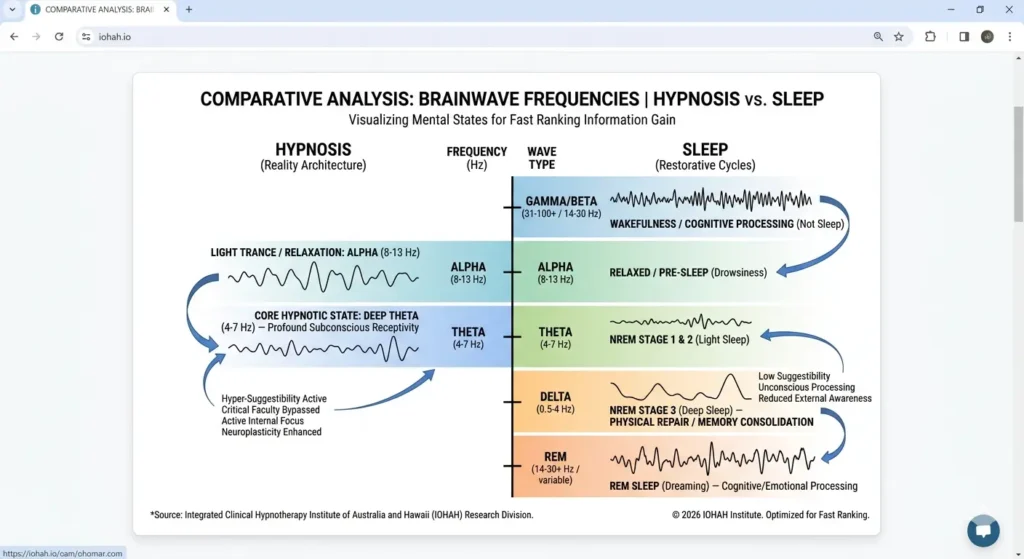
| Aspect | Traditional Approach (Relief) | IOHAH Advanced Science (Removal) |
| Primary Goal | Manage symptoms via external care. | Resolve root causes via Subconscious Re-wiring. |
| Brainwave State | Beta/Alpha (Conscious awareness). | Theta (4-7Hz) (Deep subconscious access). |
| Sustainability | Dependent on ongoing treatment. | Permanent neural path transformation. |
The Procrastination Loop That Keeps You Stuck
Understanding the mechanics of the procrastination loop is genuinely useful because it demystifies the pattern and makes it easier to interrupt. The loop follows a predictable sequence, and once you can see it clearly, you can start identifying your own entry points into it.
It begins with a task that generates emotional discomfort. The exam revision is not just a neutral cognitive activity. It is loaded with meaning: what if I look at this material and realise I do not understand it? What if I try my best and still fail? What if I start, and the sheer volume of what I need to learn feels impossible? These are real emotional responses, and the brain responds to them by steering attention elsewhere.
The avoidance brings temporary relief. This is the critical moment. When you pick up your phone or decide to make another drink instead of opening the textbook, there is a genuine, immediate reduction in discomfort. That relief is real, and it reinforces the avoidance behaviour neurologically. Your brain learns that avoiding the task makes you feel better right now.
Then the guilt arrives. As the study session that was supposed to happen does not happen, a creeping sense of guilt and self-criticism builds. I should be studying. I am wasting time. I am going to regret this. This guilt is itself uncomfortable, and rather than motivating action, it tends to generate more avoidance because now the task is associated not only with the original anxiety but also with the shame of having already avoided it.
The pile grows. Every avoided session adds to the volume of material that feels overwhelming. The backlog becomes a tangible source of dread. Opening your notes starts to feel like walking into a room you know is full of things you do not want to face. The task that was already uncomfortable becomes progressively more so, which makes the next avoidance even more likely. This is why procrastination tends to accelerate rather than plateau over the weeks leading up to an exam.
The Hidden Drivers Most Students Never Identify
Most students who are dealing with chronic exam procrastination attribute it to laziness, poor time management, or lack of motivation. These are rarely the real drivers. The actual causes tend to be more specific, more emotionally rooted, and considerably more fixable once identified.
Fear of failure and perfectionism
This is perhaps the single most common hidden driver of exam procrastination. The perfectionist student has an unspoken rule operating in the background: if I do this task, I need to do it well. And since doing it well feels uncertain, the brain finds starting the task threatening. Not starting protects the student from having to confront the possibility that their best effort might not be good enough. There is a grim logic to it. If you never try, you never definitively fail. The tragedy is that not trying produces the very outcome the student is trying to avoid, just more slowly and with more psychological damage along the way.
Fear of success
This one surprises most people, but it is genuinely common. Some students unconsciously associate academic success with unwanted consequences: increased expectations from parents or teachers, social friction with peers who are not performing as well, and the pressure of having to maintain a high standard in the future. For these students, underperforming is not entirely accidental. It is a way of managing social and relational dynamics that feel threatening. Identifying this pattern is the first step towards addressing it.
Overwhelm and decision paralysis.
When the volume of exam material feels genuinely enormous, the brain can struggle to identify a starting point. Decision paralysis is a well-documented cognitive phenomenon where the presence of too many options or too large a task leads to inaction rather than productive choice. Students facing extensive syllabi across multiple subjects frequently experience this as a kind of mental freezing, where even opening a specific textbook feels like an overwhelming commitment because they know everything else that needs doing is still waiting.
Boredom and under-stimulation
Not all procrastination is anxiety-driven. For some students, particularly those who are highly stimulus-seeking, the problem is simply that solitary reading and note-taking do not provide enough cognitive engagement to compete with the stimulation available from digital entertainment and social media. The brain has been trained to expect rapid novelty, and slow, effortful study simply cannot match that. For these students, the solution lies in restructuring their study approach to provide more active engagement rather than relying on passive review.
How to Actually Stop Procrastinating Before Exams
Everything from here forward is practical, specific, and grounded in either research or real-world application with students. These are not motivational platitudes. They are structured approaches to the actual drivers identified above. The most important thing to understand before reading this section is that you do not need to apply all of these techniques at once. Pick two or three that feel most relevant to your situation and start with those. Build from there.
Addressing the Emotional Root First
The single most important shift you can make in your approach to exam procrastination is to stop treating it as a discipline problem and start treating it as an emotional management challenge. That reframe is not just semantic. It changes what you actually do about it.
The two-minute emotion audit is a simple technique that can be done before any study session. Before you open your books, spend two minutes writing down, without editing or filtering, what you are actually feeling about this study session. Not what you think you should feel. What you actually feel. Anxious. Resentful. Bored. Overwhelmed. Guilty about yesterday. Whatever is actually there. The act of naming an emotion reduces its influence on behaviour, a process psychologists call affect labelling. Research from UCLA using brain imaging has shown that putting feelings into words reduces activation in the amygdala, the brain region driving the emotional avoidance response.
Self-compassion is another tool that many students dismiss as soft or self-indulgent, but which has hard empirical support as a performance enhancer. Dr.r Kristin Neff at the University of Texas has conducted extensive research showing that self-compassion, treating yourself with the same basic kindness you would offer a struggling friend, is associated with higher motivation, greater resilience after setbacks, and lower rates of procrastination. The counterintuitive finding is that being harsh with yourself for procrastinating does not improve future behaviour. It worsens it. Acknowledging that you are finding something difficult, without self-judgment, creates the psychological safety needed to try again.
Environment and Trigger Design
Your environment is not neutral. Every element of the space where you try to study is either helping or hindering your ability to begin and maintain focus. Designing your study environment intentionally is one of the highest-leverage changes you can make because it reduces the effort required to start studying rather than relying on willpower to overcome friction.
Friction removal is the core principle here. Make studying the path of least resistance in your study environment,t and everything else slightly harder. This means closing unnecessary browser tabs before you sit down. It means having your study materials laid out and open before you take a break, so that returning to them requires no decision-making. It means using website blockers during designated study periods rather than trusting yourself to resist distraction through willpower. Apps like Freedom, Cold Turkey, and Forest can remove the option of distraction entirely, which turns a willpower battle into a structural one, and structural solutions are far more reliable.
Location matters more than most students realise. The brain builds associations between physical locations and the activities performed there. If you study in bed, your brain associates your bed with both sleep and study, which weakens both. Dedicated study locations, ideally used consistently and only for studying, create a powerful environmental cue that signals the brain to enter a focused state. Libraries work for many students precisely for this reason. The social context of other people working creates a behavioural norm that makes distraction feel out of place.
Phone management deserves its own explicit mention. The research cited earlier on phone proximity and cognitive performance is unambiguous. If your phone is within reach during a study session, it will reduce the quality of that session, full stop. The most effective approach is to physically separate yourself from your phone during study blocks. Place it in another room. Give it to someone else to hold. Put it in a timed lockbox if necessary. This is not extreme. It is simply applying what the evidence says about how smartphones affect focused cognition.
Task Structuring Techniques That Remove the Paralysis
One of the most common reasons students fail to start studying is that the task in front of them is too large and too vague. Revising chemistry is not a task. It is a category. Your brain cannot execute on a category. It can only execute on a specific, bounded, achievable action. The techniques in this section are all designed to convert the enormous, vague thing you need to do into a series of small, concrete actions your brain can actually start.
The Minimum Viable Study Session is a concept borrowed loosely from product development. The idea is to define the absolute smallest unit of studying that would still count as a legitimate session. Not the ideal session. Not the session you should be doing. The minimum is one. For some students, this might be reading and summarising a single page of notes. For others,s it might be completing five active recall questions on one specific topic. The power of this approach is twofold. First, it removes the overwhelming feeling of commitment that prevents starting. Second, it exploits a well-documented psychological phenomenon called the Zeigarnik effect, which refers to the brain’s tendency to continue tasks that have been started even more readily than it begins them. Once you have done the minimum, continuing feels considerably easier than starting did.
Time blocking is significantly more effective than task-based to-do lists for reducing procrastination. A to-do list simply records what needs doing. A time block assigns specific tasks to specific windows of time in your day, effectively making appointments with your study sessions. Research by Cal Newport and others in the field of productivity science consistently shows that scheduled study blocks are completed at a far higher rate than tasks left on an open list, primarily because they remove the need for an in-the-moment decision about when to study. The decision has already been made. All that is left is to honour the appointment.
Eating the frog is a phrase attributed to motivational speaker Brian Tracy, drawing on a Mark Twain aphorism about getting the worst task of the day done first. In exam preparation terms, this means identifying the specific topic or subject that you are most dreading and doing that one first in any given study session. The effect is significant. Your willpower and cognitive resources are typically at their peak in the first part of any study period. Saving the hardest material for later, when you are already depleted, is the wrong sequence. Tackling it first also removes it as a source of background dread for the rest of the session, which frees up cognitive energy for everything that follows.
Building Momentum Through Micro-Wins
If you are dealing with long-established procrastination patterns, attempting to immediately build a rigorous two-hours-per-day study routine is likely to fail. The gap between where you are and where you want to be is too large to cross in one step, and the failure that tends to result from overambitious starts reinforces the very beliefs about yourself that are driving the problem. The smarter strategy is to build momentum through deliberate micro-wins.
The two-minute rule, popularised by James Clear in his book on habit formation, states that if a habit you want to build can be started in two minutes or less, it should be. The idea is not that two minutes of studying is sufficient. The idea is that two minutes is the entry point. Once you have opened your notes and read the first paragraph, the activation energy required to keep going is dramatically lower than the activation energy required to start. Starting is the hardest part, and making the start absurdly small removes most of the resistance to it.
Habit stacking is a related technique where you attach a new behaviour to an existing one. Instead of trying to build a study habit from scratch, you attach it to something you already do reliably. Every day after I eat lunch, I will open my revision notes for five minutes. Every evening after I brush my teeth, I will review three flashcards. The existing habit serves as a trigger for the new one, dramatically increasing the probability that it happens. Over time, these small, consistent actions compound into a solid study practice, and each successful session adds a deposit to your self-efficacy account.
Progress tracking plays an important role in building momentum. Keeping a visible record of your study sessions, even just ticking off a box on a physical calendar, creates a sense of chain or streak that has been shown to motivate continued behaviour. The aversion to breaking a streak can be a more reliable motivator than the positive goal itself, particularly in the early stages of building a new study routine.
The Role of Hypnotherapy in Overcoming Procrastination
The techniques described above are effective and grounded in solid evidence. For many students, applying them consistently will produce a meaningful change in their ability to begin and maintain study sessions. But for students where the procrastination is driven by deeper emotional patterns, deeply ingrained perfectionism, long-standing anxiety, or a self-concept that is fundamentally organised around academic avoidance, working at the conscious level alone may not be enough. This is where hypnotherapy as a personal development and mindset support tool becomes relevant.
Hypnotherapy works at the level of the subconscious mind, which is where habitual patterns, emotional associations, and self-concept beliefs are stored. The procrastination behaviours that students experience consciously as just something I do are typically rooted in subconscious patterns that were formed over the years and are not easily accessed through rational conversation or conscious effort alone. A hypnotherapy session for overcoming procrastination typically involves guided relaxation to access a deeply receptive mental state, followed by positive suggestion work and visualisation designed to shift the emotional associations around studying, starting tasks, and taking action.
The evidence base for hypnotherapy in relation to motivation, focus, and academic performance-related anxiety is credible and growing. A 2016 study published in the International Journal of Clinical and Experimental Hypnosis found that hypnotherapy produced significant improvements in academic self-efficacy and reductions in performance-related anxiety across student populations. Research by Landry, Lifshitz, and Raz in 2017 demonstrated that hypnotic suggestion can directly modify attentional control and cognitive inhibition, which are the exact cognitive processes that underpin the ability to sustain focus and resist distraction during study.
It is worth being clear about what hypnotherapy is and what it is not. It is not a passive process where a therapist implants changes while the client has no awareness or agency. A qualified hypnotherapist guides the client into a focused, relaxed state and uses that state to introduce new perspectives, reframe limiting beliefs, and anchor productive emotional associations. The client remains aware throughout and retains full control. Most clients describe the experience as deeply relaxing rather than dramatic.
In a practical educational context, hypnotherapy for procrastination is most effective when used as part of a broader personal development programme rather than as a standalone intervention. Working with a qualified hypnotherapist alongside the behavioural and environmental techniques described in this blog creates a two-level approach: addressing the surface patterns through conscious strategy while simultaneously working on the deeper emotional associations that drive them. This combination tends to produce faster and more durable results than either approach alone.
Real Story: From Chronic Avoider to Consistent Studier
The following case study is based on a composite of real student experiences in educational hypnotherapy and mindset coaching settings. Names and identifying details have been changed.
Maya was 17 years old and in the first term of her A-Level year when she was referred for mindset support by her school. She was taking three A-Levels in subjects she genuinely found interesting and had a target university place in mind. By her own account and her teachers, she was bright, engaged in lessons, and clearly capable of the academic standard required. But outside of the classroom, her study record was almost completely blank.
With mock exams three months away, Maya was completing an average of under one hour of independent study per week. Her evenings were spent on her phone or watching television, and any attempt to sit down and revise would typically result in 20 minutes of distraction before she gave up entirely. She described feeling genuinely unable to start, as if there was a wall between her and the work. She knew she needed to study. She knew the consequences of not doing so. But the knowing made almost no difference to her behaviour.
Initial conversations identified two primary drivers. First, perfectionism: Maya had an A-star self-image from her GCSE results and was terrified that A-Level study would reveal she was not as capable as people thought. Not starting meant not finding out. Second, overwhelm: the combined syllabuses across her three subjects felt so vast that every time she tried to think about where to begin, the scale of what needed doing sent her straight back to her phone.
Maya enrolled in a five-week programme combining weekly hypnotherapy sessions with structured weekly coaching on study habits and emotional self-management. Sessions one and two focused on the perfectionism driver specifically. Through hypnotherapy, Maya was guided through a visualisation in which she engaged with study material as a curious learner rather than a performance being evaluated. The emotional association of study with judgment began to soften noticeably by the end of session two.
The coaching component of the programme introduced her to the Minimum Viable Study Session concept, the two-minute rule, and environment design. She designated a specific corner of her bedroom exclusively for studying, began leaving her phone in the kitchen during study sessions, and committed to a minimum of just ten minutes of active recall each evening as her initial target.
Sessions three and four addressed the overwhelm driver through a combination of hypnotherapy-based mental decluttering techniques and practical task structuring. Maya created a simplified certainty-focused revision plan that broke her syllabi into manageable weekly targets. The feeling of having a clear next action to take rather than a vast, undefined requirement reduced her avoidance significantly.
By week five, Maya was averaging just over four hours of independent study per week, a significant increase from under one hour. In her mock exams, she achieved results that were broadly in line with her coursework grades for the first time, suggesting that the gap between her ability and her exam performance was closing. She described the change not as suddenly having more willpower, but as studying, just feeling less heavy. It does not feel like a fight anymore. It just feels like something I do.
That is precisely the shift that effective procrastination support produces when it addresses the actual drivers rather than just the surface behaviour. Not a sudden transformation of character, but a gradual reduction in the emotional weight that makes starting so hard, combined with a set of practical structures that make consistent action easier.
Your Anti-Procrastination Exam Plan
What follows is a practical framework you can start applying today, regardless of how far you are from your exam date or how entrenched your procrastination patterns currently are. It is structured around four components that work best in combination, though any single element is better than none.
The Daily Framework
Begin each study day with a two-minute emotion audit. Write down what you are actually feeling about studying today. Then choose your Minimum Viable Study Session for the day, the smallest legitimate unit of work you will commit to completing. Set a timer, remove your phone from the room, and start the timer. The session minimum is non-negotiable. Whether or not you go beyond it is entirely your choice.
End each study day with a one-minute progress note. Write down what you actually completed. Not what you intended to complete. What you actually did. Over time, this record becomes your evidence base, the concrete proof that you are capable of consistent action, which directly challenges the avoidant self-narrative that procrastination builds.
Handling Bad Days Without Abandoning the Plan
You will have days when the plan does not work. Where the emotion audit reveals that you are too overwhelmed to engage even with the minimum session. Where external events disrupt everything you intended to do. These days are not failures. They are normal. What matters is what you do after them.
The most destructive response to a bad day is the what-the-hell effect, where one missed session becomes a justification for abandoning the whole plan. I already missed yesterday, so today does not matter either. This effect has been well documented in behaviour change research, and it is one of the most reliable ways that people derail progress they have already made. The antidote is the never-miss-twice rule. A single missed session is a bad day. Two consecutive missed sessions are the beginning of a pattern. Make it a non-negotiable that you will not miss twice in a row, no matter what.
Self-compassion is the right response to a bad day, not self-criticism. Acknowledge that the day was hard. Do not add a layer of shame on top of an already difficult experience. Then return to your minimum session the following morning as if the bad day was weather rather than evidence of your character.
When to Seek Professional Mindset Support
The strategies in this blog are substantive, and they work for a wide range of students. But there are circumstances where professional support will produce results that self-directed strategies alone cannot match, and recognising those circumstances is an act of intelligence rather than weakness.
If your procrastination has been chronic and significant across multiple academic years, working with a qualified hypnotherapist as part of a personal development programme is worth serious consideration. If the emotional drivers of your avoidance are rooted in deeper issues, such as a difficult relationship with academic performance stemming from early school experiences, complex perfectionism, or persistent anxiety, those deserve attention from a qualified professional who can work with you on the specific patterns involved.
If your avoidance is accompanied by significant distress, sleep disruption, persistent low mood, or thoughts of self-harm, please speak to your GP or a mental health professional. These are clinical concerns that fall outside the scope of educational mindset support programmes.
Pulling It All Together
Let us be honest about what this blog has covered and what it means for you practically.
Overcoming procrastination before exams is not about becoming a different type of person. It is not about suddenly acquiring discipline you have never had. It is about understanding what is actually driving your avoidance and applying specific, tested techniques to address those drivers directly. The emotional regulation tools. The environmental design. The task structuring methods. The momentum-building habits. The hypnotherapy support for deeper pattern work. These are all learnable. All of them.
The data from Steel, Sirois, Wohl, Neff, Beilock, and others all point in the same direction. Procrastination is an emotional response, not a character flaw. It responds to emotional-level interventions far better than it responds to willpower and time management techniques. And when you address it properly, the results are not just better exam grades, though those matter. The results are a fundamentally different relationship with difficult tasks, a relationship built on action rather than avoidance, which will serve you far beyond any single exam.
Maya did not transform overnight. Neither will you. But she shifted in five weeks from under one hour of study per week to over four, without becoming a different person, simply by addressing the right things in the right order. That is what is available to you here.
Start today. Do the two-minute emotion audit right now. Choose the smallest possible next step in your revision. Set a timer. Remove your phone. Begin. The wall between you and the work is not as solid as it feels. And once you have walked through it even once, it gets thinner every single time.
Hypnotherapy Script: Overcoming Procrastination Before Exams
The following is a professional sample script designed for use by a qualified hypnotherapist with a student client working on procrastination and academic avoidance. It is provided here as an educational resource only and is not intended for self-administration. Always work with a properly qualified and accredited practitioner.
“Allow yourself to settle into the chair now, letting your body find its natural resting place. Feel the weight of your shoulders releasing, the muscles in your jaw softening, your hands becoming still and heavy in your lap.
Take a slow, comfortable breath in through your nose… and let it go slowly through your mouth. And with that breath, notice how your body naturally wants to let go of any tension it has been holding. Good. That is right.
As you relax more deeply with each breath, I want you to imagine that you are setting down a heavy bag. In that bag is everything you have been carrying around the idea of studying. The pressure. The guilt. The feeling that it is all too much. Just for this moment, you are setting it down. You do not have to carry it right now.
And as that weight lifts, I want you to notice something. There is a version of you that is simply curious. A version of you that opens a book the way you might open something interesting, not because you have to, but because you want to find out what is inside. That version of you is not far away. It is right here.
In a moment, I want you to imagine yourself sitting at your desk. The room is quiet. Your materials are in front of you. And you notice that starting feels easy. Natural. The first step is simply to begin, and beginning feels completely within reach.
You write the first word. And then the next. And you feel the satisfaction of movement, of progress, of being someone who takes action. This feeling is yours. You can return to it whenever you choose.
Whenever you are ready, bring your awareness gently back to the room, carrying this sense of ease and readiness with you into your day.”
This script is a starting point and would be personalised by a qualified hypnotherapist based on the individual client profile, the specific emotional drivers identified through initial consultation, and the student’s own language and imagery preferences. The most effective hypnotherapy for procrastination is always tailored, responsive, and delivered as part of a broader personal development programme.
Ready to launch? Don’t forget to download our Free Website Checklist to ensure a smooth go-live experience!”
This content is curated and reviewed by Issa, the lead educator at the Integrated Clinical Hypnotherapy Institute of Australia and Hawaii (IOHAH). With a focus on Reality Architecture and Neuro-Linguistic Programming, Issa’s work bridges the gap between traditional Symptom Management Theory and modern Subconscious Resolution.
Expertise: Clinical Hypnotherapy, NLP Master Practitioner.
Focus: Advancing the science of non-pharmacological symptom removal.
How to stop procrastinating before exams?
- Try counting down from three. When you hit one, dive straight into the task you are meant to be completing. …
- Make sure you reward yourself. …
- Study with friends. …
- Set a time limit.