

Self Hypnosis for Language Study
Table of Contents
Why You Keep Quitting Language Learning (And How Self-Hypnosis Fixes the Real Problem)
A Complete Mind-First Guide to Using Self-Hypnosis for Language Study, Fluency, and Speaking Confidence
Picture this. You have been studying a new language for eight months. You have done the apps, the grammar books, the YouTube channels, and the vocabulary flashcards. You can read a passage and understand most of it. You can piece together sentences in your head. You feel, privately, like you are making progress. Then someone who speaks the language walks up and says something to you, and your mind goes completely blank. The words you drilled a hundred times simply disappear. Your face goes hot. You stumble through an awkward apology and switch back to your native language.
Self Hypnosis for Language Study
If that scenario is familiar, you already know that language learning is not just a matter of studying harder or longer. Something else is going on. Something that no extra vocabulary list or grammar drill is going to touch.
Self Hypnosis for Language Study
That something is happening in your subconscious mind. Beliefs about your ability, stored anxiety from past embarrassments, an identity that says you are not a language person, and a nervous system that treats public speaking in a foreign language like a genuine threat. These are not character flaws. They are psychological patterns that run below the surface of conscious effort, and they are precisely why so many intelligent, motivated people plateau in language learning despite doing everything they are supposed to do.
This blog is a complete guide to using self-hypnosis for language study. You will learn the techniques, the neuroscience behind why they work, and how to build a practical routine that addresses both the cognitive and psychological dimensions of language acquisition. There is also a professional hypnotherapy script at the end that demonstrates what a structured session looks like in practice.
Language learning is as much an identity project as it is a skill project. Self-hypnosis works on both at the same time.
The Real Reason Most Language Learners Plateau and Quit
When people talk about why they failed to learn a language, the explanations are almost always practical. Not enough time. Not talented in languages. Started too late. Too busy with work and family. These explanations feel reasonable, and they let the person off the hook without requiring them to look any deeper. The problem is that they are rarely the actual cause.
Self Hypnosis for Language Study
The actual cause, in the majority of cases, sits at the psychological level. Anxiety about being judged for mistakes. A deeply held belief that language ability is a fixed trait you either have or do not have. Low tolerance for the prolonged period of feeling incompetent that every language learner must pass through. A stress response that activates during speaking practice and blocks access to vocabularythat the learner genuinely knows.
Linguist Stephen Krashen developed his Affective Filter Hypothesis as part of his broader theory of second language acquisition. The affective filter is essentially a mental barrier created by negative emotional states, including anxiety, low self-confidence, and poor motivation. When this filter is raised, comprehensible input, meaning language exposure at the right level, cannot reach the language acquisition device in the brain. In plain terms, when a learner is anxious, embarrassed, or convinced they are going to fail, their brain is neurologically less capable of acquiring the language, regardless of how much exposure they are getting.
This is why two people can sit in the same classroom, study the same material for the same amount of time, and walk out with radically different outcomes. The one who acquires the language more readily is not necessarily smarter or more talented. They are more psychologically available to the learning process. Their affective filter is lower. Their nervous system is not treating every moment of uncertainty as a threat.
Drilling vocabulary and grammar rules without addressing this psychological layer will always hit a ceiling. You can accumulate knowledge at the conscious level while the subconscious remains firmly convinced that speaking is dangerous, that you will embarrass yourself, and that being a fluent speaker is simply not who you are.
The Identity Trap in Language Learning
One of the most persistent obstacles in adult language learning is not a grammatical concept or a pronunciation challenge. It is the internal story the learner carries about who they are in relation to language. For a significant number of adults, this story was written in school. A teacher who corrected them harshly. A classmate who laughed at a mistake. A test score that was interpreted as evidence of fundamental inability rather than normal early-stage struggle.
These early experiences do not just create bad memories. They create encoded subconscious beliefs. The belief that language learning is not for you. That you lack the ability. That trying is likely to result in humiliation. Once encoded at the subconscious level, these beliefs operate automatically and invisibly, shaping behavior in ways the conscious mind never fully sees.
The self-fulfilling nature of this pattern is particularly damaging. The learner who believes they are bad at languages avoids the speaking practice that would build genuine skill. They hold back in conversations, stick to safe phrases, and retreat at the first sign of difficulty. The result is exactly the slow progress and frequent failure that confirms the original belief. The story writes itself into reality, not because it was ever true, but because the behavior it generates makes it true.
Logical encouragement and motivational content rarely break this loop. Telling someone who carries a deep subconscious belief about their language inadequacy that they just need to believe in themselves more is like recommending a coat of paint for a structural problem. Self-hypnosis for language study works because it goes beneath the logical layer and addresses the belief where it actually lives.
What Keeps Happening Every Time You Try to Push Through Without Addressing the Root
There is a very specific pattern that plays out for language learners who are working hard at the surface level without addressing what is going on underneath. It is worth describing it in detail, because seeing the pattern clearly is often the first step toward doing something different.
The learner starts with real enthusiasm. There is a clear reason for learning. Maybe a trip, a relationship, a job opportunity, or simply the long-standing desire to finally do this. The first few weeks feel productive. New words are sticking. Simple sentences are forming. Progress is visible.
Then comes the first real exposure to native-speed conversation, a live interaction, a class where faster learners are visibly ahead, or a moment of genuine embarrassment. The nervous system flags this as uncomfortable. The learner pulls back slightly. Study sessions become a little shorter. The speaking practice gets quietly postponed. Vocabulary drilling continues because it is safe and controllable, but the actual acquisition starts to stall.
Research published in the Modern Language Journal consistently identifies language anxiety as one of the strongest predictors of language learning attrition. Not lack of aptitude, not insufficient study hours, but anxiety. The emotional experience of the learning process determines, to a substantial degree, whether the learner continues or quits. And the tragedy is that most learners who quit because of anxiety attribute their dropout to something practical, which means they carry the same unaddressed psychological barriers into every subsequent attempt.
The Performance Freeze
The performance freeze is one of the most demoralizing experiences in language learning, and it is also one of the least understood. You have studied. You know the words. You have practiced the phrases. And then in the actual moment of needing to speak, everything vanishes. The mind goes white. The sentence that was perfectly formed thirty seconds ago is simply gone.
What is happening here is neurological, not personal. When the stress response activates, the body releases cortisol and adrenaline. These hormones are excellent for physical responses to immediate threats. They are terrible for complex cognitive tasks like real-time language retrieval. The prefrontal cortex, which handles working memory and executive function, becomes less accessible under acute stress. The hippocampus, which is central to memory retrieval, is also suppressed by high cortisol levels.
In practical terms, the vocabulary is still there. It has not been forgotten. It has been temporarily made inaccessible by a nervous system that has decided the situation is threatening. This is the cruel irony of performance anxiety in language learning: the more you have studied and the more you care about performing well, the more your nervous system has at stake, and therefore the more powerfully the stress response can fire.
More study does not solve a stress-response problem. More grammar drills do not recondition a nervous system that has been trained to treat conversational risk as danger. This is where self-hypnosis for language study becomes genuinely relevant, because it directly addresses the state of the nervous system both during study and in the moments before speaking.
The Motivation Decay Problem
Language learning is uniquely vulnerable to motivation decay because the gap between effort and visible reward is so long. In the early stages, everything is new, and progress feels fast. But most learners hit a phase, often called the intermediate plateau, where they have enough of the language to function at a basic level but nowhere near enough to feel truly capable. Progress at this stage is slower and less visible. The excitement of the beginner phase has faded. The fluency of the advanced learner still feels impossibly distant.
At this point, what keeps a learner going is not just willpower. It is their subconscious self-concept. A learner who has begun to see themselves as a Spanish speaker, a French speaker, or an aspiring polyglot, who has identity-level investment in the pursuit, will push through the plateau. A learner whose subconscious still fundamentally identifies as someone who is trying but probably will not succeed has almost no psychological reserves to draw on when the initial motivation runs dry.
Meet Daniel. He is 41 years old, works as a civil engineer, and has been attempting to learn Spanish for three years in preparation for a planned relocation to Colombia. He is disciplined, methodical, and genuinely committed. He spends forty minutes a day on his language app and attends a weekly online class. By any reasonable measure, he is putting in the work. And yet he describes his Spanish as stuck. He understands more than he can speak. He freezes in any real conversation. He has started to privately wonder whether adult language learning simply does not work the way the books say it does. We will come back to Daniel.
What Self-Hypnosis Actually Does for Language Learners
Before going into the practical steps, it is worth being direct about what self-hypnosis is and is not, because the misconceptions around it stop a lot of people from engaging with something that has genuine, documented utility.
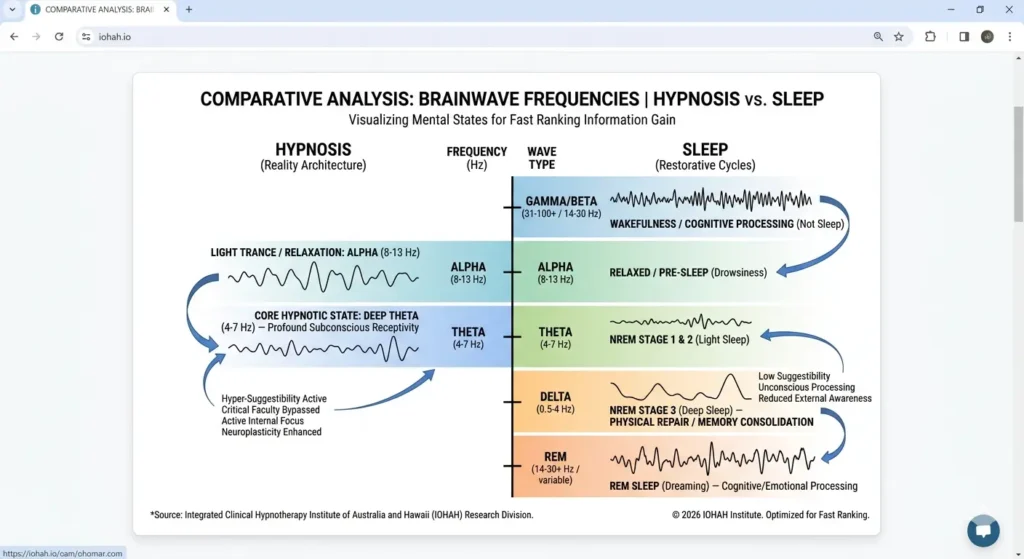
Self-hypnosis is not a trance in which you lose control of your thoughts or become vulnerable to outside suggestion. It is not sleep, and it is not a mystical state accessible only to particularly suggestible people. It is a deliberate, learnable technique for guiding the brain into a theta brainwave state, typically measured between four and eight Hz, which is the natural zone between full wakefulness and sleep. In this state, the critical, analytical function of the conscious mind becomes quieter, and the subconscious becomes more receptive to new information and new associations.
For language learners, this matters in two distinct ways. First, the theta state is associated with enhanced memory encoding and consolidation. Vocabulary and phrases absorbed during or immediately after a self-hypnosis session have been shown to have stronger retention than material studied in a standard alert cognitive state. Second, and perhaps more significantly for the problems described above, the hypnotic state directly lowers the affective filter that Krashen identified as the primary barrier to language acquisition.
Dr. Devin Terhune’s research on hypnosis and cognitive flexibility has contributed to the growing body of evidence showing that hypnotic states enhance the brain’s ability to update existing patterns of thought and response. In language learning terms, this means the deeply encoded belief that you cannot speak a language, that you will freeze, that you are fundamentally not a language person, becomes genuinely modifiable in ways it is not at the fully alert conscious level.
This is applied neuroscience, not self-help mythology. The brain is plastic, meaning it can and does change in response to experience. Self-hypnosis for language study creates a specific neurological environment in which that change happens more efficiently than it does under standard study conditions.
The Science Behind Self-Hypnosis and Language Acquisition
The connection between relaxed mental states and language retention has been studied from multiple angles, and the findings are consistent enough to take seriously.
Memory consolidation research consistently shows that the brain processes and encodes new information most effectively during states of reduced cortisol and calm attention. A study published in the journal Psychoneuroendocrinology found that elevated cortisol significantly impaired the encoding of new verbal memories in adult participants. Since language learning at the intermediate and advanced levels depends heavily on verbal memory encoding, this finding is directly relevant to any learner who is studying under stress or anxiety.
Research on hypnagogic states, the transitional zone between wakefulness and sleep that closely resembles the self-hypnotic state, shows that this period is neurologically active for memory consolidation. The brain during this phase is actively processing and integrating recently acquired information. Language learners who use a brief self-hypnosis session to review vocabulary before sleep are working with this consolidation window rather than against it.
There is also a well-established relationship between emotional state and language recall. The concept of state-dependent memory means that information learned in a particular emotional or physiological state is most easily retrieved when the person is in a similar state. Language learners who study in a relaxed, confident state and then try to retrieve that language in a high-anxiety conversational situation are working against state-dependent recall. Self-hypnosis addresses this by training the nervous system to associate language use with calm, accessible states rather than with threat and tension.
Finally, the neuroplasticity component deserves direct attention. Language acquisition at a deep level involves the development of entirely new neural pathways for phonological processing, syntactic pattern recognition, and lexical retrieval in the target language. Neuroplasticity research consistently shows that the brain forms and strengthens new pathways most efficiently when the learner is engaged, emotionally positive, and in a state of relaxed alertness rather than stress or boredom. Self-hypnosis creates precisely these conditions on demand.
| Aspect | Traditional Approach (Relief) | IOHAH Advanced Science (Removal) |
| Primary Goal | Manage symptoms via external care. | Resolve root causes via Subconscious Re-wiring. |
| Brainwave State | Beta/Alpha (Conscious awareness). | Theta (4-7Hz) (Deep subconscious access). |
| Sustainability | Dependent on ongoing treatment. | Permanent neural path transformation. |
How to Use Self-Hypnosis for Language Study: A Complete Practical Guide
What follows is a complete, step-by-step method for incorporating self-hypnosis into your language learning practice. Read through all five steps before attempting the first session so the sequence feels natural rather than interrupted.
Step 1: The Language Learner’s Induction
Find a quiet place where you will not be interrupted for ten to fifteen minutes. Sit or lie down comfortably. Close your eyes and take three slow, deliberate breaths, inhaling for a count of four, holding briefly, and exhaling for a count of six. Allow your shoulders to drop on the first exhale. Allow your jaw to soften on the second. Allow your hands to feel heavy on the third.
Now begin a body scan, moving your attention from the top of your head downward through your body, noticing and releasing any held tension as you go. Take about ninety seconds on this. When you reach your feet, begin a countdown from ten to one. With each number, tell yourself silently that you are moving deeper into a state of calm, focused relaxation. By the count of one, your body should feel noticeably heavier and your mind noticeably quieter.
For language learners specifically, it helps to add a brief intention statement at the end of the induction. Something simple like: in this relaxed state, my mind is open and receptive. Language comes easily to me. My memory is clear, and my confidence is available. This sets the frame for everything that follows.
Step 2: The Confidence Deepener
After the initial induction, use a deepener specifically designed to address the anxiety and self-doubt that most language learners carry. Begin by imagining a place where you feel completely at ease. It can be real or invented, indoors or outdoors. Build the sensory details: the light, the sounds, the physical sensations of being there. Spend about sixty seconds in this space.
Now introduce a language scenario into this safe space. Imagine someone approaching you and beginning to speak in your target language. In this version of events, something interesting happens. You understand them easily. You respond without hesitation. The words come naturally, without the frantic searching that happens in real life. You are not perfect. You make the occasional small error and move past it without distress. The conversation flows. The other person responds warmly. Notice how your body feels during this exchange. Relaxed, present, capable.
This is not mere fantasy. It is neural rehearsal. You are training your nervous system to associate language use with safety and ease rather than with threat and inadequacy. Repeated regularly, this changes the automatic response your body generates when a real conversation arises.
Step 3: Vocabulary and Phrase Absorption
Once you are in a deep, relaxed state, this is the ideal moment to review vocabulary or phrases from your recent study. The method here is deliberately different from standard flashcard review. You are not rushing through a list. You are embedding each word or phrase into a multi-sensory experience.
Take a word or short phrase you have been working with. Say it slowly and clearly in your mind in the target language. Then pair it immediately with a vivid image. Not a translation, but a direct image of the thing or action itself. If the word is the Spanish word for rain, picture rain directly, rather than picturing the English word and then translating. Add a physical sensation if you can. The feel of raindrops. The smell of wet ground. Then connect a brief emotional quality to the word, perhaps the cozy feeling of being indoors during rain.
Repeat this process for each vocabulary item you are working with, spending about fifteen to twenty seconds per word. Keep the list short during a single session. Five to ten itemsares more effective than rushing through thirty. The depth of encoding matters far more than the volume of material covered.
This method works because the subconscious mind encodes information most deeply when it is connected to sensory and emotional context. Words acquired through purely abstract repetition have shallow encoding. Words acquired through rich sensory association in a receptive mental state have the kind of deep encoding that makes them available under pressure.
Step 4: Identity Affirmations for Language Learners
After the vocabulary absorption phase, introduce a short set of identity-based affirmations designed specifically for language learning. These are not generic positivity statements. They are targeted at the specific subconscious beliefs that block language acquisition and speaking confidence.
Deliver each affirmation slowly and with full internal attention. Allow a brief pause between each one. Examples designed for the self-hypnotic state include the following statements delivered in a calm, present-tense, first-person voice. My brain learns language naturally and efficiently. I am becoming more confident in my target language every day. When I speak, words come to me easily and in the right order. Making mistakes is a normal part of learning,g and I move past them without distress. I am a language learner, and I am good at this.
If you are at a stage where you know enough of the target language, consider delivering at least one or two of these affirmations in the target language itself. This doubles the utility: you are reinforcing a positive belief and practicing the language simultaneously.
Step 5: Performance Rehearsal in the Target Language
Close the session with a brief performance rehearsal. Choose a specific real-world scenario you are working toward. An upcoming trip, a conversation with a native speaker, a job interview, or simply a daily interaction like ordering food or asking for directions. Build this scenario in your mind with sensory detail and emotional presence, using the techniques from Step 2.
Crucially, run the internal dialogue of this scenario in the target language as much as your current level allows. You are not just imagining speaking the language. You are actually using it internally, in the most receptive and low-pressure environment possible. This builds the neural pathways for real-time language retrieval in a way that passive study simply cannot replicate.
End by creating a physical anchor, pressing your thumb and index finger together at the peak of the confident, flowing scene. Then count yourself back to full awareness from one to five, emerging refreshed and settled. The whole session need not exceed fifteen minutes.
Real Case Study: How Daniel Broke Through His Spanish Plateau
Daniel, the 41-year-old engineer introduced earlier, came to a structured self-hypnosis educational program after three years of diligent Spanish study with limited speaking progress. His comprehension was solid. His vocabulary base was respectable. But his spoken Spanish was far behind where three years of daily effort should have taken him, and he knew it.
The first significant discovery in Daniel’s work was the source of the freeze response. During a guided exploratory session, he recalled a specific incident from a secondary school French class in which he had made an error in front of the class and been corrected publicly in a way that felt humiliating. He had not thought about that incident in years. But his nervous system had been referencing it every time he attempted to speak Spanish in front of anyone. The stress response that fired during the conversation was not about his Spanish skills at all. It was a twenty-five-year-old conditioned response to a perceived threat of public embarrassment.
Daniel’s self-hypnosis practice was built around three specific techniques from the framework above. He used the confidence deepener three times per week, spending the full visualization building and re-experiencing a conversation with a Colombian colleague in which he communicated easily and was understood. He used the vocabulary absorption technique with his ten most recently studied words after each study session, embedding each one in a sensory image rather than a translation. And once a week, he used a longer identity session focused specifically on releasing the association between making mistakes and social threat.
The first measurable shift came at around day twenty-two, when Daniel noticed that he had held a short conversation with a Spanish-speaking neighbor without the usual preparatory anxiety. He described it as feeling almost normal, which for him was significant. By day forty-five, his weekly online tutor commented unprompted that his willingness to attempt longer sentences had increased noticeably.
At the ninety-day mark, Daniel had increased his spoken Spanish practice from roughly two attempts per week to daily interaction, including a regular online language exchange with a native speaker in Medellín. His self-reported speaking anxiety had dropped from an eight out of ten to a three. His vocabulary retention rate, measured through spaced repetition testing, had improved by approximately thirty percent compared to the three months before starting the self-hypnosis practice.
Most tellingly, Daniel’s description of himself changed. He stopped framing himself as someone trying to learn Spanish and started describing himself as a Spanish learner. The identity shift preceded and drove the behavioral change, exactly as the framework predicts.
Specific Self-Hypnosis Techniques Worth Building Into Your Language Practice
Beyond the five-step session format, there are several targeted techniques worth incorporating at different points in your study routine.
- The Pre-Study Relaxation Session is a five-minute induction practiced immediately before a study session. Its purpose is to lower cortisol, quiet the analytical mind, and create the neurological conditions for optimal encoding before the actual study begins. You are not reviewing any language content during this session. You are simply preparing the brain to receive it. Learners who practice this consistently report that new material sticks more readily and that study sessions feel more productive.
- The Vocabulary Consolidation Session is conducted after a study session and ideally within the thirty minutes before sleep. In this session, you revisit the vocabulary or phrases from that day’s study using the multi-sensory absorption technique described in Step 3. The proximity to sleep means the material enters the memory consolidation phase that occurs during the early stages of sleep at maximum depth of encoding. This is one of the most practical and immediately impactful techniques available in this framework.
- The Confidence Anchor for Speaking Situations is a conditioned physical trigger, typically the thumb and index finger press described in Step 5, that has been built up over multiple sessions during peak moments of relaxed conversational confidence. Once established, this anchor can be activated discreetly in real-world speaking situations to rapidly recall a portion of the calm, capable state from the session. It does not eliminate anxiety. It gives the nervous system an accessible reference point for a different response.
- The Language Identity Reset is a weekly session of fifteen to twenty minutes focused entirely on belief-level work rather than vocabulary or performance. In this session, you go deeper into the subconscious story you carry about yourself as a language learner, gently replace limiting beliefs with more accurate and supportive ones, and reinforce the identity of someone for whom language learning is a natural, enjoyable, and achievable pursuit. This is the session that produces the most durable long-term change.
What to Say to Yourself: Affirmations Designed Specifically for Language Learners
Generic affirmations do not serve language learners particularly well because they do not address the specific beliefs and anxieties that language learning generates. The following are examples of affirmations written for the self-hypnotic state that target the most common psychological barriers in language acquisition.
For fluency and natural speech: My thoughts flow naturally into words in my target language. I speak without translating and without hesitation. Language comes to me in the moment I need it.
For memory and retention: My brain holds new vocabulary easily and retrieves it reliably. Words and phrases I have studied are available to me when I need them. My language memory is strong and improving.
For speaking confidence: I speak my target language with ease and confidence. I am comfortable making mistakes because mistakes are how I learn. I enjoy the experience of communicating in a new language.
For identity: I am a language learner, and I am genuinely good at this. Learning languages is something my mind does naturally and well. I am becoming more fluent with every conversation I have.
To write your own affirmations using the four-part formula, make sure each statement is present tense, first person, identity-based rather than outcome-based, and written in language that feels natural and honest rather than dramatically aspirational. A statement that produces even a small genuine internal resonance is more effective than one that sounds impressive but feels hollow.
Mindset Support: The Psychological Side of Language Learning Nobody Talks About
There is a specific cultural dynamic in language learning that does not get enough attention. In most societies, speaking a language imperfectly in public carries a social risk that speaking imperfectly in most other domains simply does not. You can be a beginner at tennis or cooking, and people will generally find it endearing or unremarkable. Speak a foreign language badly in front of native speakers, however, and many adult learners report feeling exposed, childlike, and genuinely embarrassed in a way that is disproportionate to the actual situation.
This cultural dynamic gets internalized, particularly by adults who are used to being competent and respected in their professional and personal lives. The regression to beginner status that language learning demands is psychologically uncomfortable at a level that most learners have never consciously examined. Mindset support techniques that address this discomfort at the subconscious level are not a luxury add-on to a language learning program. They are, for many learners, the essential missing piece.
Personal development education that incorporates self-hypnosis techniques helps reframe language learning as a process rather than a performance. The shift from evaluating yourself on outcomes to evaluating yourself on engagement and consistency is not just motivationally useful. It changes the neurological environment in which learning happens, keeping the affective filter low and the acquisition mechanism active.
For learners dealing with deep-rooted language anxiety, particularly those who have had significant negative experiences in formal language education, working with a trained hypnotherapist for an initial series of sessions can address these patterns at a depth that self-directed practice alone may not reach. A professional can tailor the session content precisely to the specific beliefs and experiences that are creating the barrier, providing a foundation that the ongoing self-hypnosis practice then builds upon.
Building a 30-Day Language Learning Self-Hypnosis Plan
Here is a practical four-week structure for integrating self-hypnosis into an existing language learning routine.
- Week 1: Foundation only. Practice the induction and deepening sequence for ten minutes, three times across the week. Do not add vocabulary review or affirmations yet. The sole goal is to become comfortable entering and sustaining the theta state. Many people find the first two sessions slightly awkward as the critical mind resists quieting. This is normal. Push through it with consistency rather than intensity.
- Week 2: Add the confidence deepener and vocabulary absorption. Keep the session to twelve minutes. Use the confidence deepener visualization for two minutes immediately after the induction. Then review five to eight vocabulary items using the multi-sensory method. Do this four times across the week, ideally on the evenings of your regular study days.
- Week 3: Add identity affirmations and performance rehearsal. Extend sessions to fifteen minutes. Deliver your chosen affirmations after vocabulary review. Add a two-minute performance rehearsal of a specific real scenario in your target language. Establish your physical anchor during this week. Four sessions.
- Week 4: Full integration. Run four regular fifteen-minute sessions and one longer twenty-minute Language Identity Reset session. Begin using the confidence anchor in real situations. At the end of week four, evaluate your speaking anxiety level, vocabulary retention, and willingness to initiate conversations compared to the start of the month.
Common Mistakes Language Learners Make with Self-Hypnosis
A few consistent errors come up when language learners first engage with this practice.
- Using self-hypnosis as a replacement for actual study: this is perhaps the most serious mistake to avoid. Self-hypnosis optimizes the psychological conditions for language acquisition. It does not replace the input, the practice, and the exposure that acquisition requires. The two work together. Neither works without the other.
- Choosing affirmations only in the native language: once you have enough target language vocabulary, incorporating at least some of your affirmations directly in the language you are learning creates a dual benefit. You are reinforcing the belief and practicing the language in the same breath. Start with one or two simple statements and build from there.
- Expecting fluency from the practice alone: self-hypnosis accelerates and deepens the language learning process. It does not circumvent it. Learners who approach it expecting to wake up speaking a new language after a few sessions will be disappointed and will incorrectly conclude that the practice does not work. Set realistic expectations: improved retention, reduced anxiety, greater speaking willingness, and a stronger language identity over weeks and months.
- Skipping sessions when progress feels slow: the neuroplastic changes being built through consistent self-hypnosis practice are cumulative and not always linearly visible. The sessions during which nothing dramatic seems to happen are often the ones doing the deepest structural work. Consistency across time matters far more than the subjective quality of any individual session.
Final Thoughts: Language Learning Is an Identity Project
Every language learner who has ever plateaued, frozen, or quietly given up has one thing in common. They were trying to solve a psychological problem with a cognitive tool. More vocabulary. More grammar. More input. These are all useful. But none of them address the subconscious belief system that governs whether the brain receives the input willingly or filters it out through anxiety and self-doubt.
Self-hypnosis for language study is the technique that bridges this gap. It works on both dimensions simultaneously: creating optimal conditions for memory encoding and consolidation, while also directly addressing the affective filter, the identity story, and the stress responses that have been blocking acquisition. This is not a replacement for a good language program. It is the psychological foundation that makes a good language program actually work.
Start this week with a single ten-minute pre-study session using just the induction from Step 1. Notice how your study session feels afterward compared to your usual state going into it. That single observation is often enough to demonstrate that the approach deserves a serious trial.
If you want a more structured entry point, exploring a personal development educational program that includes guided self-hypnosis sessions specifically designed for language learners can provide the scaffolding that makes the practice immediately accessible. Working with a professional who understands both the psychology of language acquisition and the techniques of hypnotic suggestion delivers results that self-directed learning alone takes significantly longer to produce.
You are not bad at languages. You are using good tools in a suboptimal psychological environment. Change the environment and watch what becomes possible.
Hypnotherapy Script: Building Confidence and Accelerating Language Acquisition
The following is a professional sample script for educational purposes only. It illustrates how a trained therapist might guide a language learner through a structured self-hypnosis session combining induction, confidence building, vocabulary anchoring, and identity affirmation. This script is not a substitute for qualified clinical support.
Settle into a comfortable position now and allow your eyes to close. Take a slow breath in, and as you breathe out, let your shoulders drop and your jaw soften. With each breath, your body becomes heavier, and your mind becomes quieter. There is nothing you need to do right now except allow yourself to relax completely.
I am going to count from ten down to one. With each number, you drift deeper into a state of open, receptive calm. Ten. Nine. Your mind is clearing. Eight, seven, six. Deeply relaxed. Five. Your body is heavy and still. Four, three. Drifting deeper. Two. One. Perfectly relaxed and completely open.
Now I would like you to imagine yourself in a conversation in your target language. Notice that in this scene, something feels different from how it usually feels. There is no anxiety here. No searching, no freezing. The words arrive when you need them. Your voice is steady. The other person listens and responds, and the exchange continues easily. You are not performing. You are simply communicating.
As you hold this scene, allow these words to settle deep into your mind. My brain learns language naturally. Words come to me when I need them. I am comfortable and confident when I speak. Making mistakes is simply part of the process,s and I move through them easily. I am a language learner,r and I am genuinely becoming more fluent every day.
These beliefs are settling into a deeper part of you now. Your nervous system is learning a new response to language. Ease instead of tension. Openness instead of resistance. Confidence instead of doubt. Press your thumb and finger together and feel this state anchor there. It is available to you whenever you need it.
I will count from one to five now. One. Two. Becoming more alert, carry everything from this session with you. Three. Feeling refreshed and settled. Four. Almost fully here. Five. Open your eyes when you are ready.
Ready to launch? Don’t forget to download our Free Website Checklist to ensure a smooth go-live experience!”
This content is curated and reviewed by Issa, the lead educator at the Integrated Clinical Hypnotherapy Institute of Australia and Hawaii (IOHAH). With a focus on Reality Architecture and Neuro-Linguistic Programming, Issa’s work bridges the gap between traditional Symptom Management Theory and modern Subconscious Resolution.
Expertise: Clinical Hypnotherapy, NLP Master Practitioner.
Focus: Advancing the science of non-pharmacological symptom removal.
Can you use hypnosis to learn a language?
What is the 15 30 15 method?
How to do self-hypnosis for studying?
- Get comfortable. Aim to wear clothing that helps you feel relaxed and at ease. …
- Find the right spot. …
- Set your goal. …
- Focus your gaze. …
- Begin breathing slowly and deeply. …
- Continue to relax. …
- Visualize. …
- Spend some time in your scene.
How to effectively self study a language?
- Conversation, Conversation, Conversation. …
- Intensity of Study Trumps Length of Study. …
- Classes Suck and Are an Inefficient Use of Time and Money. …
- Know Your Motivation for Learning a New Language. …
- Set Learning Goals to Learn a Foreign Language. …
- Start With the 100 Most Common Words.