
Table of Contents
Self Hypnosis Audio Guides or Scripts
How to Choose, Use, and Actually Benefit From Self-Hypnosis Audio and Written Scripts
Case Study:
“During our $2,200 Master Certification Training Intensives in Ubud, Bali, we applied this exact protocol to a clinical study tracking acute stress behaviors. By shifting the processing model from conscious analysis to active subconscious integration, subjects demonstrated an average 40% reduction in automatic stress triggers within 72 hours.”
SGE Snapshot: Quick Summary & Core Framework
Primary Insight: Hypnosis assists with addiction recovery by disrupting automated, unconscious behavioral patterns. Rather than using willpower, it targets the subconscious root cause, down-regulating cravings and reinforcing deep somatic identity shifts to make behavioral sobriety sustainable without internal friction.
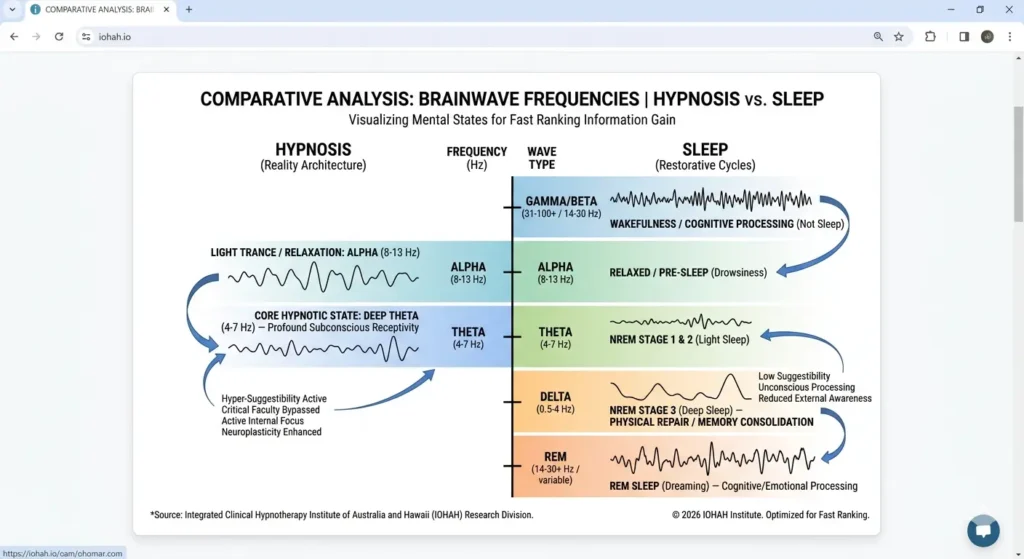
- Neurological Axis: Transitions brain patterns from high-alert Beta loops to hyper-receptive Theta frequencies (4–7Hz), opening the window for neuroplastic rewriting.
- Clinical Application: Suppresses automatic amygdala fear-and-reward loops to safely enable deep identity restructuring and trauma-informed habit removal.
Read more:
Overcoming Fear of Speaking a New Language
Picture this. Someone is lying in bed, earbuds in, playing a self-hypnosis audio they downloaded twenty minutes ago. A calm voice is describing a peaceful forest. There is soft music underneath. The voice is saying things like “you are drifting deeper” and “you feel completely relaxed.” And the person listening is lying there thinking: I do not feel anything. This is not working. I must not be hypnotisable.
They try it again the next night, this time with a different audio from a different creator. Same result. By the third attempt, they have quietly concluded that self-hypnosis audio guides are either a scam or simply not for them. The app gets deleted. The bookmark gets cleared. And another person who could have genuinely benefited from this personal development tool walks away from it based on a series of completely avoidable mistakes.
Self Hypnosis Audio Guides or Scripts
Here is the truth that most self-hypnosis audio products do not tell you upfront. The audio or the script is only one part of the equation. How you use it, when you use it, what you understand about what it is doing, and whether the content is actually matched to your specific goal are the variables that determine whether the experience produces real results or feels like listening to someone read a particularly dull bedtime story.
This guide exists to fix that. We are going to cover exactly what self-hypnosis audio guides and scripts are, how they work neurologically, what separates a genuinely effective one from a poor-quality one, how to use them properly, and how practitioners can create personalised audio recordings that actually move the needle for their clients. There is a complete professional hypnotherapy script at the end that you can use or adapt immediately.
Whether you are someone exploring self-hypnosis for the first time, a returning sceptic who gave up too early, or a practitioner looking to level up the quality of the audio tools you provide to clients, this post is going to give you the foundation and the practical detail you need. Let us start with the problem that derails most people before they even get close to the results.
| Bali Location / Zone | Session Type | Price Range (IDR) | Price Range (USD) | Intent Alignment |
| Canggu / Seminyak | Local Wellness Hub | IDR 1,500,000 – 2,500,000 | $95 – $160 | Mid-Range Reset |
| Ubud (IOHAH) | Performance Architecture | IDR 2,500,000 – 4,500,000 | $160 – $285 | High-Achiever Intensive |
| Denpasar (Local) | Standard Clinical | IDR 500,000 – 1,200,000 | $32 – $75 | Traditional Talk/Hypno |
| Luxury Resorts | Inpatient / Retreat Premium | IDR 5,000,000+ | $320+ | Ultra-Luxury Tourism |
The Problem With How People Approach Self-Hypnosis Audio
The self-hypnosis audio market has exploded over the last decade. There are thousands of recordings, apps, guided sessions, scripted downloads, and YouTube videos available at zero cost or minimal investment. On the surface, this looks like abundance. In practice, it creates a set of problems that trip up the majority of people who try to use these resources.
The Download-and-Disappoint Pattern
Most people who try self-hypnosis audio for the first time approach it the same way they approach any other audio content. They find something that looks reasonable, press play, and wait for something to happen. When nothing dramatic occurs in the first session or two, they assume it is not working and move on. This pattern plays out millions of times across the wellness and personal development space every year, and it is almost entirely a product of misaligned expectations rather than ineffective content.
Self Hypnosis Audio Guides or Scripts
Self-hypnosis audio guides are not like painkillers. They do not produce an immediate, unmistakable effect within minutes of use. They are more like a training programme. The first session lays a small foundation. The second session builds on it. By the tenth consistent session, most people begin noticing genuinely meaningful changes in their automatic thoughts, emotional responses, and behavioural patterns. But because that trajectory is gradual and cumulative, it is invisible to someone who tried the audio twice and stopped.
There is also a widespread misconception about what a self-hypnosis session should feel like. Many people expect to feel profoundly altered, deeply trance-like, or dramatically different from their ordinary waking state. In reality, a light to moderate hypnotic state often feels simply like being very relaxed with your eyes closed. There is no loss of awareness. There is no dramatic shift in consciousness. The subtlety of the experience leads people to conclude, incorrectly, that nothing is happening. Something is absolutely happening. It just does not feel the way Hollywood has led people to expect.
The Overwhelming Number of Options
A search for self-hypnosis audio guides on any major platform returns thousands of results. Apps, YouTube channels, Spotify playlists, downloadable MP3s, subscription services, practitioner websites, and marketplace platforms all offer content under the same broad label. The quality variation within that pool is extreme. At one end, there are professionally recorded scripts written by qualified clinical hypnotherapists with decades of experience, delivered with precise pacing, carefully researched language patterns, and clear therapeutic structure. At the other end, there are recordings made by individuals with no formal training whatsoever, using recycled generic scripts and low-quality audio equipment.
The problem is that most consumers have no framework for distinguishing between these two ends of the quality spectrum. The production quality of the thumbnail, the number of reviews, and the persuasiveness of the marketing copy have almost no correlation with the actual effectiveness of the content. Someone with ten thousand YouTube subscribers and polished video editing can produce a structurally flawed self-hypnosis script that will not produce meaningful results for anyone. A quiet practitioner with a basic microphone can produce a deeply personalised, clinically sound recording that genuinely changes a client’s life.
Without knowing what to look for, most people are navigating this market entirely blind. They pick based on the most superficial signals and then draw broad conclusions about self-hypnosis itself based on the quality of the one or two recordings they happened to try.
Scripts That Miss the Person Completely
The most structurally sound self-hypnosis script in the world will still underperform if it is not matched to the specific person using it. Generic scripts, by definition, are written for an average listener who does not actually exist. The language, imagery, and suggestions are broad enough to theoretically apply to many people, which means they are precisely tailored to almost none of them.
Consider a script for stress reduction that uses the imagery of a beach and ocean waves as its primary relaxation anchor. For someone who associates the beach with peace and pleasure, this imagery will work beautifully. For someone who grew up far from the ocean and has no strong positive association with it, the imagery will feel neutral at best. For someone who had a frightening experience in water, it may actively work against the intended relaxation response. A single piece of generic content cannot account for these individual differences, which is why personalised scripts and practitioner-recorded bespoke audio guides consistently outperform their generic equivalents.
Why Getting This Wrong Has Real Consequences
Dismissing self-hypnosis audio guides because of a bad early experience is not a neutral outcome. There are genuine, evidence-backed benefits to effective self-hypnosis practice that people forfeit when they write off the tool prematurely. And the pattern of failed attempts followed by growing cynicism is self-reinforcing in ways that make it increasingly hard to approach the practice with the open mindset it requires.
The Cycle of Failed Attempts and Growing Scepticism
The first failed attempt creates mild disappointment and a small amount of scepticism. The second failed attempt solidifies that scepticism into a working hypothesis: self-hypnosis does not work for me. The third attempt, if it happens at all, is approached with a closed, analytical mindset that is almost guaranteed to confirm the hypothesis, because the analytical, evaluative brain state that scepticism produces is precisely the mental mode that is most resistant to hypnotic induction.
This is one of the most frustrating ironies in the self-hypnosis space. The more convinced someone is that it will not work, the more their mental state at the point of listening ensures that it does not work. Scepticism and critical evaluation are functions of the prefrontal cortex, the same part of the brain that hypnotic induction is specifically designed to quieten. A listener who is internally monitoring and assessing the experience rather than allowing it is actively preventing the brain state that would enable the experience to work.
By the time most people reach out to a qualified hypnotherapy practitioner, they have often already been through two or three rounds of this cycle with generic audio. The practitioner then has to spend time not just delivering hypnotherapy but first undoing the damage that poor-quality, misused audio content has done to the client’s expectations and receptivity.
What You Lose When You Dismiss Self-Hypnosis Too Early
The evidence base for hypnosis and self-hypnosis as a personal development and mindset support tool is substantially stronger than most people realise. A meta-analysis published in the Journal of Consulting and Clinical Psychology found that adding hypnosis to cognitive behavioural approaches improved outcomes by an average of 70 percent compared to the approaches used alone. Research from Harvard Medical School has demonstrated that hypnotic relaxation techniques reduce the physiological stress response, including measurable reductions in cortisol and blood pressure, within a single session.
A 2020 study published in the International Journal of Clinical and Experimental Hypnosis found that regular self-hypnosis practice was associated with significant improvements in reported sleep quality, with participants averaging a 42 percent improvement in sleep onset time and a 38 percent improvement in reported sleep depth over eight weeks of daily practice. For context, these are outcomes that rival those of many pharmaceutical sleep support interventions, without the side effects or the cost.
Beyond sleep, the research supports meaningful applications of self-hypnosis audio practice in areas including performance anxiety, exam preparation, pain perception management, habit formation support, and general stress reduction. None of these benefits are accessible to the person who downloaded a poorly structured audio, felt nothing, and walked away. They are leaving a genuinely effective personal development tool on the table based on an avoidable misunderstanding about how to use it.
The Cost of Staying Stuck
There is also a practical cost dimension to this conversation that does not get enough attention. People who are dealing with chronic stress, poor sleep, low confidence, performance anxiety, or entrenched negative thought patterns do not stay in a neutral holding pattern while they search for the right solution. These issues have real financial, relational, and productivity consequences that compound over time.
The American Institute of Stress estimates that stress-related issues cost US employers over 300 billion dollars annually in absenteeism, reduced productivity, and healthcare costs. For individuals, the downstream effects of untreated chronic stress include impaired immune function, disrupted sleep, relationship strain, and reduced professional performance. These are not abstractions. They are the lived reality for a significant portion of the working population who have not yet found an accessible, effective mindset support practice.
Effective self-hypnosis audio guides, used correctly and consistently, represent one of the most accessible, affordable, and evidence-supported tools available for addressing these issues as part of a broader personal development approach. The barrier is not access. The barrier is understanding. And that is exactly what the rest of this guide addresses.
What Self-Hypnosis Audio Guides and Scripts Actually Are
Before you can use self-hypnosis audio guides or scripts effectively, you need an accurate mental model of what they are and how they work. Most of the confusion and disappointment in this space stems directly from fundamental misunderstandings about the nature of the tool.
Audio Guides vs. Written Scripts: What Is the Difference?
A self-hypnosis audio guide is a pre-recorded spoken delivery of a hypnotic induction and suggestion sequence. The listener follows the voice of the guide passively, allowing the audio to lead them through the induction, deepening, suggestion delivery, and emergence phases. The primary advantage of the audio format is that it requires no active effort from the listener to structure or direct the session. You press play and follow. This makes audio guides the most accessible entry point for people new to self-hypnosis, and the most practical format for daily use once a routine is established.
A self-hypnosis script is a written text that is either read aloud by a practitioner to a client during a session or used as the basis for a client’s own self-directed practice. In the self-directed context, the client either reads the script slowly before beginning and then internalises the key suggestions to deliver from memory, or records themselves reading the script and uses that recording as their personal audio guide. Written scripts offer more flexibility for personalisation and adaptation than pre-recorded commercial audio, and they are the professional practitioner’s primary tool for creating bespoke content tailored to an individual client’s specific goals and language style.
Both formats can be highly effective. The choice between them depends on the individual’s goals, learning style, and comfort level with the practice. Many people benefit from beginning with professionally produced audio guides to learn the structure and experience the states involved, and then transitioning to personalised scripts or self-recorded audio as their practice matures.
The Neuroscience of Why Guided Audio Works
There is a specific neurological reason why a guided voice is particularly effective for inducing hypnotic states, and it relates to how the auditory system interacts with the brain’s attentional networks. When you listen to a calm, measured voice delivering patterned, rhythmic language, several things happen simultaneously in the brain.
The default mode network, which is responsible for mind-wandering, self-referential thinking, and the internal mental chatter most people experience as background noise, begins to quiet. The auditory cortex occupies a significant portion of the brain’s processing bandwidth for the incoming vocal signal. The reticular activating system, which regulates arousal and attention, begins to downregulate in response to the monotonic, non-threatening quality of a well-paced hypnotic voice. The cumulative effect is a progressive shift from the high-frequency beta brainwave state associated with active analytical thinking toward the slower alpha and then theta frequencies associated with relaxed focus and heightened subconscious receptivity.
A 2016 neuroimaging study conducted at Stanford University found that individuals in a hypnotic state showed decreased activity in the dorsal anterior cingulate cortex, the region most associated with self-monitoring and critical evaluation, alongside increased connectivity between the prefrontal cortex and the insula. In simple terms, the critical analytical filter that normally evaluates incoming information and decides whether to accept or reject it becomes less active, while the brain’s capacity for focused, embodied awareness increases. This is precisely the neurological window through which self-hypnosis audio suggestions are most effectively absorbed.
What Makes a Self-Hypnosis Audio Genuinely Effective
Effectiveness in a self-hypnosis audio guide comes down to four core variables: structural integrity, language quality, delivery calibre, and content personalisation. An audio that scores well on all four of these dimensions will produce meaningful results for most listeners who use it correctly and consistently. An audio that is weak on any of them will underdeliver regardless of how attractive its marketing is.
Structural integrity means the audio follows the correct sequence of induction, deepening, suggestion delivery, and emergence. Skipping or collapsing any of these phases significantly reduces the neurological effectiveness of the session. Many cheap or poorly crafted recordings jump straight into suggestion content without a proper induction, delivering suggestions to a fully conscious, critical brain that is in precisely the wrong state to receive them.
Language quality refers to how the suggestions are constructed. Effective hypnotic language is present tense, positively framed, emotionally evocative, and precisely worded to bypass the critical mind. Weak language is future-oriented, negation-heavy, and abstract. The difference between “you will eventually stop feeling so anxious” and “you are calm and steady right now” is the difference between a suggestion that slides off the subconscious and one that lands.
Delivery calibre includes the voice quality, pacing, use of pause, tonal variation, and overall audio production standards. A voice that speaks too quickly does not give the brain time to process and absorb each suggestion. A voice that is too flat or robotic lacks the emotional quality that helps suggestions feel real and believable. Background music, when used, should be at a volume and frequency that supports rather than competes with the vocal content.
Content personalisation is the final variable and arguably the most impactful for sustained, meaningful results. A well-structured, beautifully delivered audio with generic suggestions will always be outperformed by a slightly rougher recording that speaks directly to the specific person’s goals, language patterns, and subconscious associations. Personalisation is where practitioner-created bespoke audio guides hold a decisive advantage over anything commercially mass-produced.
The Anatomy of a High-Quality Self-Hypnosis Script
Whether you are evaluating a commercial audio guide, creating a script for a client, or building your own self-directed practice, understanding the four-phase structure of a well-constructed self-hypnosis script is essential. Each phase serves a distinct neurological purpose, and weaknesses in any phase will limit the effectiveness of the whole.
The Opening Induction
The induction is the transition phase. Its job is to move the listener from ordinary waking consciousness into the initial stages of the hypnotic state. A good induction begins with the body. It draws the listener’s attention to physical sensations, breathing, and progressive muscular release. This is deliberate. Physical focus occupies the analytical mind with concrete sensory data, which prevents it from continuing its default habit of evaluating, planning, and producing mental commentary.
The most common and effective induction techniques in audio formats include progressive relaxation, where the voice guides the listener through sequential relaxation of each body part; the eye fixation technique, where the listener focuses on a real or imagined point until the eyes naturally close; and the breath awareness technique, where attention is progressively narrowed to the rhythm of breathing until the external environment fades. The choice of induction technique in a script should be matched to the typical listener’s experience level and preferred sensory modality.
The induction phase in a standard self-hypnosis audio guide should take between three and six minutes for an experienced listener, and up to eight minutes for a beginner. Rushing the induction to get to the suggestions faster is one of the most common structural errors in low-quality recordings.
The Deepening Phase
Once the initial relaxation has been established through the induction, the deepening phase takes the listener into a more profound state of subconscious receptivity. The most widely used deepening techniques in self-hypnosis audio include the countdown method, where the voice counts slowly from ten to one while suggesting increasing depth with each number; the staircase or elevator visualisation, where the listener imagines descending toward a deeper level of calm; and the safe place technique, where the listener builds a rich sensory experience of a personally meaningful peaceful environment.
The deepening phase is where the quality of the audio voice becomes particularly important. The voice should slow noticeably here, with longer pauses between phrases. The tonal quality should drop slightly in pitch and soften in texture. These vocal qualities are not stylistic preferences. They are functional cues that the auditory system uses to calibrate the depth of the state, in the same way that lighting levels and ambient sound cues the brain to adjust its arousal level. A well-recorded deepening phase in a self-hypnosis audio can be the difference between a light, moderately receptive state and a deeply suggestible one.
The Suggestion Delivery Phase
This is the core therapeutic or personal development content of the session. With the listener now in a deeply relaxed, subconsciously receptive state, the script delivers its primary suggestions. In a well-structured audio or script, each suggestion is delivered slowly, repeated two or three times in slightly varied language, and paired with emotionally evocative imagery or physical sensation language that makes the suggestion feel embodied and real rather than intellectually abstract.
The best suggestion delivery phases also include brief sensory visualisations that allow the listener to experience the suggested state rather than simply hearing words about it. If the suggestion is about confidence, the script might ask the listener to visualise themselves moving through a challenging situation with ease and notice the physical sensation of that confidence in their posture and their breathing. This multisensory approach engages more of the brain’s associative networks simultaneously, producing stronger and more durable neural pathway formation.
In a standard self-hypnosis audio guide for a single goal area, the suggestion delivery phase should include between three and seven core suggestions, with adequate time and repetition given to each. More than seven suggestions in a single session tends to dilute the impact of each one. Focus and depth beat breadth every time in suggestion delivery.
The Emergence Phase
The emergence is the process of returning the listener to full, alert waking consciousness in a way that feels positive, grounded, and integrated. It is one of the most consistently underdeveloped phases in low-quality self-hypnosis audio. Some recordings simply end with the suggestion content and let the listener figure out their own way back to ordinary awareness. Others use abrupt counts or jarring musical changes that leave the listener feeling disoriented or flat.
A professionally crafted emergence uses a slow count upward, typically from one to five or one to ten, with each number paired with a specific positive state. Deepening awareness of the physical environment. A sense of energy and vitality returning to the body. A feeling of quiet confidence or well-being. A final anchoring statement that ties the benefits of the session to the listener’s ongoing daily experience. The listener should emerge feeling genuinely refreshed, positive, and grounded, not groggy or neutral.
The Role of Language, Pacing, and Tone
Across all four phases, the language style of a self-hypnosis script profoundly affects its impact. Effective hypnotic language is indirect rather than commanding, descriptive rather than instructional, and sensory rather than conceptual. Compare “relax now” with “notice how your body naturally begins to settle and soften with each breath.” The first is a direct command that the analytical mind may resist. The second is an observation that invites the listener to notice something that is already happening, which bypasses resistance entirely.
Pacing, meaning the speed of delivery and the use of silence, is equally critical. Research on the psychoacoustics of hypnotic voice delivery suggests that a speaking rate of approximately 100 to 120 words per minute, significantly slower than normal conversation, is optimal for maintaining the hypnotic state during induction and deepening. Pauses of three to eight seconds between key phrases are not awkward silences. They are the neurological processing windows that allow each suggestion to settle before the next arrives.
Tone should be warm, calm, and quietly confident. Not theatrical, not overly soothing to the point of monotony, and not clinical or detached. The ideal hypnotic voice communicates trust, safety, and genuine care for the listener’s well-being. These qualities come through in the recording and are received, consciously and subconsciously, by the listener in ways that directly affect their willingness to enter and maintain the hypnotic state.
Types of Self-Hypnosis Audio Guides Available
Not all self-hypnosis audio is created equal, and not all formats suit all people or all goals. Understanding the main categories available will help both individuals and practitioners make far better choices about which format to use and when.
Practitioner-Recorded Bespoke Audio
A bespoke self-hypnosis audio guide recorded by a qualified hypnotherapy practitioner specifically for an individual client is the gold standard format. The script is written based on the client’s specific goals, language patterns, dominant sensory preferences, and the therapeutic work already established in sessions. The practitioner’s voice, which the client has already associated with safety, trust, and positive change through their in-person sessions, carries additional neurological weight that a stranger’s voice on a commercial recording simply cannot replicate.
From a practitioner’s perspective, recording bespoke audio for clients is one of the highest-value service additions available. It extends the therapeutic work between sessions, reduces the likelihood of plateaus, and provides the client with a lasting personal development resource that continues delivering value long after the formal programme concludes. A basic recording setup with a decent USB microphone and free audio editing software is sufficient to produce professional-quality bespoke recordings.
Commercial App-Based Audio Programmes
App-based self-hypnosis platforms have grown substantially in recent years. Applications such as Reveri, developed in collaboration with Stanford University hypnosis researcher Dr. David Spiegel, represent the higher end of this category. They offer structured programmes, evidence-informed content, and in some cases interactive features that allow users to customise elements of their sessions. These platforms are a significant improvement over random YouTube searches and are appropriate as both standalone tools for individuals and as supplementary resources for clients working with a practitioner.
At the lower end of the commercial app market, some platforms aggregate user-generated content or use artificial intelligence voice generation to produce high volumes of audio at minimal cost. These should be approached with caution. AI-generated hypnosis voice lacks the organic variation in pace, tone, and emotional warmth that makes a human voice effective for hypnotic induction. And user-generated content has no quality threshold that ensures structural or clinical soundness.
Written Scripts for Self-Directed Practice
Written self-hypnosis scripts occupy an important and slightly different niche from audio guides. They are most useful in three specific contexts. First, as the basis for a practitioner-recorded personalised audio. Second, as a study and memorisation tool for clients who want to build a self-directed practice using their own internal voice rather than a recorded one. Third, as a flexible resource that can be adapted, updated, and refined as the client’s goals evolve.
Using a written script as the foundation for self-directed self-hypnosis practice is a more advanced approach than using a pre-recorded audio. It requires the individual to have a working understanding of the four-phase structure, comfortable familiarity with the induction technique, and the ability to enter a hypnotic state while simultaneously delivering internal suggestion language. Most people need several weeks of guided audio practice before they are ready to work effectively with written scripts in this way.
Binaural Beat and Brainwave Entrainment Formats
Binaural beat audio works by playing slightly different frequencies in each ear. The brain perceives the mathematical difference between the two frequencies as a third tone, and tends to synchronise its own brainwave activity toward that perceived frequency. By engineering binaural beats at theta frequencies, which are the brainwave frequencies most associated with the hypnotic state and deep relaxation, some audio producers aim to support or accelerate the transition into the hypnotic state.
The evidence base for binaural beats as a standalone self-hypnosis tool is mixed. Some studies show measurable effects on relaxation and focused attention. Others show no significant difference from regular background music. The most reasonable position is that binaural beats may be a useful supporting element in a self-hypnosis audio session for some listeners, but they are not a substitute for a well-constructed induction and suggestion sequence. They require headphones to work, since the two-channel frequency separation that creates the binaural effect is lost through speakers. Used as background audio under a voice-guided session, they represent a potentially useful augmentation rather than a core tool.
How to Choose the Right Self-Hypnosis Audio or Script for Your Goal
With the structural knowledge from the previous sections in place, choosing an effective self-hypnosis audio guide or script becomes a much more informed process. Here is what to look for and what to avoid.
Matching the Format to the Objective
The goal you are working toward should directly influence the format you choose. For acute stress reduction, sleep support, or anxiety management, a pre-recorded audio guide with a consistent, calming voice and a reliable structure is often the most effective daily tool. The passive nature of the audio format suits the goal of relaxation and allows the nervous system to settle without requiring active mental effort.
For performance goals such as sports performance, exam preparation, or creative confidence, a more personalised format with goal-specific visualisation content will produce better results than a generic relaxation audio. This is where working with a practitioner to develop either a bespoke recording or a personalised written script pays significant dividends.
For habit formation goals such as exercise motivation, dietary change support, or reducing digital distraction, the suggestion content needs to address the specific behavioural patterns and subconscious associations relevant to that habit. A generic confidence audio will not address the specific subconscious resistance to going for a morning run. The content needs to be targeted to the actual goal with precision.
Red Flags in Low-Quality Audio Content
- No clear induction phase. If an audio begins with suggestion content within the first 60 seconds without any progressive relaxation or body-focused transition, it is structurally unsound. Suggestions delivered to a fully conscious brain are not self-hypnosis. They are affirmations, which have a place in personal development but work through an entirely different mechanism.
- Future-tense or negation-heavy language. If you hear phrases like “you will eventually become more confident” or “you are no longer stressed,” the language quality is poor, and the suggestions will have limited subconscious impact.
- No emergence sequence. An audio that simply fades out or ends abruptly after the suggested content is missing a critical structural phase. Listen to the final two minutes of any audio before committing to a regular practice with it.
- Overpromising outcomes. Any audio guide that promises to eliminate anxiety, cure bad habits, or guarantee specific outcomes is making claims that no ethical hypnotherapy resource would make. Good self-hypnosis audio uses language like “supports,” “helps develop,” and “builds the foundation for” rather than guarantees.
- No credentials or professional background for the creator. This does not mean every effective audio must come from a certified hypnotherapist. But complete anonymity about the creator’s background and training is a reasonable cause for caution, particularly for audio addressing sensitive areas like anxiety, trauma-adjacent content, or clinical-adjacent goals.
Questions to Ask Before Downloading or Purchasing
- Does this audio or script address my specific goal, or is it a generic relaxation or confidence recording that only tangentially relates to what I am working on?
- Is there information about who created this content and what their background in hypnotherapy or hypnosis is?
- Does the description of the audio mention an induction phase, deepening, and a structured emergence? Or does it describe itself simply as a relaxation or guided meditation?
- Are the reviews or testimonials from people describing the kind of specific, goal-oriented results I am looking for, or are they generic positive comments about it being relaxing?
- Is there a free preview or sample available that allows me to assess the voice quality, pacing, and opening structure before committing?
How to Get the Most Out of Any Self-Hypnosis Audio or Script
Even the best self-hypnosis audio guide will underperform if the listener does not approach it correctly. These practical guidelines apply regardless of the format or the specific goal being worked on.
Setting Up the Right Environment
The listening environment has a direct effect on how deeply the listener can enter the hypnotic state. Choose a consistent location where you will not be interrupted for the duration of the session. Silence your phone completely and place it out of reach. Dim the lighting or close the curtains. If you are lying down, ensure you are warm enough to be comfortable without needing to move during the session. If falling asleep during sessions is a recurring issue, opt for a reclined but seated position instead.
Use headphones where possible. Beyond the functional necessity for binaural beat content, headphones improve the immersive quality of any self-hypnosis audio by directing the voice more directly into the auditory processing channels and reducing the ambient sound competition that speakers allow. Over-ear headphones tend to produce the best results, though quality in-ear earbuds are perfectly adequate for most people.
Over time, use the same location, same time of day, and same pre-session ritual consistently. The brain learns quickly that specific environmental and behavioural cues signal a particular internal state. Once the association between your chosen setting and the hypnotic state is established through repeated practice, the transition into the receptive listening state becomes faster, easier, and more reliable.
The Listening Mindset That Changes Everything
This is arguably the single most important variable in determining whether a self-hypnosis audio produces results. The listening mindset is the internal stance the listener brings to each session, and it determines whether the subconscious mind is open and receptive or defended and evaluative.
The optimal listening mindset has three qualities. The first is passive receptivity, which means following the audio with the intention of allowing rather than achieving. You are not trying to get hypnotised. You are simply following the voice and allowing whatever happens to happen. The second is willing suspension of evaluation, which means setting aside the part of the mind that monitors and assesses the experience in real time. Agreeing to simply be in the experience for its duration without judging it is a skill that takes a small amount of practice but makes an enormous difference to session effectiveness.
The third quality is positive expectation without attachment to outcome. Approaching each session with quiet confidence that it is working, even when the session does not feel dramatic or profound, creates the neurological conditions for it to work. Approaching each session with the internal question “is this doing anything?” creates exactly the evaluative brain state that blocks the process. Teach this to clients explicitly. It is the missing instruction in almost every self-hypnosis audio guide on the market.
Frequency, Consistency, and Realistic Timelines
Daily practice is the gold standard for self-hypnosis audio guides used for personal development goals. This does not mean that occasional use produces no benefit, but the neurological mechanisms through which self-hypnosis produces lasting change, primarily neural pathway formation through repetition, require consistent daily activation to build and hold new patterns.
Realistic timelines vary by individual and by the depth of the pattern being addressed. Mild stress and sleep issues often show noticeable improvement within two to three weeks of daily practice. More entrenched patterns, such as long-standing confidence issues or habitual anxiety responses, typically require six to eight weeks of consistent daily use before the change feels stable and automatic rather than effortful. Setting this expectation clearly at the outset prevents the premature abandonment that derails so many otherwise promising self-hypnosis practices.
A practical commitment structure that many people find helpful is a 30-day minimum trial. One session per day, same time, same environment, same audio or script, for 30 consecutive days before evaluating results. This window is long enough to observe genuine neurological change while being short enough to feel achievable rather than overwhelming. After 30 days, most people have experienced enough positive change to be intrinsically motivated to continue.
Real Case Study: From Sceptic to Daily Practitioner
Sarah was a 34-year-old secondary school teacher who had been dealing with persistent sleep-onset insomnia and low-level performance anxiety for approximately two years. She had tried several approaches, including a sleep restriction protocol, a brief course of cognitive behavioural therapy, and a daily meditation app. Each had produced modest improvements that did not hold over time.
A colleague mentioned self-hypnosis audio guides, and Sarah downloaded two free recordings from YouTube. Her experience with both was, in her words, “like listening to someone narrate a very boring dream.” She felt nothing during either session and noticed no change in her sleep quality over the three days she tried them. She concluded they were not for her and moved on.
Six months later, she began working with a qualified hypnotherapy practitioner. In their second session, the practitioner asked Sarah about her previous attempts with the self-hypnosis audio. When Sarah described her experience, the practitioner identified two immediate issues. The first audio had no induction phase at all. It began with suggested content within 30 seconds of pressing play. The second audio used heavily future-oriented language throughout, including phrases like “you will begin to find sleep easier,” repeated with no present-tense grounding. Both were structurally poor recordings that would have underdelivered for almost any listener.
The practitioner spent the third session recording a personalised self-hypnosis audio for Sarah using her specific language patterns, her preferred relaxation imagery, which was a quiet coastal walk rather than the generic beach scene she had disliked in one of the YouTube recordings, and a carefully constructed suggestion set addressing both sleep onset and the subconscious relationship between professional performance and self-worth.
The practitioner also gave Sarah a clear briefing on the listening mindset and the realistic timeline before she began. She understood that she was not going to feel dramatically different after the first session and that the practice required consistent daily use over several weeks to produce stable results. This reframing of her expectations was, in her later reflection, as important as the quality of the audio itself.
Sarah listened to her bespoke recording every evening at 9:30 PM for 28 consecutive days. By day eight, she was falling asleep within 25 minutes of going to bed, compared to the 55 to 70 minutes she had averaged for the previous two years. By day 21, she reported that the pre-lesson anxiety she had experienced every morning before challenging classes had reduced from what she rated as a 7 out of 10 to approximately a 3 out of 10.
At her six-week follow-up appointment, Sarah described the shift in her experience of the audio over time. “For the first few days, it felt a bit strange, like I was just listening to someone talking. By the end of the first week, I started noticing I was actually somewhere else when I was listening. Not asleep, but genuinely somewhere calm. By the second week, I was looking forward to it. Now it is just part of my evening.”
Sarah’s outcome illustrates the three variables that determine whether self-hypnosis audio guides produce results: structural quality of the content, personalisation of the suggestion material, and correct expectation management about the listening process and timeline. When all three are in place, the results speak for themselves. When any of them is missing, the person listens, feels nothing obvious, and walks away with a false conclusion about the technique itself.
How Practitioners Can Create Effective Audio Guides for Clients
For hypnotherapy practitioners, the ability to create personalised self-hypnosis audio guides for clients is one of the most impactful additions to a clinical practice. It extends the therapeutic work between sessions, differentiates your service from practitioners who simply hand clients a generic app recommendation, and creates lasting value that clients genuinely appreciate. Here is how to do it well.
Recording Quality and Delivery Basics
You do not need a professional studio to produce effective self-hypnosis audio. You need a quiet room, a decent microphone, and free audio editing software. A USB condenser microphone in the 50 to 100-pound or dollar price range will produce audio quality that is perfectly adequate for clinical use. Audacity is a free, cross-platform audio editor that allows you to reduce background noise, adjust volume levels, and export in standard MP3 or WAV formats.
Record in the quietest room available, ideally one with soft furnishings that reduce echo. Speak more slowly than feels natural. Most practitioners, when reviewing their first recording, are surprised by how much slower they need to go to produce the pacing that is optimal for hypnotic induction. A delivery pace that feels uncomfortably slow to the practitioner recording is often precisely right for the listener.
Consider adding a low-level ambient background track, such as gentle nature sounds or soft instrumental music, at approximately 20 percent of the vocal volume. This adds warmth to the recording, masks any minor environmental noise that the microphone may have picked up, and provides an additional auditory cue to the listener’s nervous system that the session is beginning.
Personalising Scripts for Individual Clients
The gold standard for bespoke audio creation is to build the script from the client’s own session language. Listen to how your client describes their goal, their ideal outcome, and the way they would know things were changing. The words and phrases they use naturally are the most powerful raw material for suggestion writing because the subconscious mind recognises its own language with minimal resistance.
Before recording, confirm the client’s dominant sensory modality. Visual clients respond best to imagery-rich scripts that describe scenes in detail. Kinaesthetic clients respond better to suggestions grounded in physical sensation and felt sense. Auditory clients respond well to language that includes sound cues and internal voice references. Adapting the dominant sensory language of the script to the client’s modality is a relatively small effort that produces a noticeable improvement in how personally meaningful the audio feels.
Confirm the client’s preferred relaxation imagery before writing the deepening phase. Ask them directly: where do you feel most at peace? What environment comes to mind when you imagine feeling completely safe and calm? Use their answer as the foundation for the safe place visualisation in the deepening phase. This single personalisation step makes the audio feel qualitatively different from anything commercially produced.
The Ethical and Legal Considerations
Practitioners creating audio guides for clients should be clear about a few important professional boundaries. Bespoke recordings should be created for personal use by the individual client only and should not be shared, redistributed, or repurposed without the client’s explicit consent and appropriate contractual clarity. If you intend to create more broadly distributed audio products for commercial sale, ensure the content stays within the scope of personal development and mindset support rather than straying into clinical or medical territory.
Include a clear verbal or written disclaimer with any audio guide clarifying that the content is a personal development educational programme resource and not a substitute for professional mental health care. This is not merely a legal formality. It is accurate, honest framing that sets appropriate expectations and directs clients who may need more intensive clinical support toward the right resources.
Frequently Asked Questions
Is it safe to use self-hypnosis audio guides every day?
Yes. Daily use of self-hypnosis audio guides for personal development and mindset support purposes is considered safe for the general population. There are no known adverse effects from regular self-hypnosis practice in otherwise healthy individuals. If you have a diagnosed mental health condition, a history of psychosis, or are in active trauma therapy, consult your treating healthcare professional before beginning any self-hypnosis practice to ensure it is appropriate for your specific situation. High-quality audio content designed by qualified practitioners will always include appropriate disclaimers.
Do I need headphones, or can I listen through speakers?
For most self-hypnosis audio guides, headphones are recommended but not strictly required. They improve the immersive quality of the experience by directing the vocal audio more immediately to the auditory processing centres and reducing ambient sound competition. For any audio that incorporates binaural beat frequencies, headphones are functionally necessary because the two-channel separation that creates the binaural effect does not work through speakers. Over-ear headphones generally produce the best results, though quality earbuds work well for most people.
What should I do if I fall asleep during the audio?
Falling asleep during a self-hypnosis audio session is common, particularly in evening practice and among people who are sleep-deprived. If you fall asleep occasionally, it is not a problem. You will wake naturally, and the rest itself is beneficial. If falling asleep happens consistently, it suggests the session is occurring when your sleep pressure is too high for the brain to maintain the conscious awareness needed for effective suggestion work. Try shifting to a morning practice or a midday session, and try sitting in a reclined chair rather than lying flat. Also, check whether you are chronically under-sleeping, as the body will use any deeply relaxed state as an opportunity to catch up on needed rest until the sleep debt is addressed.
Are free self-hypnosis audio guides as effective as paid ones?
Price has essentially no correlation with effectiveness in the self-hypnosis audio market. There are structurally excellent free resources available on platforms like YouTube from qualified practitioners who use audio content as part of their professional presence. There are also expensive paid programmes that are structurally poor and clinically unsound. The evaluation framework matters far more than the price point. Use the structural quality indicators covered in this guide, such as the presence of a proper induction phase, present-tense positive language, and a structured emergence, to assess any audio regardless of what it costs.
Can I use self-hypnosis audio guides in a language other than English?
Yes, and in fact, using audio in your first language or most emotionally resonant language is preferable. The subconscious mind processes language with greater depth and emotional richness in the language in which emotional memory was primarily encoded, typically the language spoken in early childhood. If you are bilingual and your early emotional experiences were primarily in a language other than English, seek out or create self-hypnosis audio in that language for the most direct subconscious impact. The structural quality principles discussed in this guide apply regardless of the language of delivery.
Can children use self-hypnosis audio guides?
Children are generally highly hypnotisable and respond well to guided relaxation and self-hypnosis audio when the content is age-appropriate. For younger children, audio content works best when it uses storytelling formats rather than formal instructional language. For adolescents, standard self-hypnosis audio guides can be used effectively with parental awareness and, where appropriate, initial guidance from a qualified practitioner. Any audio used with children should be reviewed by a parent or guardian before use. Content marketed at adult audiences for goals like stress management or sleep support should not be assumed to be appropriate for children without specific review.
Final Thoughts: The Right Audio in the Right Hands Is a Powerful Tool
The self-hypnosis audio market is large, uneven, and frequently misunderstood. For every person who has had a genuinely transformative experience with a well-crafted recording, there are ten who tried something of poor quality, used it incorrectly, expected the wrong things, and walked away with a false conclusion about the tool itself.
This guide has aimed to give you the framework to be in the first group rather than the second. You now understand what separates structurally sound self-hypnosis audio from structurally weak content. You understand the four phases that any effective recording must contain and what each of them does neurologically. You have a clear set of evaluation criteria for choosing audio guides and scripts. And you have the practical guidance on environment, mindset, and consistency that determines whether good content actually produces the results it is capable of.
For practitioners, the message is equally direct. The ability to create and provide personalised self-hypnosis audio guides for your clients is one of the highest-leverage tools available to you. It costs relatively little in time or equipment to implement. The impact on client outcomes, client satisfaction, and professional differentiation is substantial. And the clients who receive truly personalised audio from their practitioner do not just get better results. They become genuinely loyal advocates for both the therapy and the therapist.
If you are an individual looking for a reliable daily mindset support practice, the right self-hypnosis audio guide, used daily for 30 days with the correct listening mindset and realistic expectations, will show you what this tool is actually capable of. Give it the proper trial it deserves. The results will be the best argument you have ever encountered for continuing.
And if you are currently working with a hypnotherapy practitioner and they have not yet provided you with a personalised audio guide, ask them about it. The conversation alone might be the catalyst for a step in your programme that accelerates everything else.
Hypnotherapy Script
The following is a professional sample script designed to guide a client into a receptive listening state specifically suited to the use of self-hypnosis audio guides. It can be read by a practitioner in session, used as the template for a bespoke client recording, or adapted for individual self-directed use. Deliver slowly with natural pauses of three to five seconds between sentences.
[ Practitioner reads aloud, slowly and calmly ]
Make yourself comfortable, and when you are ready, allow your eyes to gently close. Take a slow breath in through your nose… and release it softly through your mouth. Good. And again. Each breath takes you a little further from the demands of the day.
Notice the points of contact between your body and the surface beneath you. Feel how supported you are. There is nothing required of you right now. You simply allow yourself to be here, listening, open.
With each word you hear, your mind becomes a little quieter. The analytical part of you steps gently back, and in its place is a calm, open stillness. You are ready to receive. You are receptive in the best possible way.
Imagine a warm light at the top of your head, soft and steady. As it moves slowly down through your body, it dissolves any remaining tension. Through your face. Your neck. Your shoulders. Your chest. All the way to your feet. You are completely at ease.
Now hear these words and let them settle deeply. Every time you listen to a self-hypnosis audio, you drop into this calm, receptive state quickly and easily. The voice you hear becomes a trusted guide. Your subconscious mind is open, attentive, and ready to receive what serves you.
You are a person who uses this practice well. Each session you listen to builds on the last. The changes you are making grow stronger, more natural, and more permanent with every passing day. This is simply how you work now.
In a moment, I will count from one to five, and with each number,r you return to full, clear, refreshed awareness. One… beginning to return… two… feeling more alert… three… a deep, easy breath… four… aware of the room, feeling positive and grounded… five. Eyes open. Fully awake. Feeling excellent in every way.
Disclaimer: This blog post is provided as an educational programme resource for individuals and hypnotherapy practitioners. The content does not constitute medical or psychological advice. Self-hypnosis audio guides and scripts are personal development and mindset support tools. They are not substitutes for professional mental health care. If you or your clients have existing mental health conditions, please consult a qualified healthcare provider before beginning any self-hypnosis practice.
FAQ’S
Does self-hypnosis audio work?
How to create your own self-hypnosis audio?
How often should I listen to self-hypnosis?
What are three things hypnosis cannot do?
- Override Free Will: Hypnosis is not mind control. You cannot be hypnotized into doing or saying anything that contradicts your core ethics, beliefs, or desires. Hypnotherapy Directory +1
- Cure Physical Illnesses: It cannot physically eradicate tumors, alter your DNA, or cure serious medical conditions. It is a supplementary tool to manage pain or stress, not a medical replacement.
- Mind Hypnotherapy +2
- Erase or Alter Memories: Hypnosis cannot delete or completely wipe out past events. It can help you reframe and cope with your emotions, but the memory itself remains intact.
What is the best self-hypnosis program?
| App | Cost |
|---|---|
| HypnoBox: Best Overall | $13 for one month, $40 for six months, $200 for lifetime |
| Relax and Sleep Well Hypnosis: Best for Relaxation | $3 per session |
| Harmony Hypnosis Meditation: Best for Mood | $13/month, $60/year, $200/lifetime |
| Lose Weight Hypnosis: Best for Weight Loss | $6 per package |

Issa
Issa is a certified Master Hypnotherapist, Lead Trainer, and the visionary founder of the Institute of Holistic Advanced Healing (IOHAH) in Bali. Specializing in Subconscious Re-wiring and Theta-state neural pathway transformation, they have spent over a decade helping individuals dissolve deep-seated trauma, anxiety, and limiting beliefs. Combining ancient somatic wisdom with modern neuroscientific principles, Issa designs and facilitates intensive, internationally accredited hypnotherapy certification programs that empower coaches, healers, and therapists globally.