

Anchor Anchoring
Table of Contents
How to Install Instant Emotional States on Command
Introduction
There are moments in life when everything seems to align. You feel calm, focused, confident, and fully in control. Your thoughts are clear, your body is steady, and your responses feel effortless. Then there are other moments—often when it matters most—when those same qualities seem completely inaccessible.
This inconsistency is one of the most frustrating aspects of human performance and emotional experience. People often assume that confidence, calmness, or focus are traits that come and go unpredictably, or that they depend entirely on external circumstances. But this assumption is not entirely accurate.
In reality, emotional states are not random. They are patterns. And like any pattern, they can be conditioned, triggered, and reproduced.
Read more:
Ideomotor Response Clinical Hypnotherapy
This is where the concept of anchoring comes in.
Anchoring is one of the most practical and powerful tools in hypnotherapy, neuro-linguistic programming (NLP), and applied psychology. It allows individuals to deliberately associate a specific internal state—such as confidence, calm, or motivation—with a specific external or internal trigger. Once installed, that trigger can be used to bring the desired state back on demand.
At its core, anchoring is about creating a reliable bridge between a stimulus and a state.
This article explores anchoring in depth—what it is, how it works neurologically and psychologically, how it is used in clinical hypnotherapy, how to apply it in real life, and how to avoid the common mistakes that prevent it from working effectively.
SGE Snapshot: Quick Summary & Core Framework
Primary Insight: Hypnosis assists with addiction recovery by disrupting automated, unconscious behavioral patterns. Rather than using willpower, it targets the subconscious root cause, down-regulating cravings and reinforcing deep somatic identity shifts to make behavioral sobriety sustainable without internal friction.
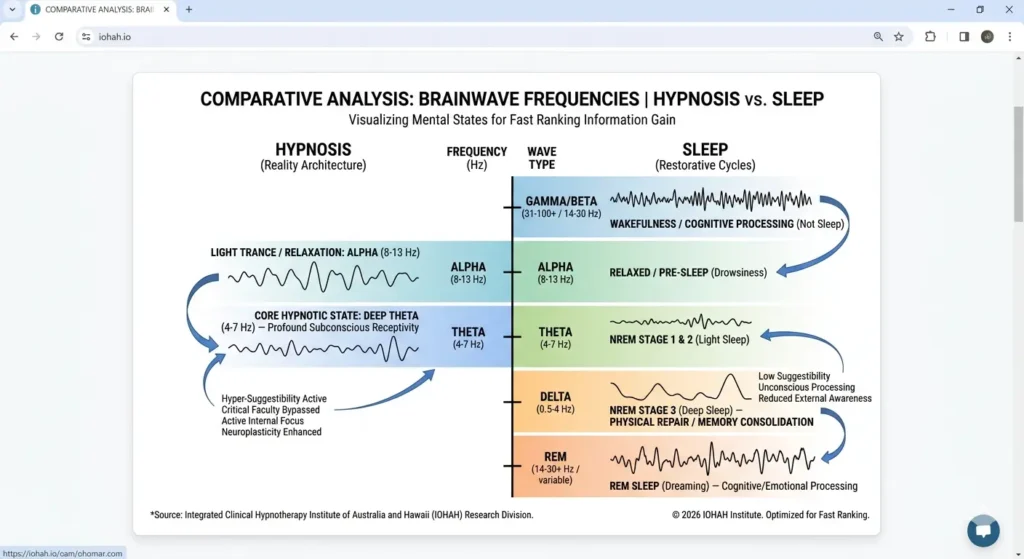
- Neurological Axis: Transitions brain patterns from high-alert Beta loops to hyper-receptive Theta frequencies (4–7Hz), opening the window for neuroplastic rewriting.
- Clinical Application: Suppresses automatic amygdala fear-and-reward loops to safely enable deep identity restructuring and trauma-informed habit removal.
What Is Anchor Anchoring?
Anchoring is a process through which a specific stimulus becomes associated with a particular emotional or physiological state, such that activating the stimulus later triggers that state automatically.
Case Study:
“During our $2,200 Master Certification Training Intensives in Ubud, Bali, we applied this exact protocol to a clinical study tracking acute stress behaviors. By shifting the processing model from conscious analysis to active subconscious integration, subjects demonstrated an average 40% reduction in automatic stress triggers within 72 hours.”
The stimulus (anchor) can be:
A physical touch
A word or phrase
A gesture
A sound
A visual cue
A breath pattern
The state can be:
Confidence
Calmness
Focus
Motivation
Relaxation
Determination
Simple Definition:
Anchoring is the intentional linking of a trigger to a desired internal state.
Everyday Examples of
Anchor Anchoring
Anchoring is not something artificial or invented—it is something your brain already does constantly.
Consider the following examples:
A song instantly brings back memories of a past relationship
A particular smell reminds you of childhood
Walking into a workplace triggers stress before anything happens
Hearing your phone notification creates anticipation or anxiety
These are all naturally formed anchors.
The difference in hypnotherapy is that anchors are:
Deliberate
Controlled
Purpose-driven
The Science Behind Anchoring
Anchoring is grounded in well-established psychological and neurological principles.
1. Classical Conditioning
Anchoring is closely related to classical conditioning, first studied by Ivan Pavlov.
Pavlov demonstrated that:
A neutral stimulus (bell)
Paired repeatedly with a meaningful stimulus (food)
Eventually triggers the same response (salivation)
Anchoring works the same way:
A neutral trigger becomes linked to an emotional state
The trigger alone later produces that state
2. Neural Pathways and Association
The brain is an association machine. When two experiences occur together:
Neural pathways connect them
Repetition strengthens the connection
Anchoring leverages this by pairing:
A peak emotional state
With a specific trigger
3. State-Dependent Memory
Your brain stores information in connection with emotional states.
This means:
When you enter a state again
Related memories and behaviors become accessible
Anchoring allows you to:
Re-enter useful states
Access the resources linked to them
Why Anchoring Is So Powerful
Anchoring works because it bypasses conscious effort.
Instead of:
Trying to think yourself into confidence
Forcing calm through willpower
You:
Trigger the state directly
Key Advantages:
Instant activation
Reduced reliance on willpower
Consistent performance
Emotional regulation under pressure
Connecting with the Subconscious for Positive Change
Sit comfortably and allow your eyes to close. Take a slow breath in… and release it fully. Let your body settle with each breath.
Now bring your awareness inward. Notice the quiet space behind your thoughts. There is nothing you need to force.
I will count from five down to one, and with each number, your mind becomes more calm and receptive.
Five… relaxing.
Four… letting go.
Three… calm and steady.
Two… focused inward.
One… deeply settled.
In this state, your subconscious mind is open in a natural and safe way.
Allow this idea to form gently:
Each day, you respond with greater awareness.
You notice your thoughts without reacting immediately.
You choose calm, steady responses.
This becomes easier with practice.
It becomes natural.
It becomes automatic.
In a moment, I will count from one to five.
One… returning slowly.
Two… becoming aware.
Three… refreshed.
Four… almost back.
Five… eyes open, calm and clear.
Ready to experience this transformation deeply? [Book a Personalized 1-on-1 Hypnotherapy Session] to clear your subconscious blocks today.
Types of Anchors
1. Physical Anchors
These involve touch or movement:
Pressing fingers together
Touching wrist
Clenching a fist
These are among the most effective because they are:
Discreet
Repeatable
Easy to apply
2. Auditory Anchors
These involve sound:
A word or phrase
Internal dialogue
A specific tone
Example:
Repeating a word like “calm” in a specific tone.
3. Visual Anchors
These involve images:
A mental picture
A symbol
A visual cue
4. Kinesthetic Anchors
These involve internal sensations:
Breathing patterns
Posture changes
Body positioning
The Anchoring Process: Step-by-Step
Step 1: Choose the Desired State
Be specific.
Instead of:
“I want to feel better”
Choose:
“I want calm, grounded confidence during presentations”
Step 2: Recall or Create the State
Access a strong version of the state by:
Remembering a past experience
Imagining a powerful scenario
Step 3: Intensify the State
Make it stronger by:
Adding sensory detail
Increasing emotional intensity
Fully immersing in the experience
Step 4: Apply the Anchor
At the peak of the state:
Apply your chosen trigger
Hold it for several seconds
Timing is critical.
| Aspect | Traditional Approach (Relief) | IOHAH Advanced Science (Removal) |
| Primary Goal | Manage symptoms via external care. | Resolve root causes via Subconscious Re-wiring. |
| Brainwave State | Beta/Alpha (Conscious awareness). | Theta (4-7Hz) (Deep subconscious access). |
| Sustainability | Dependent on ongoing treatment. | Permanent neural path transformation. |
Step 5: Break State
Shift attention:
Open eyes
Move body
Think of something neutral
Step 6: Repeat
Reinforce the anchor:
Repeat the process multiple times
Use different memories if possible
Step 7: Test the Anchor
Activate the trigger:
Observe if the state returns
Stacking Anchors
One of the most powerful techniques is stacking.
This involves:
Anchoring multiple experiences
Onto the same trigger
Example:
Confidence from sports
Confidence from work success
Confidence from social situations
All linked to one anchor.
This creates a stronger, more robust state.
Applications of Anchoring
1. Anxiety Management
Anchoring calm allows:
Quick regulation
Reduced stress response
2. Performance Enhancement
Used in:
Public speaking
Sports
Business
3. Confidence Building
Anchors provide:
Reliable access to confidence
Reduced self-doubt
4. Breaking Negative Patterns
Negative anchors can be:
Identified
Replaced
Reconditioned
5. Habit Change
Anchors can trigger:
New behaviors
Positive routines
Anchoring in Hypnotherapy
In clinical hypnotherapy, anchoring is often used:
During deep trance
After suggestion work
At peak emotional states
This makes anchors:
Stronger
More deeply embedded
More reliable
Collapsing Anchors
This technique is used to:
Neutralize negative emotional responses
Process:
Activate a negative state
Activate a stronger positive state
Merge them
The positive state overrides the negative one.
Common Mistakes
1. Weak Emotional Intensity
Anchors require strong states.
2. Poor Timing
Apply the anchor at the peak.
3. Inconsistency
Use the same trigger consistently.
4. Lack of Repetition
Reinforcement is essential.
Anchoring in Daily Life
You can use anchoring for:
Morning routines
Pre-performance rituals
Stress management
Confidence boosts
Self-Hypnosis and Anchoring
Anchoring becomes more powerful when combined with:
Relaxation
Visualization
Suggestion
This allows deeper subconscious conditioning.
Long-Term Effects
With consistent use:
Anchors become automatic
States become stable
Behavior becomes predictable
Ethical Considerations
Anchoring should be used:
Responsibly
Transparently
With awareness
In therapy, consent is essential.
Conclusion
Anchoring is one of the most practical tools available for emotional control and behavioral change. It transforms states from something unpredictable into something trainable and accessible.
Instead of waiting to feel confident, calm, or focused, anchoring allows you to create and trigger those states intentionally.
When practiced correctly, anchoring becomes more than a technique—it becomes a skill. A way of interacting with your own mind that gives you greater control, consistency, and capability in situations that once felt overwhelming.
The key is simple:
Choose the state
Build it strongly
Anchor it precisely
Reinforce it consistently
Over time, what once required effort becomes automatic.
And that is where real change begins.
FAQ’S
What does ⚓ mean?
What is anchor ⚓?
How do you do anchoring?
What does the ⚓ emoji mean?
- Literal: Sea voyages, boating, sailing, or maritime themes (e.g., ⛵⚓).
- Metaphorical: Feeling safe, holding steady in tough times, or being deeply connected to someone.
- Digital: A navigation or webpage “anchor link
What is this 🗞?

Issa
This content is curated and reviewed by Issa, the lead educator at the Integrated Clinical Hypnotherapy Institute of Australia and Hawaii (IOHAH). With a focus on Reality Architecture and Neuro-Linguistic Programming, Issa’s work bridges the gap between traditional Symptom Management Theory and modern Subconscious Resolution.
Expertise: Clinical Hypnotherapy, NLP Master Practitioner.
Focus: Advancing the science of non-pharmacological symptom removal.