

Hypnotic Amnesia: Clinical Uses of Post-Hypnotic State
Table of Contents
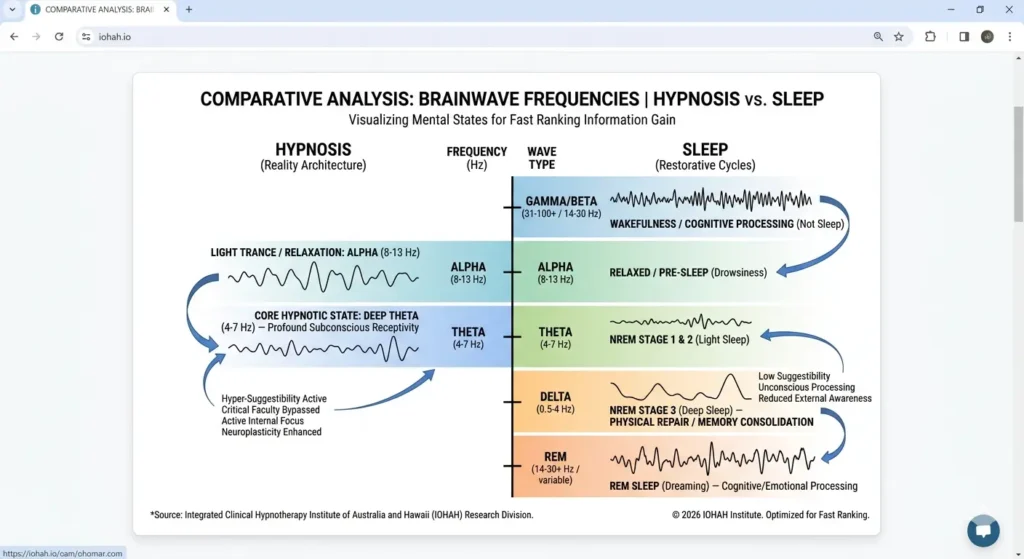
Information Gain Action: Differentiate between organic memory loss and therapeutic post-hypnotic suggestion with a clear “Clinical Fact vs. Fiction” section.
The Hypnotic Phenomenon of Forgetting That Reveals How the Mind Selects What to Remember
A complete, evidence-informed guide to understanding amnesia in hypnosis, how it works, why it matters, and how it is used in clinical hypnotherapy and subconscious change work.
Read more:
Hypermnesia Clinical Hypnotherapy
Introduction: When the Mind Chooses Not to Remember
There is a curious moment that sometimes occurs during hypnosis.
A person is asked a simple question:
“What number comes after six?”
They pause.
They think.
They search for the answer.
And for a brief moment—sometimes longer—they genuinely cannot find it.
Not because they do not know it.
Not because they are confused.
But because the answer is temporarily… unavailable.
Then, just as suddenly, it returns.
Seven.
Obvious. Familiar. Always known.
But for that brief window, it was gone.
This phenomenon is known as hypnotic amnesia, and it reveals something profound about how the mind works:
Memory is not just about storage—it is about access.
And access can be influenced.
What Is Amnesia in Hypnosis?
In everyday language, amnesia refers to memory loss.
In hypnosis, it has a more specific meaning:
Amnesia is the temporary inability to recall specific information due to suggestion or altered mental state, despite the information still being stored in memory.
Key features include:
The memory is not erased
The information still exists in the mind
Access to it is temporarily blocked or altered
Recall can return spontaneously or through suggestion
This is important:
Hypnotic amnesia is not damage.
It is selective inaccessibility.
Types of Hypnotic Amnesia
Amnesia in hypnosis can take several forms, depending on how it is used.
1. Spontaneous Amnesia
This occurs naturally during trance.
The person may:
Forget parts of the session
Lose track of time
Have gaps in recall
This is common in deeper hypnotic states.
2. Suggested Amnesia
This is deliberately created through suggestion.
For example:
“You may find that the number seven simply disappears for a moment…”
The person experiences genuine difficulty recalling it.
3. Post-Hypnotic Amnesia
After the session, the person may:
Forget specific suggestions
Be unable to recall parts of the experience
Until a cue is given.
This is often used therapeutically.
4. Selective Amnesia
Only certain information is affected.
For example:
Forgetting a name
Forgetting a number
Forgetting a specific event
Other memories remain intact.
Why Amnesia Matters in Hypnosis
Amnesia is not just a demonstration.
It serves important functions in therapy and subconscious work.
1. It Demonstrates Subconscious Control
Amnesia shows that:
The mind can control access to information
Conscious recall is not absolute
The subconscious plays a key role in memory
This shifts how people understand their own minds.
2. It Bypasses the Critical Mind
When information becomes inaccessible:
Analytical thinking is disrupted
The usual mental patterns are interrupted
New suggestions can be introduced more easily
3. It Enhances Suggestion Effectiveness
If a person forgets the process:
They are less likely to analyze it
The change feels natural
The results feel automatic
4. It Supports Emotional Processing
In therapy, amnesia can:
Reduce overwhelm
Limit conscious interference
Allow deeper processing
| Aspect | Traditional Approach (Relief) | IOHAH Advanced Science (Removal) |
| Primary Goal | Manage symptoms via external care. | Resolve root causes via Subconscious Re-wiring. |
| Brainwave State | Beta/Alpha (Conscious awareness). | Theta (4-7Hz) (Deep subconscious access). |
| Sustainability | Dependent on ongoing treatment. | Permanent neural path transformation. |
The Experience of Hypnotic Amnesia
People often expect amnesia to feel dramatic.
In reality, it is usually subtle.
The Feeling of “Blankness”
The most common experience is:
Knowing you should know something
But not being able to access it
It feels like:
A blank space
A missing connection
A temporary gap
The Search Without Success
People may:
Try to recall the information
Feel it is “just out of reach”
Experience mild confusion
The Return of Memory
When the suggestion is removed:
The memory returns quickly
Often with clarity
Sometimes with surprise
The Science Behind Hypnotic Amnesia
Modern neuroscience provides insight into how this works.
1. Memory Retrieval vs Storage
Memory involves two processes:
Storage (keeping information)
Retrieval (accessing it)
Hypnotic amnesia affects retrieval, not storage.
2. Role of the Prefrontal Cortex
The prefrontal cortex is involved in:
Conscious recall
Decision-making
Attention
In hypnosis:
Its activity may be altered
Access pathways may be disrupted
3. Attention and Filtering
Attention determines what we access.
In hypnosis:
Attention is narrowed
Certain pathways are prioritized
Others are temporarily blocked
4. Expectation and Suggestion
The brain responds to expectation.
If a person expects:
Not to remember something
The brain organizes recall accordingly.
Amnesia in Clinical Hypnotherapy
Amnesia is used carefully and purposefully in therapy.
1. Reducing Overanalysis
Some clients:
Analyze everything
Overthink suggestions
Resist change
Amnesia can reduce this interference.
2. Protecting the Therapeutic Process
By limiting recall of certain details:
The subconscious can integrate changes
The conscious mind does not interfere
Results feel more natural
3. Managing Emotional Intensity
In trauma-related work:
Full recall may be overwhelming
Partial amnesia can create distance
The client remains safe
4. Reinforcing Change
If the process is not fully remembered:
The outcome feels automatic
The change feels internalized
Everyday Examples of Natural Amnesia
Hypnotic amnesia is not unusual.
It happens in daily life.
Forgetting Why You Entered a Room
You walk into a room…
And forget why you came.
Tip-of-the-Tongue Moments
You know a word…
But cannot recall it.
Losing Track of Time
You look at the clock…
And realize time has passed without awareness.
Selective Attention
You ignore certain stimuli…
And do not remember them later.
These are natural forms of memory filtering.
Hypnosis simply makes them more controlled.
Connecting with the Subconscious for Positive Change
Sit comfortably and allow your eyes to close. Take a slow breath in… and release it fully. Let your body settle with each breath.
Now bring your awareness inward. Notice the quiet space behind your thoughts. There is nothing you need to force.
I will count from five down to one, and with each number, your mind becomes more calm and receptive.
Five… relaxing.
Four… letting go.
Three… calm and steady.
Two… focused inward.
One… deeply settled.
In this state, your subconscious mind is open in a natural and safe way.
Allow this idea to form gently:
Each day, you respond with greater awareness.
You notice your thoughts without reacting immediately.
You choose calm, steady responses.
This becomes easier with practice.
It becomes natural.
It becomes automatic.
In a moment, I will count from one to five.
One… returning slowly.
Two… becoming aware.
Three… refreshed.
Four… almost back.
Five… eyes open, calm and clear.
Ready to experience this transformation deeply? [Book a Personalized 1-on-1 Hypnotherapy Session] to clear your subconscious blocks today.
How Amnesia Is Induced
There are several methods used in hypnosis.
1. Direct Suggestion
Simple and clear.
“You may find that this number disappears from your mind…”
2. Confusion Technique
The mind is overloaded:
Multiple instructions
Rapid changes
This disrupts recall.
3. Distraction
Attention is shifted away from the target memory.
4. Fractionation
The person moves in and out of trance:
Each cycle increases responsiveness
Amnesia becomes more likely
Amnesia in Self-Hypnosis
You can experience mild forms of amnesia yourself.
Step 1: Relaxation
Sit comfortably.
Close your eyes.
Breathe slowly.
Step 2: Focus on a Simple Target
Choose:
A number
A word
Step 3: Suggest Forgetting
Silently say:
“For a moment, this number fades…
It becomes distant…
Unavailable…”
Step 4: Allow the Experience
Do not force it.
Notice:
Any hesitation
Any delay
Any gap
Step 5: Restore Recall
Say:
“The number returns clearly now…”
Notice how quickly it comes back.
Common Challenges
“I Can Still Remember”
This is normal.
Amnesia varies in intensity.
Start with:
Partial forgetting
Delayed recall
“It Feels Fake”
The conscious mind may interfere.
Solution:
Relax expectations
Focus on the experience
Allow subtle effects
“Nothing Happens”
Practice is key.
Over time:
Responsiveness increases
Effects become clearer
Myths About Hypnotic Amnesia
“It Erases Memory”
False.
Memories are not deleted.
“It Is Dangerous”
No.
It is temporary and reversible.
“It Means Loss of Control”
Incorrect.
You remain aware and safe.
“Only Certain People Can Experience It”
Most people can, to some degree.
The Deeper Meaning of Amnesia
Amnesia is not just about forgetting.
It is about control over attention and access.
It shows that:
Memory is flexible
Awareness is selective
The mind filters constantly
From Forgetting to Freedom
In therapy, amnesia can help people:
Let go of unhelpful patterns
Reduce emotional intensity
Create space for new responses
It is not about removing the past.
It is about changing the relationship to it.
Ethical Considerations
Amnesia must be used responsibly.
Practitioners should:
Ensure client safety
Avoid misuse
Maintain transparency
The goal is always:
Benefit, not control.
Conclusion: The Mind Decides What to Remember
Amnesia in hypnosis reveals something essential:
Memory is not fixed. It is dynamic.
The mind:
Stores vast amounts of information
Filters what is accessed
Adapts based on context and suggestion
Hypnotic amnesia simply makes this process visible.
It shows that:
You are not limited to automatic recall
You can influence mental processes
Change can occur below conscious awareness
And in that understanding, there is power.
Not the power to forget everything.
But the power to:
Focus on what matters
Release what does not
And allow the mind to work in a more flexible, adaptive way
This content is curated and reviewed by Issa, the lead educator at the Integrated Clinical Hypnotherapy Institute of Australia and Hawaii (IOHAH). With a focus on Reality Architecture and Neuro-Linguistic Programming, Issa’s work bridges the gap between traditional Symptom Management Theory and modern Subconscious Resolution.
Expertise: Clinical Hypnotherapy, NLP Master Practitioner.
Focus: Advancing the science of non-pharmacological symptom removal.