

Table of Contents
Resource Retrieval
The Complete Guide to Accessing Inner Strength, Skills, and Emotional States on Demand
Introduction
Case Study:
“During our $2,200 Master Certification Training Intensives in Ubud, Bali, we applied this exact protocol to a clinical study tracking acute stress behaviors. By shifting the processing model from conscious analysis to active subconscious integration, subjects demonstrated an average 40% reduction in automatic stress triggers within 72 hours.”
SGE Snapshot: Quick Summary & Core Framework
Primary Insight: Hypnosis assists with addiction recovery by disrupting automated, unconscious behavioral patterns. Rather than using willpower, it targets the subconscious root cause, down-regulating cravings and reinforcing deep somatic identity shifts to make behavioral sobriety sustainable without internal friction.
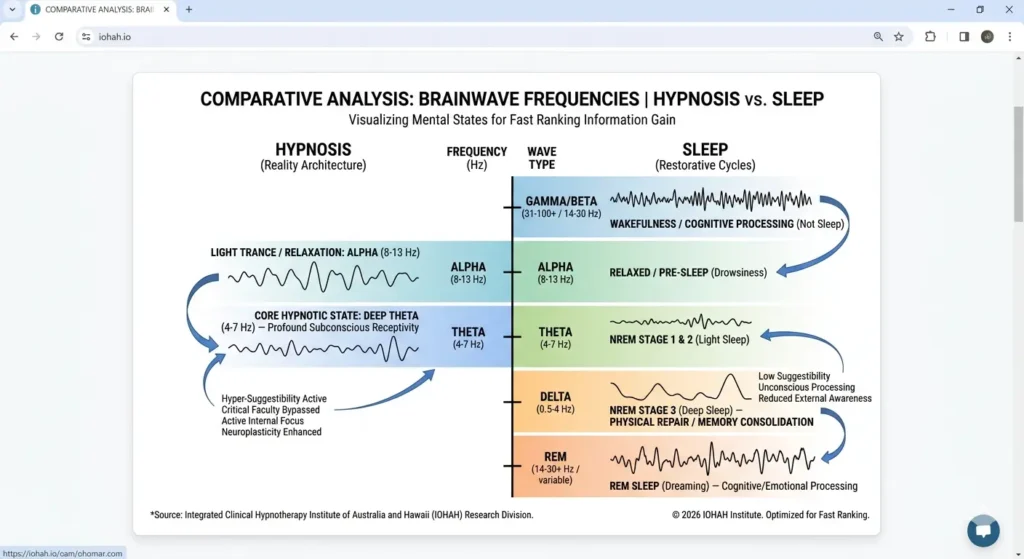
- Neurological Axis: Transitions brain patterns from high-alert Beta loops to hyper-receptive Theta frequencies (4–7Hz), opening the window for neuroplastic rewriting.
- Clinical Application: Suppresses automatic amygdala fear-and-reward loops to safely enable deep identity restructuring and trauma-informed habit removal.
Every human being possesses a vast reservoir of internal resources—confidence, resilience, creativity, calmness, motivation, and more. Yet, in moments when these qualities are needed most, they often feel out of reach. Resource retrieval is the process of accessing and activating these internal states intentionally, allowing you to perform at your best in any situation.
Resource retrieval is widely used in psychology, coaching, hypnotherapy, and Neuro-Linguistic Programming (NLP). It is based on a powerful idea: you already have what you need within you—you just need to learn how to access it.
In this comprehensive guide, we will explore resource retrieval in depth—its meaning, psychology, techniques, applications, and how you can use it to transform your performance, emotions, and overall life experience.
Read more:
Safe Place Imagery
1. What Is Resource Retrieval?
Resource retrieval is the process of recalling and reactivating positive internal states, skills, or experiences to use them in the present moment.
These “resources” can include:
Confidence
Calmness
Focus
Motivation
Creativity
Strength
Example
You may have felt confident in the past during a successful experience. Resource retrieval allows you to bring that same feeling into a new situation.
2. The Concept of Internal Resources
Internal resources are psychological and emotional states that support effective behavior.
They are not external—they already exist within you.
Types of Resources
Emotional (confidence, calm)
Cognitive (clarity, focus)
Behavioral (skills, habits)
Physical (energy, strength)
3. Why We Lose Access to Resources
Even though resources exist within us, we don’t always access them.
Common Reasons
Stress or anxiety
Negative thinking
Lack of awareness
Environmental pressure
Resource retrieval helps bridge this gap.
4. The Psychology Behind Resource Retrieval
State-Dependent Memory
We recall information and emotions more easily when we are in a similar state.
Neural Pathways
Past experiences create neural connections that can be reactivated.
Emotional Conditioning
Feelings can be triggered by memories and associations.
Connecting with the Subconscious for Positive Change
Sit comfortably and allow your eyes to close. Take a slow breath in… and release it fully. Let your body settle with each breath.
Now bring your awareness inward. Notice the quiet space behind your thoughts. There is nothing you need to force.
I will count from five down to one, and with each number, your mind becomes more calm and receptive.
Five… relaxing.
Four… letting go.
Three… calm and steady.
Two… focused inward.
One… deeply settled.
In this state, your subconscious mind is open in a natural and safe way.
Allow this idea to form gently:
Each day, you respond with greater awareness.
You notice your thoughts without reacting immediately.
You choose calm, steady responses.
This becomes easier with practice.
It becomes natural.
It becomes automatic.
In a moment, I will count from one to five.
One… returning slowly.
Two… becoming aware.
Three… refreshed.
Four… almost back.
Five… eyes open, calm and clear
You might also find these helpful:
5. The Role of the Subconscious Mind
The subconscious mind stores past experiences and emotional states.
Resource retrieval taps into this storage system and brings relevant states into awareness.
| Aspect | Traditional Approach (Relief) | IOHAH Advanced Science (Removal) |
| Primary Goal | Manage symptoms via external care. | Resolve root causes via Subconscious Re-wiring. |
| Brainwave State | Beta/Alpha (Conscious awareness). | Theta (4-7Hz) (Deep subconscious access). |
| Sustainability | Dependent on ongoing treatment. | Permanent neural path transformation. |
6. Applications of Resource Retrieval
Performance
Public speaking
Sports
Work presentations
Emotional Control
Managing anxiety
Building confidence
Personal Development
Goal achievement
Habit change
7. The Basic Resource Retrieval Process
Identify the desired resource
Recall a past experience where you felt it
Relive the experience vividly
Amplify the feeling
Bring it into the present
8. Visualization in Resource Retrieval
Visualization is key to accessing resources.
The more vivid the memory, the stronger the emotional response.
9. Sensory Engagement
Engage all senses:
What did you see?
What did you hear?
What did you feel?
This deepens the experience.
10. Emotional Amplification
Focus on intensifying the emotion.
Stronger emotions lead to stronger resource activation.
11. Anchoring Resources
Anchoring links a resource state to a physical trigger.
Example
Pressing fingers together while feeling confident
Later, the same action triggers the feeling.
12. Using Resource Retrieval in Daily Life
Apply it before:
Important meetings
Challenging conversations
High-pressure situations
13. Resource Retrieval in Hypnotherapy
Therapists guide clients to access positive states to support change.
This strengthens emotional resilience.
14. Combining with Future Pacing
Use retrieved resources in imagined future scenarios.
This prepares the mind for success.
15. Overcoming Negative States
Replace fear or anxiety with positive resources.
Example:
Swap nervousness with calm confidence.
16. Common Mistakes
Choosing weak memories
Lack of emotional engagement
Inconsistent practice
17. Advanced Techniques
Resource Stacking
Combining multiple positive states.
Circle of Excellence
Visualizing a space filled with powerful resources.
18. Building a Resource Routine
Daily practice strengthens access.
Routine
Morning visualization
Pre-event activation
Evening reflection
19. Real-Life Examples
Athletes recalling peak performance
Speakers accessing confidence
Individuals calming anxiety
20. Long-Term Benefits
Increased confidence
Better emotional control
Improved performance
21. Conclusion
Resource retrieval is a powerful tool for accessing your inner strengths.
It allows you to bring your best self into any situation.
Final Thoughts
You already possess the resources you need.
The key is learning how to access them intentionally.
When you master resource retrieval, you gain the ability to control your state, influence your actions, and shape your outcomes—whenever it matters most.
FAQ’S
What is an example of retrieval?
What is the retrieval process?
What is the main purpose of MRF?
What are the two types of retrieval processes?
What is the purpose of retrieval?

Issa
Issa is a certified Master Hypnotherapist, Lead Trainer, and the visionary founder of the Institute of Holistic Advanced Healing (IOHAH) in Bali. Specializing in Subconscious Re-wiring and Theta-state neural pathway transformation, they have spent over a decade helping individuals dissolve deep-seated trauma, anxiety, and limiting beliefs. Combining ancient somatic wisdom with modern neuroscientific principles, Issa designs and facilitates intensive, internationally accredited hypnotherapy certification programs that empower coaches, healers, and therapists globally.