

Table of Contents
The Complete Guide to Understanding, Inducing, and Using Hypnotic Stillness for Deep Transformation
Introduction
Case Study:
“During our $2,200 Master Certification Training Intensives in Ubud, Bali, we applied this exact protocol to a clinical study tracking acute stress behaviors. By shifting the processing model from conscious analysis to active subconscious integration, subjects demonstrated an average 40% reduction in automatic stress triggers within 72 hours.”
SGE Snapshot: Quick Summary & Core Framework
Primary Insight: Hypnosis assists with addiction recovery by disrupting automated, unconscious behavioral patterns. Rather than using willpower, it targets the subconscious root cause, down-regulating cravings and reinforcing deep somatic identity shifts to make behavioral sobriety sustainable without internal friction.
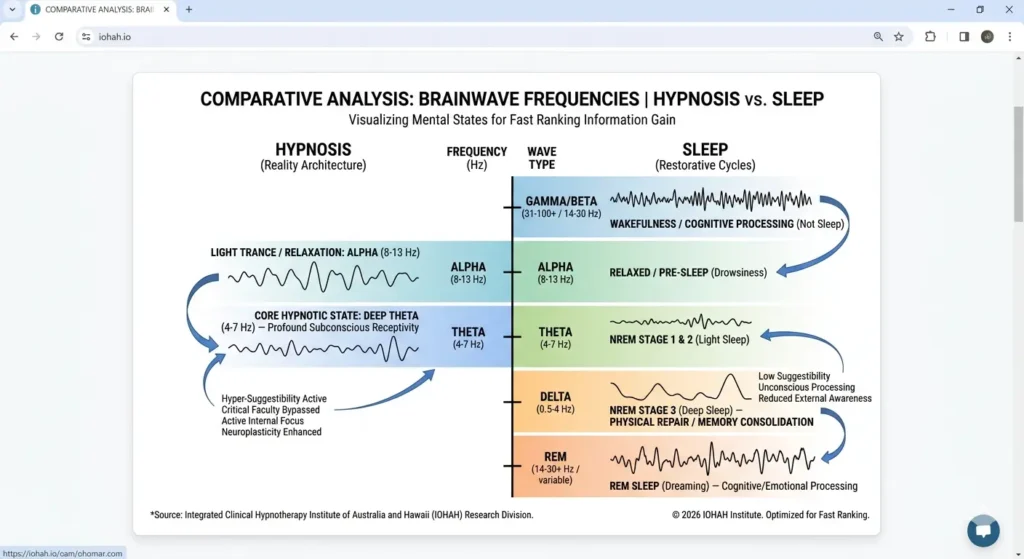
- Neurological Axis: Transitions brain patterns from high-alert Beta loops to hyper-receptive Theta frequencies (4–7Hz), opening the window for neuroplastic rewriting.
- Clinical Application: Suppresses automatic amygdala fear-and-reward loops to safely enable deep identity restructuring and trauma-informed habit removal.
Catalepsy is one of the most intriguing and visually striking phenomena in hypnosis and mind-body psychology. Often demonstrated in both clinical and stage settings, catalepsy involves a temporary state of muscular rigidity or stillness in which a limb—or even the entire body—remains fixed in a position without conscious effort.
While it may appear unusual or even mysterious, catalepsy is a natural and explainable psychological and physiological response. It reflects the powerful connection between the mind and body, where suggestion, focus, and subconscious processes can override normal voluntary movement patterns.
Read more:
Manifestation Hypnotherapy: Aligning the Subconscious Mind with Intentional Creation
Glove Anesthesia
Beyond demonstration, catalepsy is a highly valuable therapeutic tool. It can be used to deepen trance, reinforce suggestions, enhance focus, and create powerful experiential learning during hypnotherapy sessions.
In this comprehensive guide, we will explore catalepsy in depth—its meaning, science, mechanisms, types, techniques, therapeutic uses, and practical applications.
1. What Is Catalepsy?
Catalepsy is a state of muscular rigidity or immobility in which a body part remains in a fixed position without conscious effort.
Key Characteristics
Muscles hold position automatically
Movement feels restricted or “locked”
The experience is often effortless
Example
A person’s arm is lifted and remains suspended in the air without them actively holding it there.
2. Catalepsy in Hypnosis vs Medical Context
Catalepsy exists in both clinical and hypnotic contexts.
Medical Catalepsy
Associated with neurological or psychiatric conditions
May involve rigidity and reduced responsiveness
Hypnotic Catalepsy
Induced intentionally through suggestion
Temporary and controlled
Used therapeutically
This guide focuses on hypnotic catalepsy.
3. The Science Behind Catalepsy
Motor Control Systems
The brain regulates movement through complex neural pathways.
Suggestion and Expectation
When a suggestion is accepted, the brain modifies motor output.
Neural Inhibition
Certain signals inhibit normal movement, creating stillness.
4. The Role of the Subconscious Mind
The subconscious mind plays a central role in catalepsy.
Interprets suggestion
Controls muscle tone
Maintains position without effort
This bypasses conscious control.
Connecting with the Subconscious for Positive Change
Sit comfortably and allow your eyes to close. Take a slow breath in… and release it fully. Let your body settle with each breath.
Now bring your awareness inward. Notice the quiet space behind your thoughts. There is nothing you need to force.
I will count from five down to one, and with each number, your mind becomes more calm and receptive.
Five… relaxing.
Four… letting go.
Three… calm and steady.
Two… focused inward.
One… deeply settled.
In this state, your subconscious mind is open in a natural and safe way.
Allow this idea to form gently:
Each day, you respond with greater awareness.
You notice your thoughts without reacting immediately.
You choose calm, steady responses.
This becomes easier with practice.
It becomes natural.
It becomes automatic.
In a moment, I will count from one to five.
One… returning slowly.
Two… becoming aware.
Three… refreshed.
Four… almost back.
Five… eyes open, calm and clear
You might also find these helpful:
5. Why Catalepsy Works
Focused Attention
Enhances responsiveness to suggestion.
Relaxation
Reduces conscious interference.
Belief and Expectation
Strengthens the effect.
| Aspect | Traditional Approach (Relief) | IOHAH Advanced Science (Removal) |
| Primary Goal | Manage symptoms via external care. | Resolve root causes via Subconscious Re-wiring. |
| Brainwave State | Beta/Alpha (Conscious awareness). | Theta (4-7Hz) (Deep subconscious access). |
| Sustainability | Dependent on ongoing treatment. | Permanent neural path transformation. |
6. Types of Hypnotic Catalepsy
Arm Catalepsy
The arm remains fixed in position.
Hand Catalepsy
The hand becomes rigid or immobile.
Full Body Catalepsy
The entire body maintains a rigid posture.
Eye Catalepsy
Eyes remain closed and difficult to open.
7. Eye Catalepsy Explained
A common hypnotic phenomenon.
Process
Eyes are suggested to become heavy
Muscles relax or lock
Opening becomes difficult
Used as a convincer.
8. Arm Catalepsy Techniques
Method
Lift the arm gently
Suggest it becomes rigid
Reinforce the idea of stiffness
The arm remains in place.
9. Hand Lock Technique
Hands are clasped together and suggested to lock.
Result
The person feels unable to separate them temporarily.
10. Full Body Catalepsy Demonstrations
Used in stage hypnosis.
Example
A person lies rigid between two supports.
This demonstrates extreme muscle rigidity.
11. Stages of Inducing Catalepsy
Stage 1: Relaxation
The body becomes calm.
Stage 2: Suggestion
The idea of rigidity is introduced.
Stage 3: Acceptance
The subconscious accepts the suggestion.
Stage 4: Manifestation
The body responds with stillness.
12. Sensory Experience During Catalepsy
People may feel:
Heaviness
Stiffness
Numbness
Stillness
These are ideosensory components.
13. Catalepsy as a Hypnotic Convincer
It demonstrates that hypnosis is working.
Benefits
Builds confidence
Increases suggestibility
Reduces skepticism
14. Therapeutic Applications
Deepening Trance
Catalepsy enhances focus and absorption.
Behavioral Change
Reinforces subconscious learning.
Pain Management
Alters sensory perception.
Anxiety Reduction
Creates a sense of control and calm.
15. Catalepsy and Suggestibility
Strong catalepsy indicates responsiveness.
This helps tailor therapeutic approaches.
16. Using Catalepsy in Self-Hypnosis
Steps
Relax deeply
Focus on a body part
Suggest stillness or rigidity
Allow the effect to develop
17. Common Challenges
Resistance to suggestion
Overthinking
Lack of relaxation
Patience improves results.
18. Tips for Success
Use clear suggestions
Build gradually
Maintain focus
Practice consistently
19. Advanced Techniques
Fractionation
Alternating movement and stillness.
Anchoring
Linking catalepsy to triggers.
Combination
Integrating with levitation or signaling.
20. Safety Considerations
Avoid physical strain
Ensure comfort
Supervise advanced demonstrations
21. Real-Life Applications
Hypnotherapy sessions
Stage demonstrations
Self-development practices
22. Scientific Perspective
Catalepsy involves:
Motor cortex modulation
Neural inhibition
Muscle tone regulation
It is a natural physiological response.
23. Long-Term Benefits
Increased focus
Enhanced mind-body awareness
Improved responsiveness to suggestion
24. Common Misconceptions
Myth: Loss of control
Reality: It is cooperative and guided.
Myth: Dangerous
Reality: Safe when practiced properly.
25. Conclusion
Catalepsy is a powerful demonstration of the mind’s ability to influence the body.
It reveals how suggestion and focus can create profound physical effects.
Final Thoughts
What appears extraordinary is actually a natural function of the human mind.
Catalepsy is not about being controlled—it is about accessing deeper levels of control through the subconscious.
With understanding and practice, it becomes a valuable tool for therapy, self-development, and transformation.
The stillness of the body reflects the power of the mind.
FAQ’S
What is the meaning of catalepsy?
What is the meaning of catalepsis?
What is the opposite of catalexis?
Can catalepsia be treated or cured?
What are 5 examples of catalysts?
- Iron – used to make ammonia by the Haber Process.
- Platinum – used in manufacture of nitric acid (Ostwald process)
- Rhodium and Platinum – in catalytic converters.
- Nickel – to make margarine by hardening vegetable oil.
- Vanadium (V) Oxide – in the contact process, to make sulphuric acid.

Issa
Issa is a certified Master Hypnotherapist, Lead Trainer, and the visionary founder of the Institute of Holistic Advanced Healing (IOHAH) in Bali. Specializing in Subconscious Re-wiring and Theta-state neural pathway transformation, they have spent over a decade helping individuals dissolve deep-seated trauma, anxiety, and limiting beliefs. Combining ancient somatic wisdom with modern neuroscientific principles, Issa designs and facilitates intensive, internationally accredited hypnotherapy certification programs that empower coaches, healers, and therapists globally.