

Therapeutic Metaphor
Table of Contents
A Deep Exploration of Healing Through Symbolic Language
Introduction
SGE Snapshot: Quick Summary & Core Framework
Primary Insight: Hypnosis assists with addiction recovery by disrupting automated, unconscious behavioral patterns. Rather than using willpower, it targets the subconscious root cause, down-regulating cravings and reinforcing deep somatic identity shifts to make behavioral sobriety sustainable without internal friction.
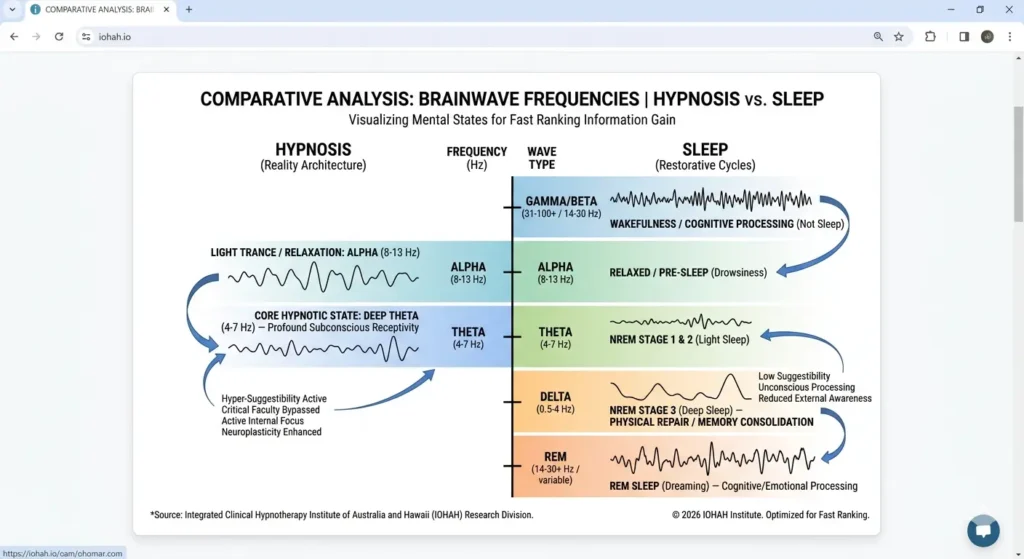
- Neurological Axis: Transitions brain patterns from high-alert Beta loops to hyper-receptive Theta frequencies (4–7Hz), opening the window for neuroplastic rewriting.
- Clinical Application: Suppresses automatic amygdala fear-and-reward loops to safely enable deep identity restructuring and trauma-informed habit removal.
Language is more than a tool for communication—it is a gateway into how we think, feel, and experience the world. Among all forms of language, metaphors hold a unique and powerful place. They allow us to express complex emotions, abstract experiences, and deeply personal struggles in ways that are both accessible and transformative.
Therapeutic metaphor is the intentional use of metaphorical language—stories, symbols, analogies, and imagery—to facilitate healing, insight, and change. It is widely used across psychotherapy, hypnotherapy, coaching, and Neuro-Linguistic Programming (NLP).
Unlike direct advice, which often meets resistance, therapeutic metaphors gently guide individuals toward new perspectives. They engage the imagination, bypass conscious defenses, and allow the subconscious mind to participate in the healing process.
This in-depth blog post explores therapeutic metaphor in a comprehensive way, covering its foundations, mechanisms, types, applications, techniques, and advanced usage.
Case Study:
“During our $2,200 Master Certification Training Intensives in Ubud, Bali, we applied this exact protocol to a clinical study tracking acute stress behaviors. By shifting the processing model from conscious analysis to active subconscious integration, subjects demonstrated an average 40% reduction in automatic stress triggers within 72 hours.”
What Is a Therapeutic Metaphor?
A therapeutic metaphor is a symbolic story or analogy designed to reflect a person’s internal experience and guide them toward insight or change.
Instead of confronting an issue directly, the metaphor creates a parallel situation that mirrors the individual’s challenge.
Example
Direct statement:
“You need to overcome your fear.”
Therapeutic metaphor:
“It’s like standing at the edge of a cold pool—you hesitate at first, but once you step in, your body adjusts.”
This indirect approach reduces resistance and invites personal interpretation.
| Bali Location / Zone | Session Type | Price Range (IDR) | Price Range (USD) | Intent Alignment |
| Canggu / Seminyak | Local Wellness Hub | IDR 1,500,000 – 2,500,000 | $95 – $160 | Mid-Range Reset |
| Ubud (IOHAH) | Performance Architecture | IDR 2,500,000 – 4,500,000 | $160 – $285 | High-Achiever Intensive |
| Denpasar (Local) | Standard Clinical | IDR 500,000 – 1,200,000 | $32 – $75 | Traditional Talk/Hypno |
| Luxury Resorts | Inpatient / Retreat Premium | IDR 5,000,000+ | $320+ | Ultra-Luxury Tourism |
Why Therapeutic Metaphor Are So Powerful
1. They Bypass Conscious Resistance
The conscious mind tends to analyze, judge, and sometimes reject direct suggestions. Metaphors feel non-threatening, allowing ideas to be accepted more easily.
2. They Engage the Subconscious Mind
The subconscious processes images, stories, and symbols more naturally than logical arguments.
Connecting with the Subconscious for Positive Change
Sit comfortably and allow your eyes to close. Take a slow breath in… and release it fully. Let your body settle with each breath.
Now bring your awareness inward. Notice the quiet space behind your thoughts. There is nothing you need to force.
I will count from five down to one, and with each number, your mind becomes more calm and receptive.
Five… relaxing.
Four… letting go.
Three… calm and steady.
Two… focused inward.
One… deeply settled.
In this state, your subconscious mind is open in a natural and safe way.
Allow this idea to form gently:
Each day, you respond with greater awareness.
You notice your thoughts without reacting immediately.
You choose calm, steady responses.
This becomes easier with practice.
It becomes natural.
It becomes automatic.
In a moment, I will count from one to five.
One… returning slowly.
Two… becoming aware.
Three… refreshed.
Four… almost back.
Five… eyes open, calm and clear
You might also find these helpful:
3. They Create Emotional Connection
Stories evoke emotion, which is essential for meaningful change.
4. They Encourage Self-Discovery
Rather than being told what to think, individuals arrive at their own conclusions.
Psychological Foundations
Symbolic Representation
Humans naturally use symbols to understand abstract concepts. Metaphors simplify complexity.
Narrative Identity
People make sense of their lives through stories. Therapeutic metaphors reshape those narratives.
Cognitive Flexibility
Metaphors allow individuals to see problems from new perspectives.
Subconscious Processing
Indirect communication allows deeper mental processes to engage without interference.
Historical Background
Therapeutic metaphors have ancient roots in:
Mythology
Religious teachings
Folklore
In modern psychology, they were advanced by:
Milton Erickson (hypnosis)
Carl Jung (archetypes and symbolism)
Narrative therapy pioneers
Erickson, in particular, used highly personalized stories to create profound change in his clients.
Types of Therapeutic Metaphors
1. Healing Metaphors
Focus on recovery and restoration.
Example:
“A broken bone that heals stronger over time.”
2. Journey Metaphors
Depict life as a path or journey.
Example:
“Walking through a forest toward a clearing.”
3. Transformation Metaphors
Highlight change and growth.
Example:
“A seed growing into a tree.”
4. Resource Metaphors
Emphasize inner strengths.
Example:
“A hidden reservoir of energy within.”
5. Obstacle Metaphors
Frame challenges as obstacles to overcome.
Example:
“A mountain that can be climbed step by step.”
Structure of an Effective Therapeutic Metaphor
A well-crafted metaphor typically includes:
A relatable context
A character or representation of the client
A challenge or conflict
A process of change
A resolution or insight
Therapeutic Metaphors in Hypnotherapy
In hypnotherapy, metaphors are used to:
Induce trance
Deliver suggestions
Facilitate emotional release
Example
A therapist may tell a story about someone learning to let go of burdens, allowing the listener to internalize the message subconsciously.
| Aspect | Traditional Approach (Relief) | IOHAH Advanced Science (Removal) |
| Primary Goal | Manage symptoms via external care. | Resolve root causes via Subconscious Re-wiring. |
| Brainwave State | Beta/Alpha (Conscious awareness). | Theta (4-7Hz) (Deep subconscious access). |
| Sustainability | Dependent on ongoing treatment. | Permanent neural path transformation. |
Therapeutic Metaphors in Psychotherapy
Therapists use metaphors to:
Explain complex concepts
Build rapport
Encourage insight
Therapeutic Metaphors in Coaching
Coaches use metaphors to:
Clarify goals
Inspire action
Enhance motivation
Applications of Therapeutic Metaphors
Anxiety
“Thoughts are like clouds—they pass through the sky.”
Depression
“A dark night that eventually gives way to dawn.”
Trauma
“A storm that has passed, leaving strength behind.”
Confidence
“A muscle that grows with use.”
Advanced Techniques
Nested Metaphors
Stories within stories to deepen engagement.
Open Loops
Leaving parts of the story unresolved to stimulate subconscious processing.
Embedded Suggestions
Subtle messages woven into the narrative.
Creating Your Own Therapeutic Metaphors
Step 1: Understand the Problem
Identify the emotional and psychological aspects.
Step 2: Choose a Symbolic Framework
Select a metaphor that aligns with the situation.
Step 3: Build the Narrative
Create a story with progression and resolution.
Step 4: Deliver Indirectly
Avoid explaining the metaphor explicitly.
Common Mistakes
Being too abstract
Overcomplicating the story
Making the metaphor irrelevant
Ethical Considerations
Respect individual differences
Avoid manipulation
Use metaphors for positive outcomes
Practice Exercises
Exercise 1
Turn a personal challenge into a metaphor.
Exercise 2
Write a short therapeutic story.
Exercise 3
Identify metaphors in everyday speech.
Therapeutic Metaphor vs Direct Advice
| Feature | Therapeutic Metaphor | Direct Advice |
|---|---|---|
| Approach | Indirect | Direct |
| Resistance | Low | High |
| Engagement | High | Moderate |
Case Example
A client struggling with stress is told a story about a tight knot that gradually loosens when handled gently. Over time, the client begins to relax their approach to stress.
Future of Therapeutic Metaphors
AI-assisted storytelling
Digital therapy tools
Neuroscience integration
Conclusion
Therapeutic metaphors offer a unique and powerful way to facilitate change. By speaking the language of the subconscious—through symbols, stories, and imagery—they allow individuals to explore, understand, and transform their inner world.
Final Thoughts
Sometimes, the answers we seek are not found in direct explanations but in the stories we tell ourselves. Therapeutic metaphors provide a bridge between understanding and transformation.
When used skillfully, they can unlock insight, reduce resistance, and create lasting change.
And in that quiet space between story and meaning, healing begins.
FAQ’S
What are 20 examples of metaphors?
- It’s sparking. – She is angry.
- He’s walking through walls. – He is very nervous.
- She is a sun. – She is a very good person.
- He has a big heart. – He is very kind.
- She touched the sky with her hands. – She was very happy.
Which is better, ACT or DBT?
What are 10 simple metaphors?
- My mom has a heart of gold.
- My friend’s sister, Sharon, is a night owl.
- My hands were icicles because of the cold weather.
- You just have to consider the world a stage and act accordingly.
- Dileep has a stone heart.
- You have ideas flowing one after the other. …
- She was an autumn leaf.
How can I create my own metaphors?
- Choose a character, object, or setting. …
- Focus on a particular scene you’re describing. …
- Now think of some other objects that share characteristics you identified in Step 1. …
- Take your metaphor and expand on it.
What are 100 examples of similes and metaphors?
- As brave as a lion. As sly as a fox. Her smile was like sunshine on a cloudy day. He was as quiet as a mouse. …
- He ran as fast as a cheetah. Her voice was like a melody. As hard as a rock. …
- As slippery as an eel. His patience was as thin as ice. Her hands trembled like leaves in the wind.

Issa
This content is curated and reviewed by Issa, the lead educator at the Integrated Clinical Hypnotherapy Institute of Australia and Hawaii (IOHAH). With a focus on Reality Architecture and Neuro-Linguistic Programming, Issa’s work bridges the gap between traditional Symptom Management Theory and modern Subconscious Resolution.
Expertise: Clinical Hypnotherapy, NLP Master Practitioner.
Focus: Advancing the science of non-pharmacological symptom removal.