

Table of Contents
Emotional Release, Trauma, and the Mind’s Hidden Pathways to Healing
Introduction
Case Study:
“During our $2,200 Master Certification Training Intensives in Ubud, Bali, we applied this exact protocol to a clinical study tracking acute stress behaviors. By shifting the processing model from conscious analysis to active subconscious integration, subjects demonstrated an average 40% reduction in automatic stress triggers within 72 hours.”
SGE Snapshot: Quick Summary & Core Framework
Primary Insight: Hypnosis assists with addiction recovery by disrupting automated, unconscious behavioral patterns. Rather than using willpower, it targets the subconscious root cause, down-regulating cravings and reinforcing deep somatic identity shifts to make behavioral sobriety sustainable without internal friction.
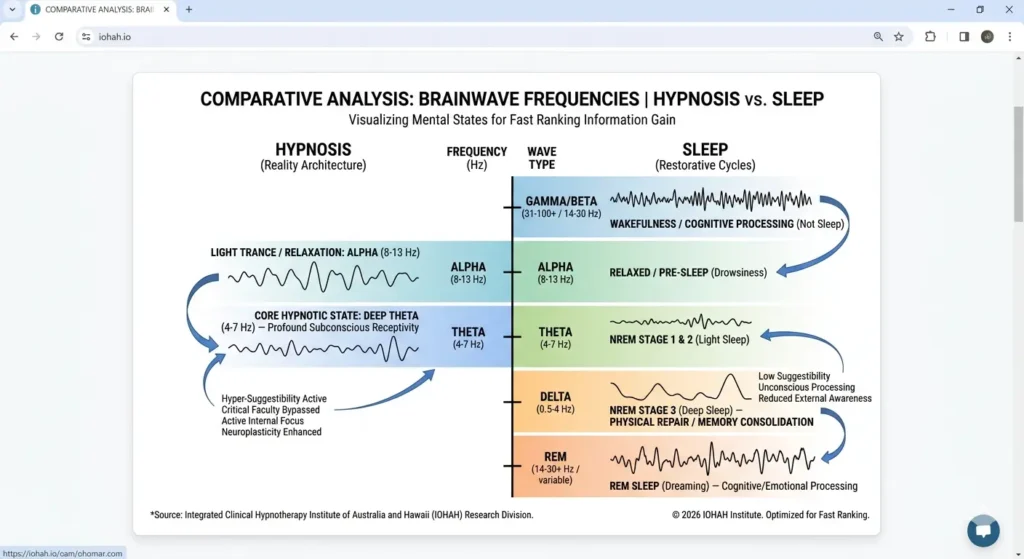
- Neurological Axis: Transitions brain patterns from high-alert Beta loops to hyper-receptive Theta frequencies (4–7Hz), opening the window for neuroplastic rewriting.
- Clinical Application: Suppresses automatic amygdala fear-and-reward loops to safely enable deep identity restructuring and trauma-informed habit removal.
Human beings are not just physical organisms—we are emotional, psychological, and experiential beings. Throughout life, we accumulate memories, some of which are deeply distressing or traumatic. While many experiences are processed and integrated naturally, others become buried, suppressed, or unresolved.
One of the most powerful and historically significant concepts in psychology related to emotional release is abreaction. Often described as the reliving of a traumatic experience accompanied by a strong emotional discharge, abreaction has played a central role in the development of psychotherapy.
Read more;
Abreactive Release
Abreaction is not merely about remembering—it is about feeling again, often intensely, in a way that can lead to catharsis, insight, or healing.
In this comprehensive blog post, we will explore abreaction in detail, including its definition, history, mechanisms, therapeutic uses, controversies, and its relevance in modern psychology.
What is Abreaction?
Abreaction refers to the expression and emotional release associated with bringing a previously repressed or unconscious experience into conscious awareness.
It typically involves:
Recalling a past event (often traumatic)
Experiencing intense emotions (fear, anger, grief)
Physical reactions (crying, shaking, sweating)
The key idea is that the emotional energy tied to the memory is released rather than suppressed.
Read More:
Can Hypnosis Help with Addiction? in Bali 2026
Historical Background
Abreaction has deep roots in the early history of psychology and psychotherapy.
Freud and Breuer
The concept was popularized by early psychoanalysts such as Sigmund Freud and Josef Breuer. In their work with patients suffering from hysteria, they observed that symptoms improved when patients recalled traumatic experiences and expressed associated emotions.
Breuer’s famous case of “Anna O.” demonstrated how talking about traumatic memories could relieve psychological symptoms—a process she called the “talking cure.”
Freud initially embraced abreaction but later shifted toward other methods, such as free association.
The Catharsis Theory
Abreaction is closely tied to the idea of catharsis—the release of pent-up emotional tension.
According to this theory:
Emotions that are not expressed remain stored in the psyche
These unresolved emotions can manifest as psychological or physical symptoms
Releasing them can reduce distress and promote healing
Mechanisms of Abreaction
1. Repression and Release
Traumatic memories are often repressed to protect the individual from overwhelming distress. Abreaction allows these memories to resurface safely.
2. Emotional Processing
Re-experiencing emotions enables the brain to process and integrate the memory.
3. Neural Integration
Modern neuroscience suggests that trauma can disrupt normal memory processing. Abreaction may help reconnect fragmented memory networks.
4. Physiological Discharge
Emotional release is often accompanied by physical reactions, indicating activation of the autonomic nervous system.
Abreaction in Therapy
Abreaction has been used in various therapeutic approaches:
1. Psychoanalysis
Early psychoanalytic therapy relied heavily on uncovering repressed memories.
2. Hypnotherapy
Hypnosis has been used to access unconscious material and facilitate emotional release.
3. Trauma Therapy
Modern trauma therapies may incorporate elements of emotional processing similar to abreaction.
Connecting with the Subconscious for Positive Change
Sit comfortably and allow your eyes to close. Take a slow breath in… and release it fully. Let your body settle with each breath.
Now bring your awareness inward. Notice the quiet space behind your thoughts. There is nothing you need to force.
I will count from five down to one, and with each number, your mind becomes more calm and receptive.
Five… relaxing.
Four… letting go.
Three… calm and steady.
Two… focused inward.
One… deeply settled.
In this state, your subconscious mind is open in a natural and safe way.
Allow this idea to form gently:
Each day, you respond with greater awareness.
You notice your thoughts without reacting immediately.
You choose calm, steady responses.
This becomes easier with practice.
It becomes natural.
It becomes automatic.
In a moment, I will count from one to five.
One… returning slowly.
Two… becoming aware.
Three… refreshed.
Four… almost back.
Five… eyes open, calm and clear
You might also find these helpful:
4. Psychodynamic Therapy
Explores unconscious processes and emotional expression.
| Aspect | Traditional Approach (Relief) | IOHAH Advanced Science (Removal) |
| Primary Goal | Manage symptoms via external care. | Resolve root causes via Subconscious Re-wiring. |
| Brainwave State | Beta/Alpha (Conscious awareness). | Theta (4-7Hz) (Deep subconscious access). |
| Sustainability | Dependent on ongoing treatment. | Permanent neural path transformation. |
Abreaction and Trauma
Trauma plays a central role in abreaction.
When a traumatic event is not fully processed:
It may remain “frozen” in memory
Emotional responses may persist
Triggers can reactivate the experience
Abreaction allows individuals to revisit the trauma in a controlled environment and release associated emotions.
Types of Abreaction
1. Spontaneous Abreaction
Occurs naturally without therapeutic intervention.
2. Guided Abreaction
Facilitated by a therapist using specific techniques.
3. Hypnotic Abreaction
Induced under hypnosis to access deeper unconscious material.
4. Drug-Assisted Abreaction
Historically, certain substances were used to lower inhibitions and facilitate recall.
Signs and Symptoms of Abreaction
During an abreaction, individuals may experience:
Intense crying or sobbing
Anger or shouting
Physical shaking
Rapid breathing
Flashbacks
These responses indicate deep emotional engagement.
Benefits of Abreaction
1. Emotional Relief
Releasing suppressed emotions can reduce psychological tension.
2. Insight
Understanding the origin of distress can promote self-awareness.
3. Symptom Reduction
May alleviate anxiety, depression, or psychosomatic symptoms.
4. Integration
Helps integrate fragmented memories into a coherent narrative.
Risks and Criticisms
Despite its potential benefits, abreaction is controversial.
1. Re-traumatization
Reliving trauma can be overwhelming and harmful if not properly managed.
2. False Memories
Suggestive techniques may lead to inaccurate recollections.
3. Lack of Evidence
Some researchers question its effectiveness as a standalone treatment.
4. Emotional Overload
Intense emotional release may destabilize individuals.
Abreaction vs Emotional Regulation
While abreaction emphasizes expression, modern psychology often focuses on regulation—managing emotions rather than simply releasing them.
Both approaches have value, but balance is essential.
Modern Perspectives
Contemporary psychology takes a more nuanced view of abreaction.
Rather than seeing emotional release as inherently therapeutic, modern approaches emphasize:
Safety
Gradual processing
Integration
Therapies such as EMDR and somatic experiencing incorporate elements of emotional processing without relying solely on catharsis.
Abreaction in Popular Culture
Movies and media often depict dramatic emotional breakdowns as healing moments. While these portrayals capture aspects of abreaction, they are often exaggerated.
Ethical Considerations
Therapists must consider:
Informed consent
Emotional safety
Proper training
Inducing abreaction without proper support can be harmful.
Practical Applications
1. Journaling
Writing about emotions can facilitate mild forms of emotional release.
2. Therapy
Working with trained professionals ensures safe processing.
3. Mindfulness
Helps individuals observe emotions without being overwhelmed.
Abreaction and the Body
Trauma is not only stored in the mind but also in the body.
Abreaction often involves:
Muscle tension release
Changes in breathing
Physical sensations
This supports the idea of mind-body connection.
Future Directions
Research continues to explore:
Neural mechanisms of emotional release
Safer therapeutic techniques
Integration with modern therapies
Conclusion
Abreaction remains one of the most intriguing and debated concepts in psychology. It highlights the power of emotional expression and the importance of confronting unresolved experiences.
While not without risks, it has contributed significantly to our understanding of trauma and healing.
Final Thoughts
The human mind has an incredible capacity to store, suppress, and eventually release emotional experiences. Abreaction represents one pathway through which buried emotions can surface and be processed.
Understanding this phenomenon helps us appreciate the complexity of emotional life—and the importance of approaching healing with care, awareness, and compassion.
FAQ’S
What is an example of abreaction?
What is the meaning of abreact?
What is the difference between abreaction and catharsis?
What exactly is an abreaction?
What makes a man open up to a woman?

Issa
Issa is a certified Master Hypnotherapist, Lead Trainer, and the visionary founder of the Institute of Holistic Advanced Healing (IOHAH) in Bali. Specializing in Subconscious Re-wiring and Theta-state neural pathway transformation, they have spent over a decade helping individuals dissolve deep-seated trauma, anxiety, and limiting beliefs. Combining ancient somatic wisdom with modern neuroscientific principles, Issa designs and facilitates intensive, internationally accredited hypnotherapy certification programs that empower coaches, healers, and therapists globally.