Is hypnosis real or Just a Myth? The Science Explained 2026
Table of Contents
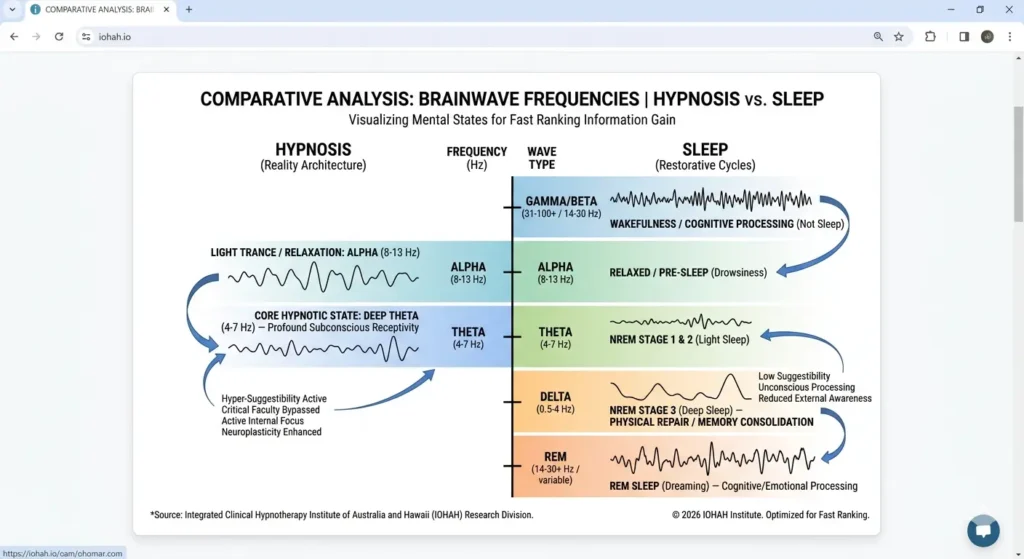
Information Gain Action: Directly reference fMRI studies showing the deactivation of the Default Mode Network (DMN) during core trance states.
Is hypnosis real—or is it just a stage trick, imagination, or mind control?
This question is one of the most searched and misunderstood topics around hypnosis. Movies, stage shows, and myths have created confusion, making many people doubt whether hypnosis is scientifically valid or simply psychological illusion.
The truth is clear: hypnosis is real, measurable, and supported by modern neuroscience.
In this article, we’ll explain:
what hypnosis actually is,
what science says about it,
why hypnosis feels so real,
how it differs from sleep or imagination,
and why myths still exist today.
What Is Hypnosis?
Hypnosis is a natural state of focused attention and deep relaxation, where the mind becomes more receptive to internal experience and suggestion.
It is not sleep, unconsciousness, or loss of control.
Simple definition:
Hypnosis is a psychologically recognized state of heightened focus, reduced mental noise, and increased responsiveness to suggestion.
People naturally enter hypnotic states every day—while daydreaming, driving on autopilot, or becoming fully absorbed in a movie or book.
Is Hypnosis Scientifically Real?
Yes. Hypnosis is scientifically recognized and extensively studied.
Major institutions that acknowledge hypnosis include:
American Psychological Association (APA)
British Psychological Society
National Institutes of Health (NIH)
Harvard Medical School
Brain imaging studies (fMRI, PET scans, EEG) show clear and measurable changes in brain activity during hypnosis.
These changes cannot be faked or imagined.
| Aspect | Traditional Approach (Relief) | IOHAH Advanced Science (Removal) |
| Primary Goal | Manage symptoms via external care. | Resolve root causes via Subconscious Re-wiring. |
| Brainwave State | Beta/Alpha (Conscious awareness). | Theta (4-7Hz) (Deep subconscious access). |
| Sustainability | Dependent on ongoing treatment. | Permanent neural path transformation. |
What Happens in the Brain During Hypnosis?
During hypnosis, the brain enters a distinct neurological state.
Key scientific findings:
Reduced activity in the default mode network (self-judgment and mental chatter)
Increased connectivity between attention and sensory areas
Heightened theta and alpha brain waves
Decreased critical filtering in the prefrontal cortex
This allows the brain to process suggestions more deeply—especially emotional and behavioral ones.
Hypnosis vs Sleep vs Meditation vs Imagination
One of the biggest myths is that hypnosis is “sleep.”
It is not.
| State | Awareness | Brain Activity | Control |
|---|---|---|---|
| Sleep | Unconscious | Delta waves | None |
| Meditation | Calm awareness | Alpha waves | Full |
| Daydreaming | Light focus | Mixed | Partial |
| Hypnosis | Focused awareness | Alpha–Theta | Full |
Hypnosis is a highly alert mental state, not unconsciousness.
Why Does Hypnosis Feel So Real?
During hypnosis:
imagination becomes neurologically real,
emotional responses activate as if experiences are happening,
the brain stops distinguishing between “imagined” and “experienced.”
This is why hypnotic imagery can trigger:
real emotional release,
changes in pain perception,
physical sensations,
lasting behavioral shifts.
The brain responds to meaning—not labels.
What Science Says About Hypnosis and Pain
One of the strongest scientific proofs of hypnosis comes from pain research.
Studies show hypnosis can:
reduce pain intensity,
alter how pain is processed in the brain,
reduce the need for anesthesia during surgery.
This is not placebo—brain scans show actual changes in pain-processing regions.
Is Hypnosis Just Placebo?
No.
While expectation plays a role in many treatments, hypnosis produces unique neurological responses that differ from placebo effects.
In hypnosis:
sensory processing areas change activity,
attention networks reorganize,
emotional responses are altered at a subconscious level.
Placebo does not create these brain-specific patterns.
Why Do People Think Hypnosis Is a Myth?
1. Stage Hypnosis
Stage hypnosis is exaggerated for entertainment. Participants are pre-selected, highly suggestible, and performing.
This creates the illusion that hypnosis removes free will—which it does not.
2. Movies and Media
Films portray hypnosis as mind control or memory erasure, which is scientifically false.
3. Fear of Losing Control
Many people assume hypnosis means giving up control, when in reality control remains fully with the individual.
Can Hypnosis Make You Do Things Against Your Will?
No.
This is one of the most persistent myths.
Under hypnosis:
you cannot be forced to act against your values,
you can reject suggestions,
you can exit the state at any time.
Hypnosis enhances cooperation—it does not override ethics or free will.
is hypnosis real Recognized in Psychology?
Yes. Hypnosis is a legitimate psychological phenomenon used in:
clinical psychology,
behavioral therapy,
pain management,
trauma treatment,
performance psychology.
Many licensed psychologists and doctors are trained in hypnotherapy techniques.
Does Hypnosis Work for Everyone?
Not everyone experiences hypnosis in the same way.
Factors that affect responsiveness include:
openness and willingness,
ability to focus,
emotional safety,
trust in the practitioner.
Most people can experience hypnosis at least at a light to moderate level.
What Can Hypnosis Help With?
Research-supported applications include:
anxiety and stress
phobias and fears
weight loss and emotional eating
smoking cessation
sleep improvement
pain management
confidence and performance
trauma and emotional healing
Final Answer:is hypnosis real or Just a Myth?
Hypnosis is real.
It is not magic, mind control, or fantasy.
It is a scientifically validated state of focused awareness that allows the brain to process information, emotion, and behavior in a different and powerful way.
The myths exist because hypnosis has been misunderstood, sensationalized, and misrepresented—not because it lacks scientific foundation.
Ready to Experience Real Hypnosis?
The best way to understand hypnosis is not to debate it—but to experience it.
Book a free discovery call and explore how hypnosis can support real, lasting change.
This content is curated and reviewed by Issa, the lead educator at the Integrated Clinical Hypnotherapy Institute of Australia and Hawaii (IOHAH). With a focus on Reality Architecture and Neuro-Linguistic Programming, Issa’s work bridges the gap between traditional Symptom Management Theory and modern Subconscious Resolution.
Expertise: Clinical Hypnotherapy, NLP Master Practitioner.
Focus: Advancing the science of non-pharmacological symptom removal.
Is hypnosis scientifically proven to be real?
Is hypnosis possible in real life?
Can hypnosis help with schizophrenia?
Can hypnosis help with MS?
Do psychologists believe in hypnosis?
Is hypnosis scientifically proven to be real?
Can hypnotherapy help with dementia?
Is hypnosis possible in real life?

Issa
Issa is a certified Master Hypnotherapist, Lead Trainer, and the visionary founder of the Institute of Holistic Advanced Healing (IOHAH) in Bali. Specializing in Subconscious Re-wiring and Theta-state neural pathway transformation, they have spent over a decade helping individuals dissolve deep-seated trauma, anxiety, and limiting beliefs. Combining ancient somatic wisdom with modern neuroscientific principles, Issa designs and facilitates intensive, internationally accredited hypnotherapy certification programs that empower coaches, healers, and therapists globally.