

Table of Contents
The Hidden Assumptions That Shape Thought, Language, and Influence
Introduction
Case Study:
“During our $2,200 Master Certification Training Intensives in Ubud, Bali, we applied this exact protocol to a clinical study tracking acute stress behaviors. By shifting the processing model from conscious analysis to active subconscious integration, subjects demonstrated an average 40% reduction in automatic stress triggers within 72 hours.”
SGE Snapshot: Quick Summary & Core Framework
Primary Insight: Hypnosis assists with addiction recovery by disrupting automated, unconscious behavioral patterns. Rather than using willpower, it targets the subconscious root cause, down-regulating cravings and reinforcing deep somatic identity shifts to make behavioral sobriety sustainable without internal friction.
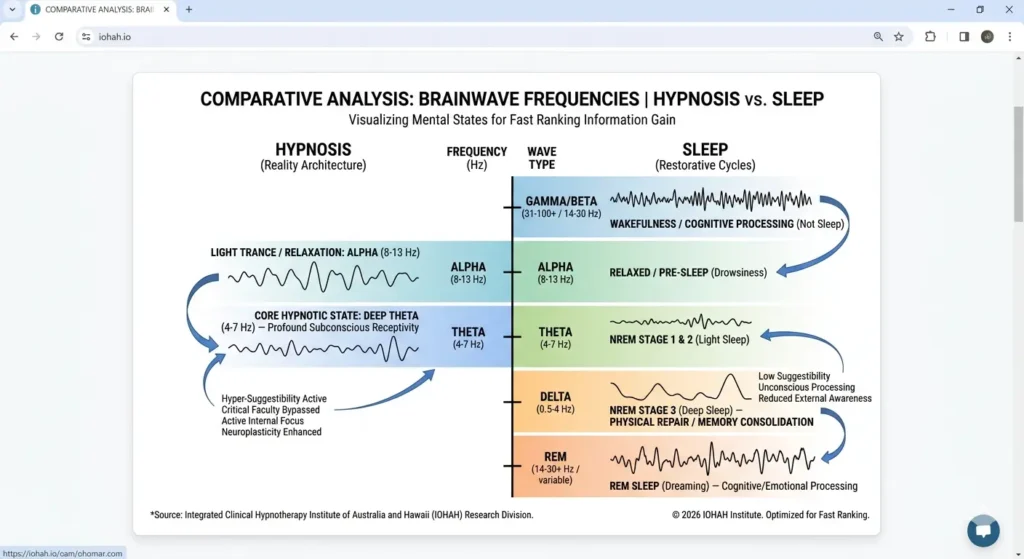
- Neurological Axis: Transitions brain patterns from high-alert Beta loops to hyper-receptive Theta frequencies (4–7Hz), opening the window for neuroplastic rewriting.
- Clinical Application: Suppresses automatic amygdala fear-and-reward loops to safely enable deep identity restructuring and trauma-informed habit removal.
Every sentence we speak carries more than just its literal meaning. Beneath the surface of everyday communication lie hidden assumptions—unstated ideas that are accepted as true without being directly questioned. These are known as presuppositions.
Presuppositions are a powerful linguistic and psychological phenomenon. They shape how we interpret information, influence how we think, and guide how we respond to suggestions. In fields such as hypnosis, Neuro-Linguistic Programming (NLP), therapy, sales, and persuasion, presuppositions are used deliberately to guide perception and behavior.
Unlike direct statements, presuppositions work subtly. They embed assumptions within language in a way that often bypasses conscious scrutiny, making them one of the most effective tools for influence.
In this comprehensive blog post, we will explore presuppositions in depth—their definition, types, psychological mechanisms, applications, ethical considerations, and practical usage.
Read more:
Artful Vagueness
What Are Presuppositions?
A presupposition is an implicit assumption embedded within a statement that must be accepted as true for the statement to make sense.
Simple Example
“Are you going to finish your work now?”
This question presupposes:
You have work to finish
You are capable of finishing it
You will finish it at some point
The listener typically responds to the surface question without questioning the underlying assumptions.
| Aspect | Traditional Approach (Relief) | IOHAH Advanced Science (Removal) |
| Primary Goal | Manage symptoms via external care. | Resolve root causes via Subconscious Re-wiring. |
| Brainwave State | Beta/Alpha (Conscious awareness). | Theta (4-7Hz) (Deep subconscious access). |
| Sustainability | Dependent on ongoing treatment. | Permanent neural path transformation. |
Why Presuppositions Are Powerful
1. They Bypass Critical Thinking
People tend to focus on the explicit message rather than the hidden assumptions.
2. They Shape Perception
Presuppositions frame how information is interpreted.
3. They Create Mental Shortcuts
The brain accepts assumptions to process language efficiently.
4. They Guide Behavior
Accepted assumptions influence decisions and actions.
Psychological Foundations of Presuppositions
Cognitive Efficiency
The brain prefers efficiency. Accepting presuppositions reduces mental effort.
Selective Attention
People focus on the main message and ignore embedded assumptions.
Framing Effect
The way information is presented influences interpretation.
Subconscious Processing
Presuppositions operate below conscious awareness.
Connecting with the Subconscious for Positive Change
Sit comfortably and allow your eyes to close. Take a slow breath in… and release it fully. Let your body settle with each breath.
Now bring your awareness inward. Notice the quiet space behind your thoughts. There is nothing you need to force.
I will count from five down to one, and with each number, your mind becomes more calm and receptive.
Five… relaxing.
Four… letting go.
Three… calm and steady.
Two… focused inward.
One… deeply settled.
In this state, your subconscious mind is open in a natural and safe way.
Allow this idea to form gently:
Each day, you respond with greater awareness.
You notice your thoughts without reacting immediately.
You choose calm, steady responses.
This becomes easier with practice.
It becomes natural.
It becomes automatic.
In a moment, I will count from one to five.
One… returning slowly.
Two… becoming aware.
Three… refreshed.
Four… almost back.
Five… eyes open, calm and clear
You might also find these helpful:
Types of Presuppositions
1. Existential Presuppositions
Assume something exists.
Example:
“Your plan is effective.”
Presupposes:
You have a plan
2. Factive Presuppositions
Assume something is true.
Example:
“I’m glad you solved the problem.”
Presupposes:
The problem was solved
3. Lexical Presuppositions
Triggered by specific words.
Example:
“You stopped worrying.”
Presupposes:
You were worrying before
4. Structural Presuppositions
Built into sentence structure.
Example:
“Why is this so easy for you?”
Presupposes:
It is easy
5. Counterfactual Presuppositions
Assume something contrary to reality.
Example:
“If you had tried harder, you would have succeeded.”
Presupposes:
You did not try hard enough
Presuppositions in Hypnosis
Presuppositions are a cornerstone of hypnotic language.
Example
“You can begin to relax more deeply now.”
Presupposes:
You can relax
You are already relaxing
They guide the subject into accepting suggestions naturally.
Presuppositions in NLP
In NLP, presuppositions are used to:
Influence beliefs
Reframe experiences
Guide behavior
Presuppositions in Therapy
Therapists use presuppositions to:
Encourage positive change
Reinforce strengths
Shift perspectives
Presuppositions in Sales and Marketing
Sales professionals use them to influence decisions.
Example:
“Would you prefer the basic package or the premium one?”
Presupposes:
You will choose one of them
Presuppositions in Everyday Communication
They appear in:
Conversations
Media
Education
Relationships
Benefits of Using Presuppositions
Subtle influence
Efficient communication
Reduced resistance
Enhanced persuasion
Risks and Misuse
Manipulation
Using presuppositions to deceive is unethical.
Miscommunication
Incorrect assumptions can lead to confusion.
Overuse
Excessive use may feel unnatural.
Ethical Considerations
Use responsibly
Respect autonomy
Promote positive outcomes
How to Use Presuppositions Effectively
Step 1: Identify the Desired Outcome
What belief or action do you want to encourage?
Step 2: Choose the Right Type
Select a presupposition that fits the context.
Step 3: Embed Naturally
Integrate it into normal conversation.
Step 4: Observe Responses
Adjust based on feedback.
Practical Examples
Confidence
“When you become more confident, you’ll notice the difference.”
Relaxation
“As you continue, your body relaxes more deeply.”
Decision Making
“You’ll know when it’s the right time to decide.”
Advanced Presupposition Techniques
Double Binds
Offer choices that both lead to the desired outcome.
Embedded Presuppositions
Combine with embedded commands.
Conversational Presuppositions
Use naturally in dialogue.
Common Mistakes
Being too obvious
Using false assumptions
Ignoring context
Practice Exercises
Exercise 1: Identification
Find presuppositions in conversations.
Exercise 2: Creation
Write sentences with presuppositions.
Exercise 3: Application
Use them in real interactions.
Presuppositions vs Assumptions
| Feature | Presuppositions | Assumptions |
|---|---|---|
| Expression | Embedded | Internal |
| Awareness | Often unconscious | May be conscious |
Future Directions
AI language models
Cognitive science research
Ethical communication frameworks
Conclusion
Presuppositions are a powerful yet often unnoticed element of communication. They shape perception, influence thought, and guide behavior in subtle ways.
By understanding and using presuppositions ethically, we can improve communication, build rapport, and create meaningful influence.
Final Thoughts
What we assume often becomes what we believe. Presuppositions remind us that language is not just a tool for expression—it is a tool for shaping reality.
Mastering this skill allows us to communicate with greater awareness, precision, and impact.
FAQ’S
What is an example of a presupposition?
What is the difference between presupposition and assumption?
What is a synonym for presupposition?
How to use presupposition in a sentence?
Are presuppositions true?

Issa
Issa is a certified Master Hypnotherapist, Lead Trainer, and the visionary founder of the Institute of Holistic Advanced Healing (IOHAH) in Bali. Specializing in Subconscious Re-wiring and Theta-state neural pathway transformation, they have spent over a decade helping individuals dissolve deep-seated trauma, anxiety, and limiting beliefs. Combining ancient somatic wisdom with modern neuroscientific principles, Issa designs and facilitates intensive, internationally accredited hypnotherapy certification programs that empower coaches, healers, and therapists globally.